

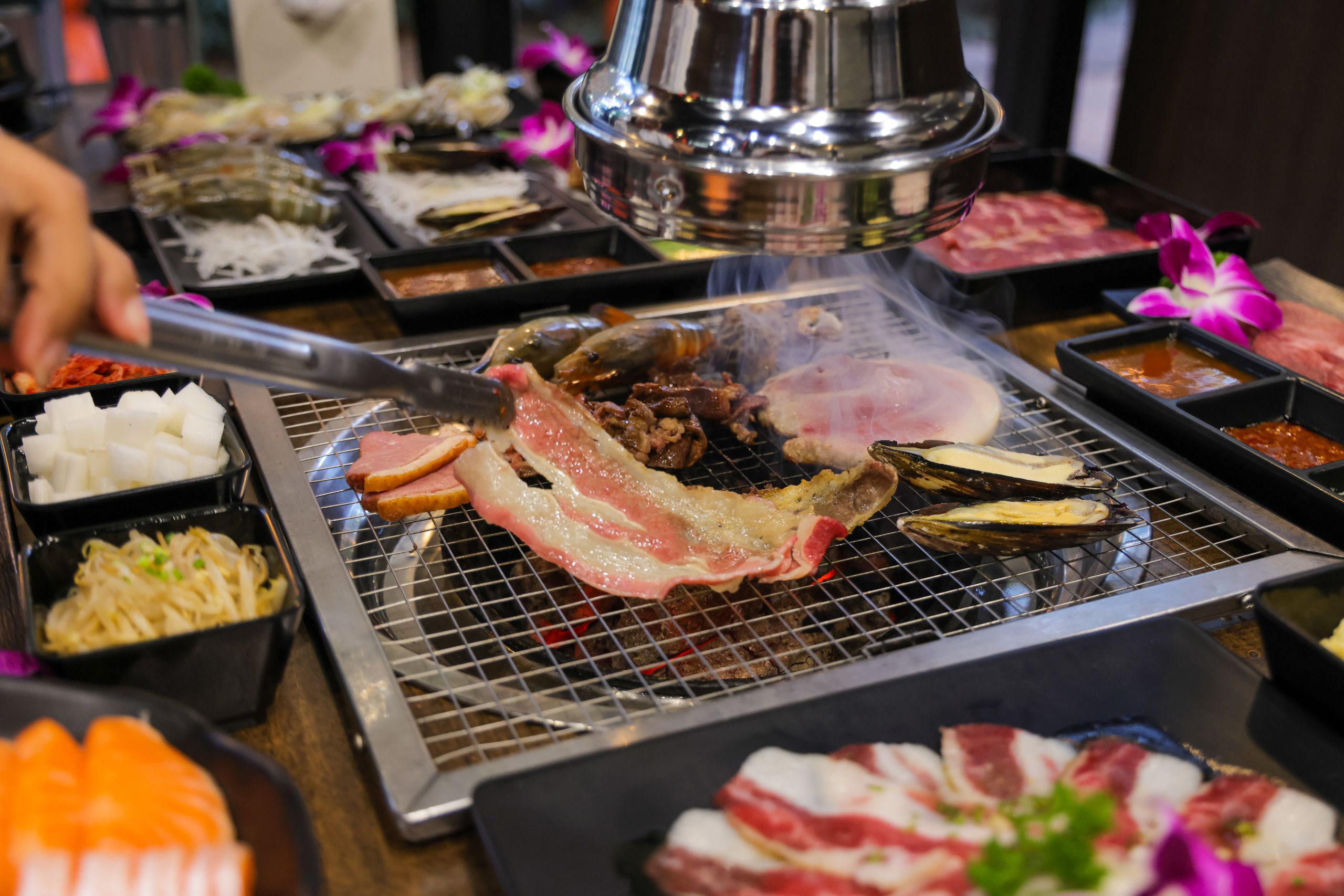
What makes Korean BBQ marinades different?
Korean BBQ marinades work differently from most Western-style marinades. They use ingredients that both flavor and tenderize the meat at the same time.
The key ingredient in bulgogi marinade is Asian pear or kiwi. These fruits contain natural enzymes that break down muscle fiber in beef. As a result, the meat becomes tender in as little as 30 minutes. Soy sauce, sesame oil, garlic, and brown sugar complete the base.

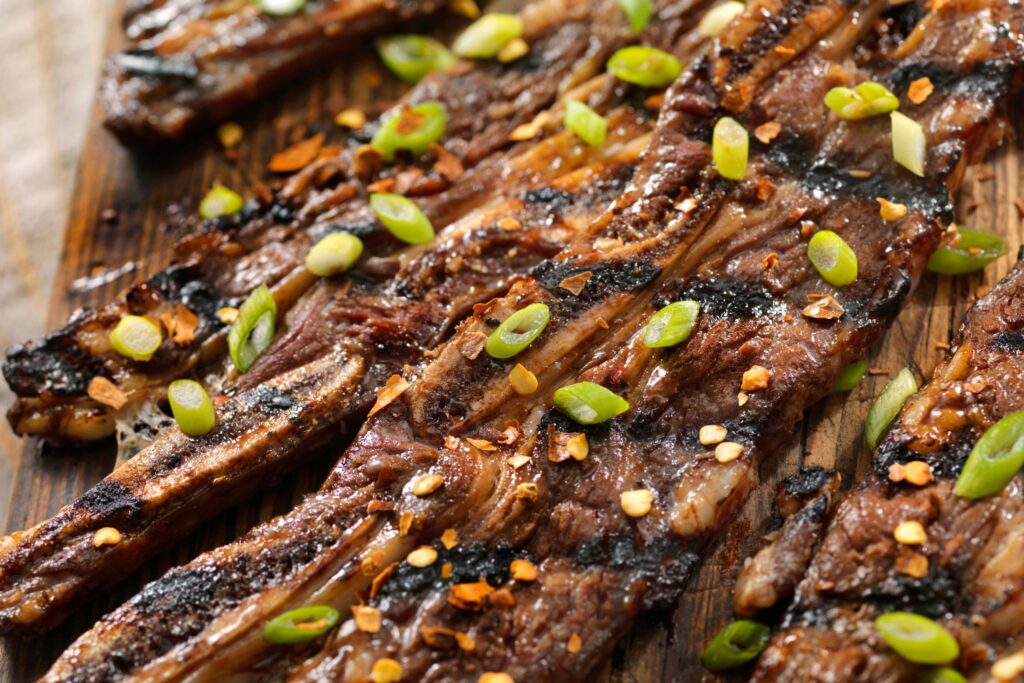
Galbi marinade follows a similar structure. However, galbi uses short ribs instead of thinly sliced beef. The rib bones add depth to the flavor during cooking. Consequently, galbi often needs a longer marinating time of 4 to 8 hours.
How to build a classic Bulgogi marinade
Bulgogi is one of the most recognized dishes in Korean cuisine. The name translates directly as “fire meat.” The marinade creates a slightly sweet, deeply savory crust when the beef hits a hot grill.
To make a standard bulgogi marinade for 500g of beef, combine:

- 4 tablespoons soy sauce
- 2 tablespoons brown sugar
- 1 tablespoon sesame oil
- 3 cloves garlic, finely grated
- 2 tablespoons grated Asian pear
- 1 teaspoon ground black pepper
- 2 sliced spring onions
First, mix all ingredients until the sugar dissolves. Then add the thinly sliced beef and coat evenly. Finally, refrigerate for at least 30 minutes before grilling.
How to make the perfect Galbi marinade
Galbi requires a slightly richer marinade to match the stronger flavor of short ribs. Korean BBQ restaurants across Seoul, Los Angeles, and Sydney serve galbi as a centerpiece dish. The combination of soy sauce, sesame, and fruit creates a glaze that caramelizes over charcoal.
For a galbi marinade for 1kg of short ribs, use:





- 6 tablespoons soy sauce
- 3 tablespoons brown sugar
- 2 tablespoons sesame oil
- 4 cloves garlic, grated
- 3 tablespoons grated Asian pear
- 1 tablespoon rice wine (mirin)
- 1 teaspoon grated fresh ginger
Score the surface of each rib before marinating. This allows the marinade to penetrate deeper into the meat.

Truffle dinners in NYC this autumn
Truffle dinners transform New York City restaurants each autumn into something truly Italian in spirit: intimate, ingredient-led, and brief by...
Autumn equinox and how cooks rethink heat
The autumn equinox is not simply a date on a calendar. It is the moment when serious cooks across the...
Bread traditions and what they reveal
Bread traditions are among the oldest and most honest records of human civilization. From the grain a community grows to...

Gluten-free bakeries NYC: eat well
Gluten-free bakeries in New York City are no longer a compromise. From dedicated allergen-free kitchens in the West Village to...









Reading this made me crave Koreatown so badly. I love that you distinguished between LA galbi and traditional galbi because most recipes online just lump them together and confuse beginners.
Cooking galbi on a regular gas grill never works for me, the sugar burns way before the meat is done. Anyone tried a cast iron pan instead?
Grilling galbi over charcoal really is non-negotiable if you can pull it off. The fat dripping onto the coals and coming back as smoke is what makes it taste like the real thing instead of a home approximation. Indoor grill pans get you maybe seventy percent of the way there at best. Worth setting up a small charcoal grill on the balcony just for this one dish.
Slicing the beef partially frozen is the single trick that took my bulgogi from edible to actually restaurant level. You mentioned it almost in passing but it deserves its own paragraph honestly. Without it the slices are too thick and uneven.
Galbi over charcoal is honestly one of life’s great pleasures. The caramelization you get from that fruit puree on hot coals is unreal.