CONTACT
  • Login
Upgrade
GUSTOwebzine
Advertisement
  • Home
    • Our Authors
    • Subscribe for Free
    • Media Kit
    • Contact
    • Terms and Conditions
    • Cookie Policy
  • Discoveries
    • Chefs
  • Culinary Culture
  • Food & Drinks
  • Cooking Tips
    • Recipes
  • GUSTO Global
  • Insights
  • GUSTO Guide
    • Hotels Worldwide
    • Nightlife Worlwide
    • Restaurants Worldwide
    • Services Worldwide
  • Home
    • Our Authors
    • Subscribe for Free
    • Media Kit
    • Contact
    • Terms and Conditions
    • Cookie Policy
  • Discoveries
    • Chefs
  • Culinary Culture
  • Food & Drinks
  • Cooking Tips
    • Recipes
  • GUSTO Global
  • Insights
  • GUSTO Guide
    • Hotels Worldwide
    • Nightlife Worlwide
    • Restaurants Worldwide
    • Services Worldwide
No Result
View All Result
GUSTOwebzine
No Result
View All Result
Home Home Cooking Tips

Fresh Pasta: Italian Dough Recipe and Shapes

Fresh pasta starts with eggs, flour, and technique. Learn the Italian dough recipe and 5 regional shapes to master at home.

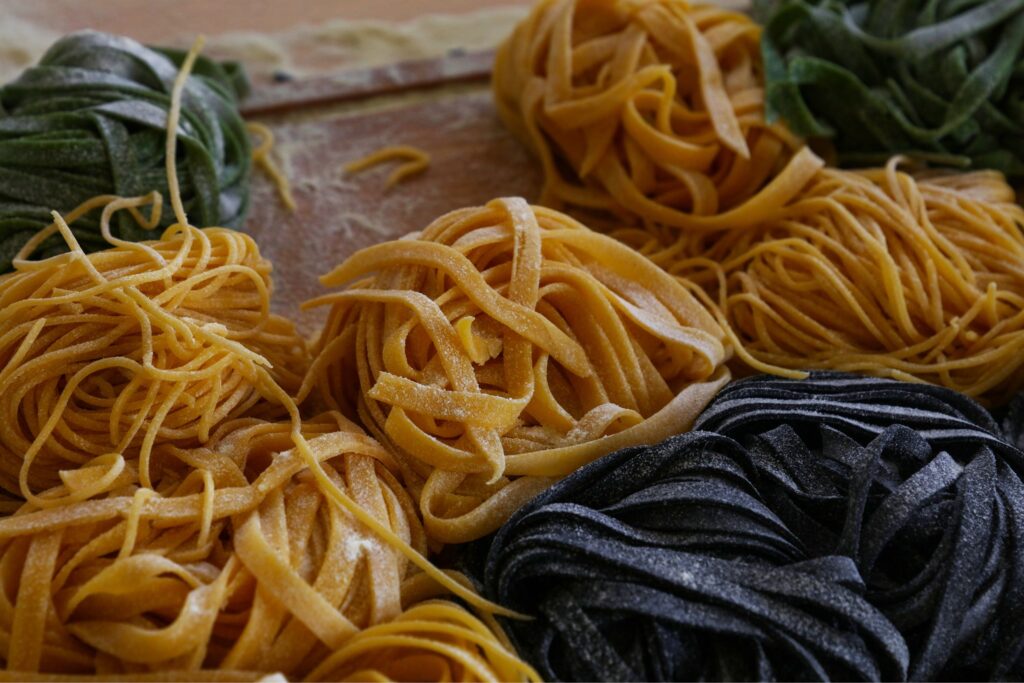
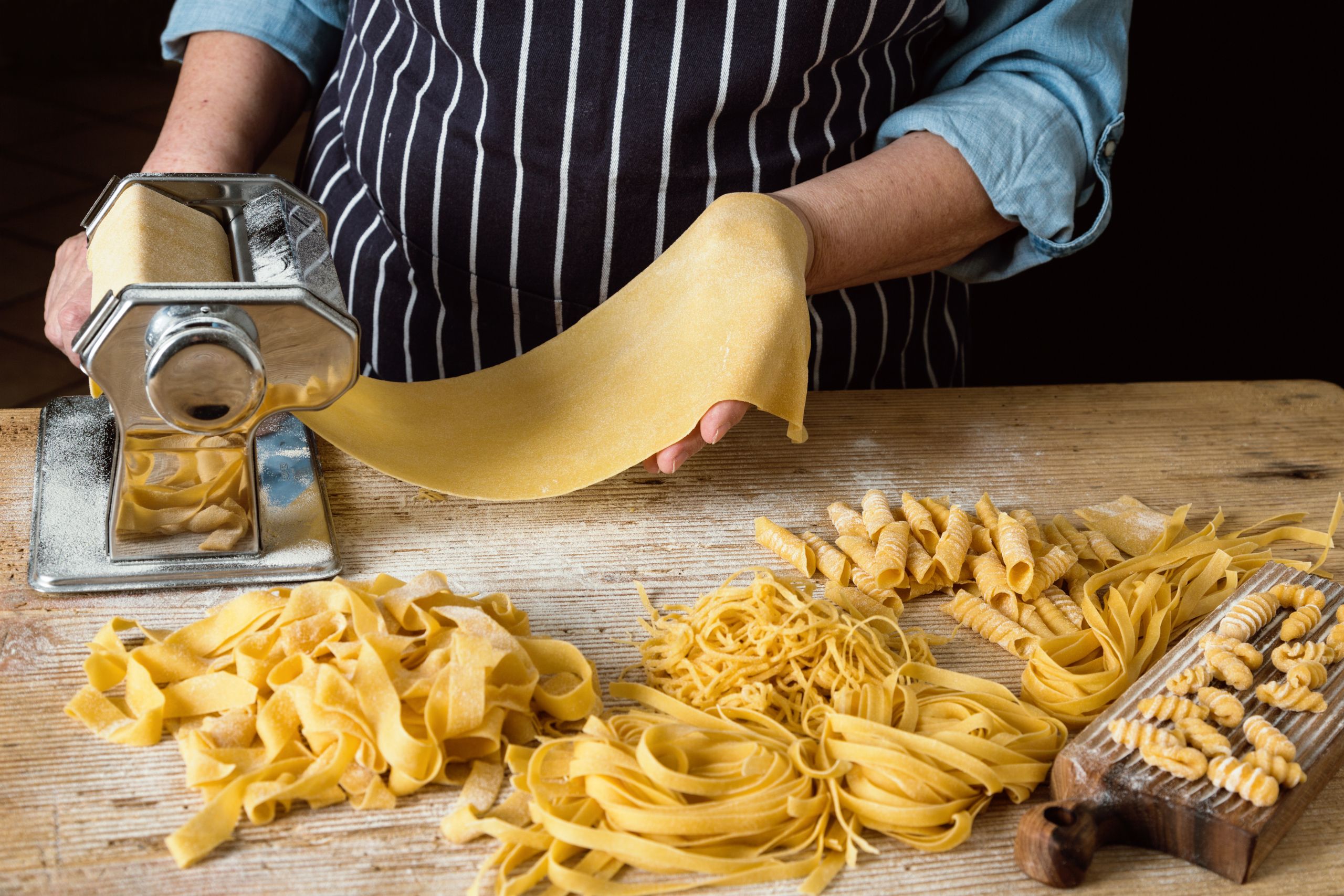
Fresh pasta nests dusted with semolina flour drying on a wooden surface before cooking

Fresh pasta is one of the oldest preparations in Italian culinary tradition. It uses only eggs and flour, yet it produces a dough with a texture and flavour that dried pasta cannot match. In 2025, home cooks around the world are rediscovering this simple skill. Fresh pasta connects every cook to a tradition that runs deep across all 20 regions of Italy. This guide explains the essential egg dough recipe and introduces 5 regional shapes that beginners can make today.

What Flour Should You Use for Fresh Pasta Dough?

The choice of flour has a direct effect on the texture of your dough. Most Italian home cooks use “00” flour, which is a very finely milled soft wheat flour. It produces a smooth, elastic dough that rolls easily and cooks to a delicate, silky texture.

However, many regional recipes combine “00” flour with semolina flour in equal parts. Semolina comes from durum wheat and adds structure, a light golden colour, and a slight bite to the finished pasta. For beginners, a 50/50 blend of the 2 flour types is a reliable starting point.

GUSTO guide worldwide restaurants, hotels, nightlife, professional services GUSTO guide worldwide restaurants, hotels, nightlife, professional services GUSTO guide worldwide restaurants, hotels, nightlife, professional services
Discoveries

The Mastercooks of Belgium: 170 Elite Chefs Network

12/10/2025

What Is the Basic Fresh Pasta Dough Recipe?

The classic Italian ratio is 100 grams of flour per 1 whole egg. For a standard batch that serves 3 to 4 people, use the following:

  • 200 g “00” flour
  • 200 g semolina flour
  • 4 large eggs, at room temperature
  • 1 pinch of fine salt

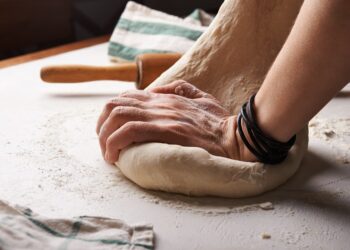
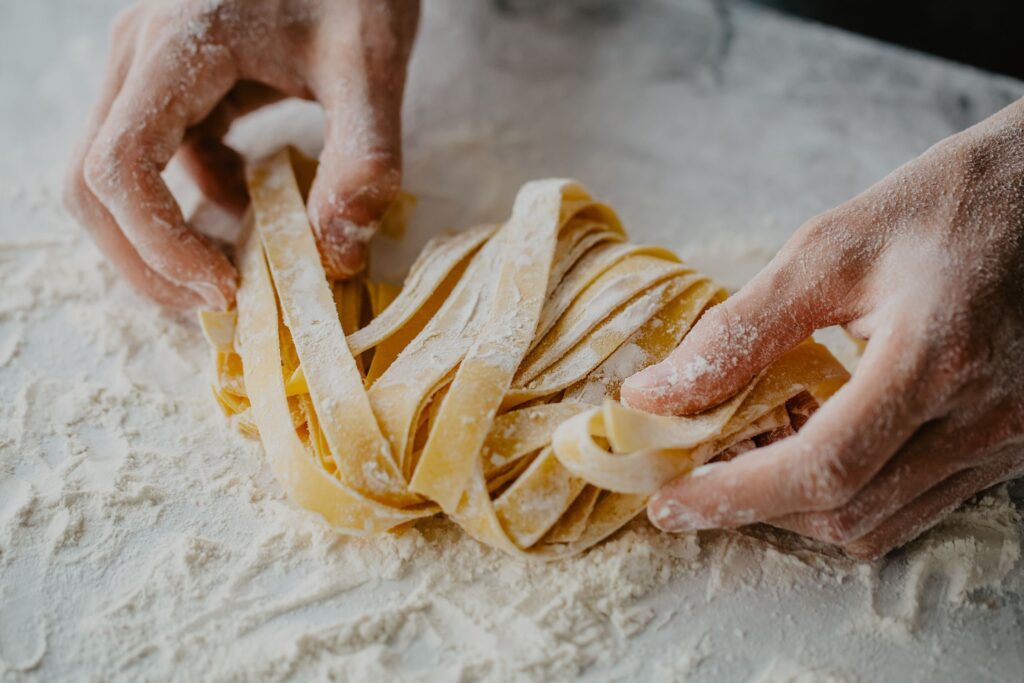
First, combine the 2 flours on a clean work surface. Create a well in the centre and add the eggs and salt. Next, use a fork to break the eggs and slowly incorporate the flour from the inside edge of the well. Then bring the mixture together with your hands and knead the dough for 8 to 10 minutes until it is smooth and elastic. Finally, wrap the dough tightly and allow it to rest at room temperature for 30 minutes before rolling.

Close-up of flour-dusted hands shaping long ribbons of fresh pasta on a floury work surface.

Why Is Resting the Dough So Important?

Resting is not optional. During kneading, the gluten network in the flour becomes tight and resistant. The dough needs time to relax so it can be rolled without tearing.

After 30 minutes of rest, the dough becomes much easier to work. It rolls evenly and holds its shape during cutting. Furthermore, a well-rested dough produces a better texture after cooking.

Global Voices. Local Webzines. Discover the WEBZINEworld Network.

A Pasta Maker Shares Her Approach

Giulia Ferretti, Culinary Instructor, Scuola di Pasta Artigianale, Bologna

“My students often arrive believing fresh pasta is difficult. They are wrong. The technique is simple once you understand the dough. I teach them to feel it, not measure it perfectly. The dough should be soft but not sticky. It should spring back slowly when pressed.”

“The most common mistake is adding too much flour when the dough feels soft. This makes the final pasta tough. I always say: trust the rest period. After 30 minutes, the dough transforms completely. Students who follow this step consistently produce better results from the very first session.”

A chef carefully tending slow braises in a heavy cocotte, demonstrating classical technique over low heat

6 slow-cooked braises from around the world

03/08/2026

Slow braises are among the most honest expressions of culinary culture. These 6 dishes, drawn from France, Morocco, Japan, Italy,...

Vendor wearing a green GrabFood apron prepares sauces at a busy market stall with colorful bottles in the foreground.

National Day dishes every table needs

02/08/2026

Singapore's National Day dishes are more than food. They carry 6 decades of shared history across Chinese, Malay, Indian, and...

-

A woman applies a thin layer of oil to a cast iron pan during the cast iron seasoning process in a home kitchen.

Cast iron seasoning: the complete guide

19/07/2026
A chef demonstrating knife skills while slicing fresh summer tomatoes on a wooden cutting board

Knife skills for summer produce prep

13/07/2026
A chef holds tongs over an open flame while charring summer peppers on a gas stovetop in a professional kitchen.

Summer peppers: char, peel, and use them

08/07/2026
A woman carefully assembling a cold noodle bowl with fresh vegetables and sesame dressing on a bright kitchen counter

Cold noodle bowl for hot summer days

03/07/2026
A woman scooping a bowl of homemade ice cream from a metal loaf pan in a bright kitchen

Homemade ice cream without a machine

28/06/2026
A woman carefully arranging ripe stone fruit at a summer farmers market, selecting the best peaches and plums for storage

Stone fruit storage tips for summer

18/06/2026
A chef carefully selects ripe tomato dishes ingredients at a Mediterranean summer market

Tomato dishes peak in August across Mediterranean

02/08/2026

August marks the true peak of tomato dishes across the Mediterranean, when heat, soil, and time produce fruit of exceptional...

Market vendor, a woman in a striped shirt looking at her phone while standing near piles of produce including garlic and ginger in a busy market stall.

Depachika gluten-free meals in Tokyo

01/08/2026

Tokyo's depachika basement halls combine Japanese craft and French-influenced presentation to offer some of the city's most beautiful ready-to-eat food....

Which Regional Italian Pasta Shapes Can You Make at Home?

Italy has more than 300 documented pasta shapes. Many belong to specific regions and pair best with local sauces. Here are 5 shapes that home cooks can make without specialist equipment.

  1. Tagliatelle (Emilia-Romagna): Roll the dough to about 2 mm thickness. Dust well with flour, fold loosely, and cut into strips 6 to 7 mm wide. Traditionally served with a slow-cooked meat sauce.
  2. Pappardelle (Tuscany): Use the same method as tagliatelle but cut strips 20 to 25 mm wide. The broad surface holds rich sauces such as wild boar or mushroom ragu.
  3. Maltagliati (Emilia-Romagna): Tear or cut the rolled dough into irregular triangles. The name means “badly cut.” Additionally, this shape works well with chunky bean soups.
  4. Orecchiette (Puglia): This southern Italian shape does not use egg. Use semolina flour and water only. Cut small pieces of dough and press each one forward with a thumb to create a small ear shape. Consequently, the hollow centre holds sauces like broccoli rabe and olive oil.
  5. Trofie (Liguria): Roll small pieces of dough between your palms to form thin, twisted shapes. Trofie is the traditional base for pesto alla Genovese, the classic basil and pine nut sauce from the Ligurian coast.
_regional Italian pasta shapes tagliatelle pappardelle semolina

How Do You Cook and Store Fresh Pasta Correctly?

Fresh pasta cooks much faster than dried pasta. In a large pot of generously salted boiling water, most shapes are ready in 2 to 4 minutes. Always taste the pasta 2 minutes after adding it to the water.

Do not cook fresh pasta at a very high boil. A steady simmer protects the delicate dough from breaking apart. Moreover, transfer the cooked pasta directly into the sauce rather than draining it in a colander. This preserves heat and allows the pasta to absorb the sauce more effectively.

To store uncooked fresh pasta, dust it well with semolina flour and place it in the freezer. Cook straight from frozen without defrosting. Fresh pasta keeps well in the freezer for up to 4 weeks.

Chefs & Creators

Glenn Verhasselt: 2 Michelin Stars Chef at 30

15/10/2025

Fresh Pasta Belongs on Every Home Cook’s Table

Fresh pasta is not a restaurant skill. It is a home tradition that any cook can learn. The dough needs only eggs and flour, 2 ingredients found in almost every kitchen. Indeed, the technique improves quickly with practice. Furthermore, each regional shape opens a new part of Italian food culture.

Start with tagliatelle or pappardelle, then explore the shapes of the south. In 2025, fresh pasta continues to connect people to a food tradition that has endured for centuries. Begin with 1 batch. Taste the difference. Share the experience at your table.

Further Reading about Fresh Pasta 

  • FAO: Culture and Food Traditions
  • Il Sole 24 Ore: Italy Tops Global Pasta Production and Exports
  • The Clever Carrot: Beginner’s Guide to Fresh Homemade Pasta Dough
author avatar
GUSTOwebzine
GUSTOwebzine is your international window on food culture: culinary lifestyle, trends, recipes and gastronomic stories for a global audience with a passion for exceptional taste.
See Full Bio
Tags: doughflourfresh pastaItalian Cuisineshapes
Previous Post

Allergen labels for gluten-free eating

Next Post

Korean BBQ Marinades: Bulgogi and Galbi

Related Posts

A woman applies a thin layer of oil to a cast iron pan during the cast iron seasoning process in a home kitchen.
Home Cooking Tips

Cast iron seasoning: the complete guide

19/07/2026
A chef demonstrating knife skills while slicing fresh summer tomatoes on a wooden cutting board
Home Cooking Tips

Knife skills for summer produce prep

13/07/2026
A chef holds tongs over an open flame while charring summer peppers on a gas stovetop in a professional kitchen.
Home Cooking Tips

Summer peppers: char, peel, and use them

08/07/2026
A woman carefully assembling a cold noodle bowl with fresh vegetables and sesame dressing on a bright kitchen counter
Home Cooking Tips

Cold noodle bowl for hot summer days

03/07/2026
A woman scooping a bowl of homemade ice cream from a metal loaf pan in a bright kitchen
Home Cooking Tips

Homemade ice cream without a machine

28/06/2026
Next Post
Korean BBQ grill

Korean BBQ Marinades: Bulgogi and Galbi

Comments 4

  1. NATHAN SCOTT says:
    3 months ago

    Decent guide overall. One thing worth flagging for anyone reading though, an Imperia machine is great but you really do not need one to start. I made pasta for years with just a rolling pin and a sharp knife, and honestly the hand-rolled texture absorbs sauce better than machine-rolled in my experience. The pici you briefly mentioned is also a fantastic beginner shape because it forgives uneven rolling.

    Reply
  2. Camille says:
    3 months ago

    Just tried this last weekend for the first time after years of being intimidated. Used the 50/50 mix of 00 and semolina you recommend and the difference in bite compared to my old all-purpose flour version was night and day. Pappardelle with mushroom ragu is now officially in my regular rotation.

    Reply
  3. Jack says:
    3 months ago

    Been making pappardelle every Sunday since lockdown and the semolina trick is real, gives that bite you just can’t get with all-purpose flour. One thing I’d add for anyone trying this for the first time, weigh your eggs because the size varies so much, especially with farm eggs. I usually aim for around 55g per egg and adjust the flour by feel after. Saves a lot of frustration when the dough turns out either gluey or crumbly.

    Reply
  4. Jemma Johnson says:
    3 months ago

    What I appreciate is that you actually talked about the eggless southern Italian doughs with just semolina and water, because so many guides treat fresh pasta as if it’s only the northern egg version. My mother in law from Puglia makes orecchiette by hand and the texture is completely different, more rustic and chewy. Saving this article to send to my husband who keeps insisting tagliatelle is the only real pasta.

    Reply

Leave a Reply Cancel reply

Your email address will not be published. Required fields are marked *

Truelang AI Translations Truelang AI Translations Truelang AI Translations
No Result
View All Result

Our Focus

GUSTOwebzine is your international window on food culture: culinary lifestyle, trends, recipes and gastronomic stories for a global audience with a passion for exceptional taste.

Our Readers

GUSTOwebzine addresses readers who engage with food culture at a high level: as culinary professionals, passionate home cooks, food entrepreneurs, and tastemakers in their communities.

Our Approach

Recipes, trends, and dining culture are integrated as context and indicators of creativity, identity, and the social forces shaping how the world eats, not standalone content.

Recent Post

  • Cold brew tea from four global traditions
  • 6 slow-cooked braises from around the world

© 2026 GUSTOwebzine by NOOR & NOOR — part of WEBZINE.world.

Welcome Back!

Login to your account below

Forgotten Password?

Retrieve your password

Please enter your username or email address to reset your password.

Log In
Manage Consent
To provide the best experiences, we use technologies like cookies to store and/or access device information. Consenting to these technologies will allow us to process data such as browsing behavior or unique IDs on this site. Not consenting or withdrawing consent, may adversely affect certain features and functions.
Functional Always active
The technical storage or access is strictly necessary for the legitimate purpose of enabling the use of a specific service explicitly requested by the subscriber or user, or for the sole purpose of carrying out the transmission of a communication over an electronic communications network.
Preferences
The technical storage or access is necessary for the legitimate purpose of storing preferences that are not requested by the subscriber or user.
Statistics
The technical storage or access that is used exclusively for statistical purposes. The technical storage or access that is used exclusively for anonymous statistical purposes. Without a subpoena, voluntary compliance on the part of your Internet Service Provider, or additional records from a third party, information stored or retrieved for this purpose alone cannot usually be used to identify you.
Marketing
The technical storage or access is required to create user profiles to send advertising, or to track the user on a website or across several websites for similar marketing purposes.
  • Manage options
  • Manage services
  • Manage {vendor_count} vendors
  • Read more about these purposes
View preferences
  • {title}
  • {title}
  • {title}
No Result
View All Result
  • Home
    • Our Authors
    • Subscribe for Free
    • Media Kit
    • Contact
    • Terms and Conditions
    • Cookie Policy
  • Discoveries
    • Chefs
  • Culinary Culture
  • Food & Drinks
  • Cooking Tips
    • Recipes
  • GUSTO Global
  • Insights
  • GUSTO Guide
    • Hotels Worldwide
    • Nightlife Worlwide
    • Restaurants Worldwide
    • Services Worldwide

© 2026 GUSTOwebzine by NOOR & NOOR — part of WEBZINE.world.

Not enough quota to unlock this post
Unlock left : 0
Are you sure want to cancel subscription?
Verified by MonsterInsights
enEnglishdeDeutschesEspañolfrFrançaisitItalianoja日本語nlNederlandszh中文
No results