CONTACT
  • Login
Upgrade
GUSTOwebzine
Advertisement
  • Home
    • Our Authors
    • Subscribe for Free
    • Media Kit
    • Contact
    • Terms and Conditions
    • Cookie Policy
  • Discoveries
    • Chefs
  • Culinary Culture
  • Food & Drinks
  • Cooking Tips
    • Recipes
  • GUSTO Global
  • Insights
  • GUSTO Guide
    • Hotels Worldwide
    • Nightlife Worlwide
    • Restaurants Worldwide
    • Services Worldwide
  • Home
    • Our Authors
    • Subscribe for Free
    • Media Kit
    • Contact
    • Terms and Conditions
    • Cookie Policy
  • Discoveries
    • Chefs
  • Culinary Culture
  • Food & Drinks
  • Cooking Tips
    • Recipes
  • GUSTO Global
  • Insights
  • GUSTO Guide
    • Hotels Worldwide
    • Nightlife Worlwide
    • Restaurants Worldwide
    • Services Worldwide
No Result
View All Result
GUSTOwebzine
No Result
View All Result
Home Culinary Culture

Why flatbreads appear in every food culture on earth

From a 14,400-year-old hearth in Jordan to a tortilla griddle in Mexico City, one simple form of bread connects all of humanity.

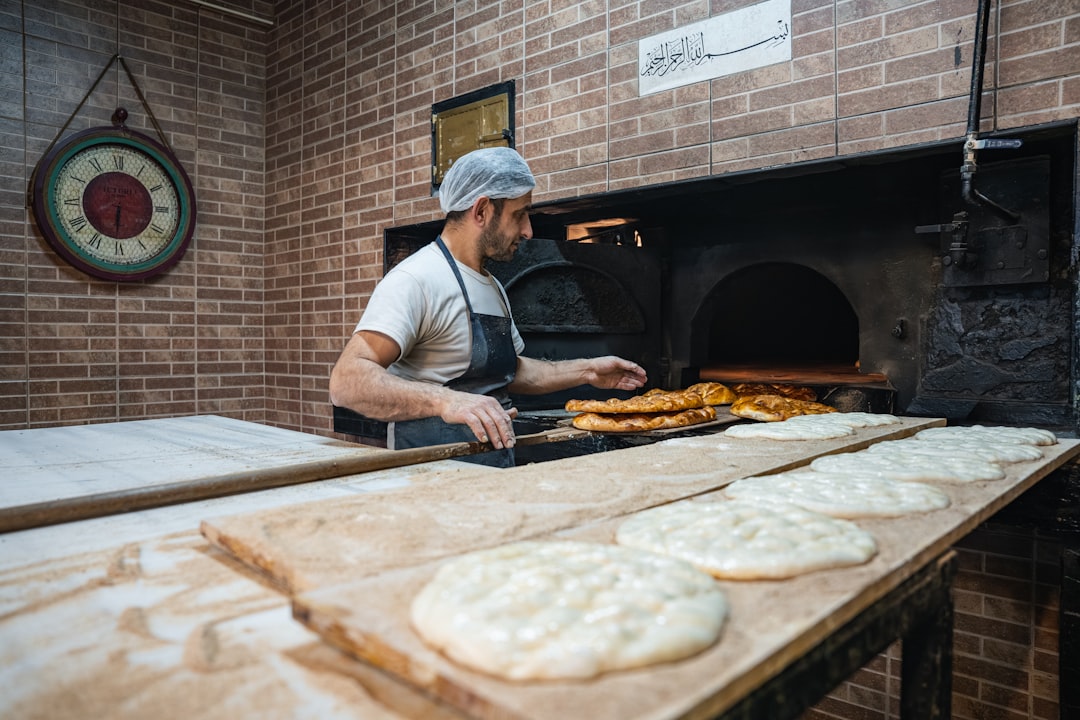
A man pressing flatbreads against the wall of a traditional clay oven, demonstrating the ancient craft of flatbread making.

Flatbreads carry a kind of quiet authority that no other food possesses: a thin, unassuming surface of grain and water that has fed every civilisation ever recorded.

The oldest food on the table

Researchers discovered the charred remains of a flatbread baked by hunter-gatherers 14,400 years ago at an archaeological site in northeastern Jordan. This is the oldest direct evidence of bread found to date, predating the advent of agriculture by at least 4,000 years. That single discovery rewrites the story of human cooking. It tells us that flatbreads did not wait for agriculture to exist. Instead, the desire to transform grain into something finer may have created agriculture itself.

The findings suggest that bread production based on wild cereals may have encouraged hunter-gatherers to cultivate cereals, and thus contributed to the agricultural revolution in the Neolithic period. The 24 remains analysed in this study show that wild ancestors of domesticated cereals such as barley, einkorn, and oat had been ground, sieved, and kneaded prior to cooking. The precision of that process is remarkable. These were not accidental cooks. They were craftspeople.

GUSTO guide worldwide restaurants, hotels, nightlife, professional services GUSTO guide worldwide restaurants, hotels, nightlife, professional services GUSTO guide worldwide restaurants, hotels, nightlife, professional services

Food historians argue that flatbread should be considered the original processed meal, because it marks the first instance of human technology being used to drastically alter the physical state of a foodstuff. Before the sauce, before the spit, before the refined stock, there was dough pressed flat against a stone.

How flatbreads reached every corner of the world

Flatbreads developed independently in several geographical areas: the Fertile Crescent, sub-Saharan Africa, Ethiopia, China, New Guinea, Mesoamerica, Amazonia, the Andes, and the eastern United States. This is not a story of one recipe travelling the globe. It is a story of independent discovery, repeated in parallel by cultures with no contact with each other, because the logic of the flatbread is irresistible.

Wherever you travel in the world, someone is making flatbread. That is because flatbread is a quick, simple way to turn flour into bread. Food historians believe that the custom of eating flatbread was spread in part by ancient nomads, because it could be prepared quickly over a fire while on the move. What makes a flatbread unique to a culture comes down to ingredients, kneading technique, leavening or the absence of it, shaping, and the way the bread is cooked.

Flatbread is part of almost every culture: tortillas in Mexico, oatcakes in Scotland, chapati and naan in India, a wide variety of breads in China, flattbrod in Norway, injera in Ethiopia, matzoh in Israel, and pita in the Middle East. Each one is a distinct response to local grain, local fire, and local need. Each one is also a masterclass in simplicity.

Flatbreads as social and ritual objects

A flatbread is never only food. The culture of making and sharing flatbread in communities of Azerbaijan, Iran, Kazakhstan, Kyrgyzstan, and Turkey carries social functions that have enabled it to continue as a widely practised tradition. Besides regular meals, flatbread is shared at weddings, births, funerals, various holidays, and during prayers. In Azerbaijan and Iran, it is placed on the bride’s shoulders or crumbled over her head to wish the couple prosperity, while in Turkey it is given to the couple’s neighbours.

Injera, a fermented flatbread made from teff, an ancient grain cultivated for over 3,000 years in the Ethiopian highlands, is both plate and food. The communal dining practice it supports, with multiple people eating together from a single shared injera, reflects cultural values of equality and togetherness that are inseparable from the food itself. In Ethiopia, the flatbread does not simply accompany the meal. It is the meal, the vessel, and the table at once.

Casabe, an indigenous flatbread made from cassava root, was recently recognised by UNESCO as part of its Intangible Cultural Heritage list. This followed a collaborative nomination from several Caribbean nations, including Venezuela, Cuba, the Dominican Republic, Haiti, and Honduras. Every continent now holds at least 1 example of a flatbread elevated to the status of shared human heritage.


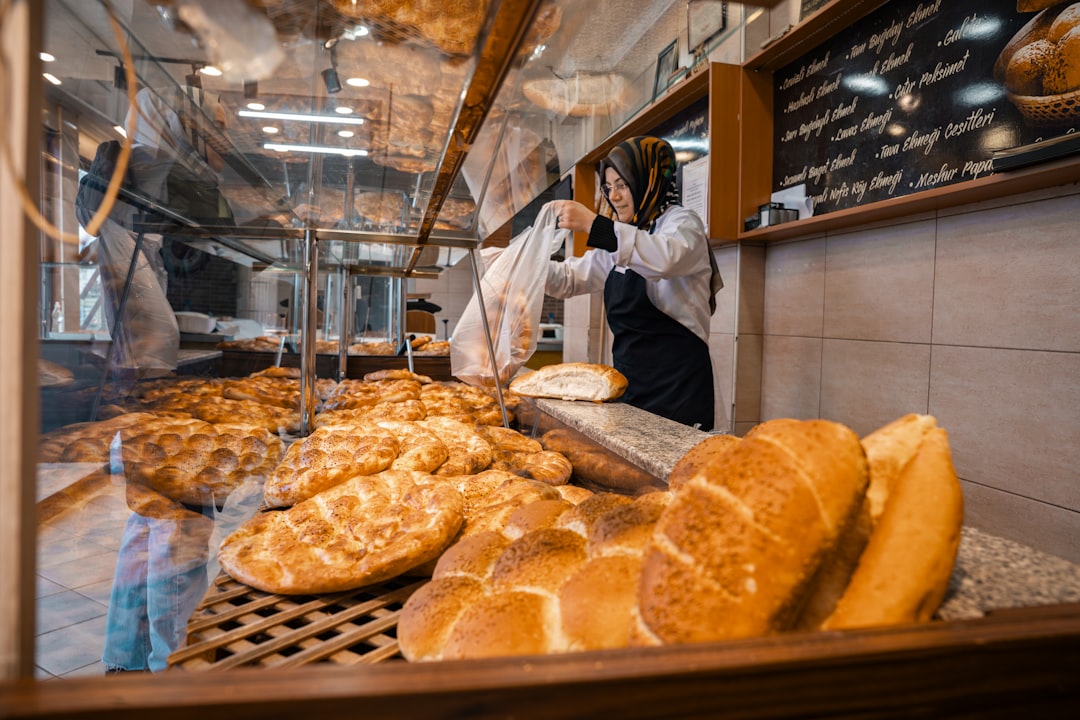
a turkish baker woman in the baker shop with flat breads

-

A woman grinding fresh cilantro and parsley in a mortar while preparing Moroccan chermoula from scratch

How to make Moroccan chermoula from scratch

21/07/2026
A chef carefully pouring chilled soups into a white bowl in a professional kitchen

This 6 chilled soups are worth making this season

17/07/2026
A spice vendor in Marrakech souk surrounded by colorful Moroccan cuisine ingredients

Moroccan cuisine: best dishes and flavors

15/07/2026
A woman carefully ladling street food pho broth into a bowl at a home kitchen counter

Street food classics from Southeast Asia

12/07/2026
A fisherman presenting a fresh catch at a coastal market, representing the seasonal freshness at the heart of coastal cuisine

Coastal cuisine lighter in midsummer

11/07/2026
A professional chef stirs a deep pot of Neapolitan ragù over a low flame in a traditional kitchen

Neapolitan ragù: the classic slow recipe

07/07/2026

An expert perspective on flatbreads

The persistence of the flatbread across every food culture on earth speaks to something deeper than necessity. Grain, water, and heat produce an almost infinite range of results depending on the hands involved, the stone or steel beneath the dough, and the ambient knowledge of the maker. The technique itself is not simple: the pressure of the hand, the temperature of the surface, the thickness of the roll, and the timing of the turn all require judgment that takes years to refine. What we see today in the growing global appreciation of traditional flatbreads is not nostalgia. It is the recognition that these products encode some of the most sophisticated food knowledge our species has ever produced, knowledge that resisted standardisation precisely because it lived in the body and not on the page.

Industry perspective, culinary heritage and grain culture professionals

The craft behind the form

Romans made panis focacius, a flatbread topped with cheese and vegetables. These simple recipes evolved as ingredients and cooking methods spread across regions, highlighting the fluid nature of culinary traditions. The flatbread has always absorbed its environment. It does not impose. It adapts.

South Asia is home to roti and chapati, whole wheat flatbreads used to dip into stews and curries. In Ethiopia, sour injera bread serves as the base of nearly every meal, acting as a kind of edible platter with multiple dishes piled on top. On the Italian island of Sardinia, pane carasau is so thin and crunchy that locals sometimes refer to it as “carta musica,” meaning music paper. Each variation reflects a specific climate, a specific grain harvest, a specific fire. The form is universal. The result is always local.

The making and sharing culture surrounding flatbread was added to the UNESCO Intangible Cultural Heritage list in 2015. Flatbread dough is always prepared from simple ingredients: wheat flour, water, and salt. Three ingredients. Thousands of results. This is the precision of restraint.
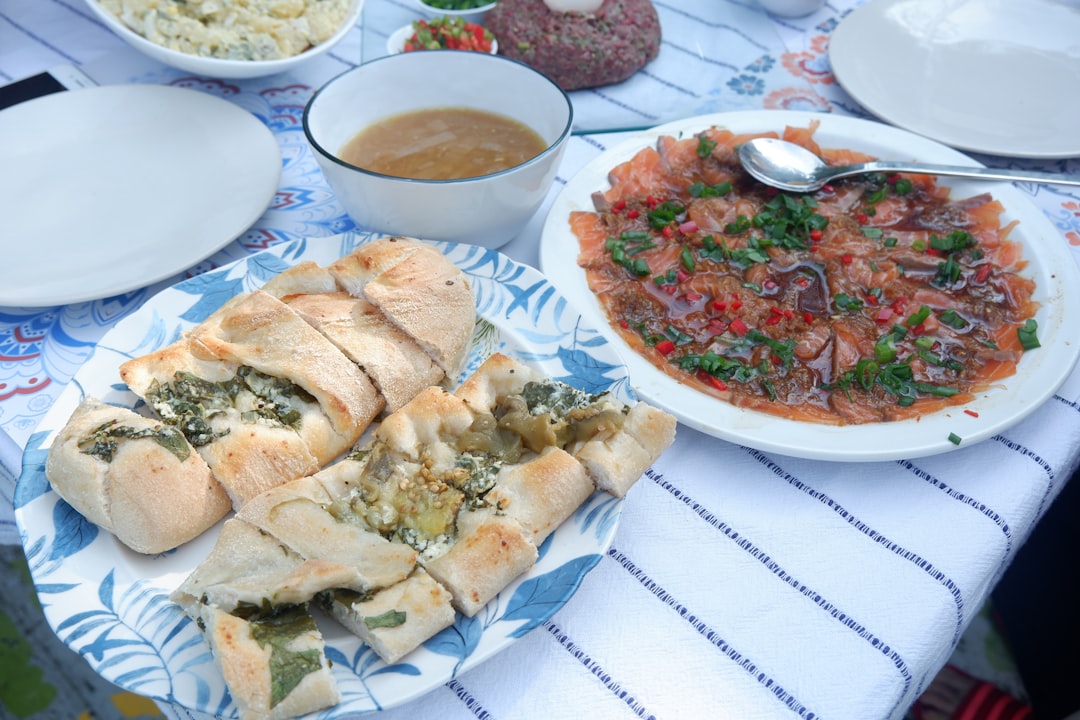
the communal values embedded in flatbread culture across the globe.

Why flatbreads will always matter

Flatbreads are not a trend. They are the most durable culinary form the world has ever produced, and their presence in nearly every food culture on earth is not coincidence. It is evidence of the universal human desire to refine the simplest of materials into something nourishing and beautiful. Flatbreads deserve the attention of any serious student of food, not as a curiosity, but as the original language of the kitchen. To study flatbreads is to study the full arc of human cooking: the grain, the heat, the hand, and the table they bring people to. In this precise simplicity, flatbreads remain as relevant today as they were 14,400 years ago.

Discover more about flatbreads

  • UNESCO Intangible Cultural Heritage: Flatbread making and sharing culture
  • Proceedings of the National Academy of Sciences: Archaeobotanical evidence reveals the origins of bread 14,400 years ago in northeastern Jordan
  • NPR: Cassava bread is named a cultural heritage of humanity (December 2024)

author avatar
Claire Beaumont
Claire Beaumont grew up in Lyon's bouchon culture, where Sunday lunches lasted three hours and every dish told a story. She trained at Institut Paul Bocuse before turning to food writing, covering classical French technique, regional produce, and Europe's evolving restaurant scene. Her work is elegant, precise, and always deeply rooted in the craft behind the plate.
See Full Bio
Previous Post

Moroccan cuisine: best dishes and flavors

Next Post

Belgian brewing industry sounds alarm

Related Posts

A woman grinding fresh cilantro and parsley in a mortar while preparing Moroccan chermoula from scratch
Culinary Culture

How to make Moroccan chermoula from scratch

21/07/2026
A chef carefully pouring chilled soups into a white bowl in a professional kitchen
Culinary Culture

This 6 chilled soups are worth making this season

17/07/2026
A spice vendor in Marrakech souk surrounded by colorful Moroccan cuisine ingredients
Culinary Culture

Moroccan cuisine: best dishes and flavors

15/07/2026
A woman carefully ladling street food pho broth into a bowl at a home kitchen counter
Culinary Culture

Street food classics from Southeast Asia

12/07/2026
A fisherman presenting a fresh catch at a coastal market, representing the seasonal freshness at the heart of coastal cuisine
Culinary Culture

Coastal cuisine lighter in midsummer

11/07/2026
Next Post
Belgian brewers at work inside a traditional brewery, representing the pressured Belgian brewing industry

Belgian brewing industry sounds alarm

Leave a Reply Cancel reply

Your email address will not be published. Required fields are marked *

Truelang AI Translations Truelang AI Translations Truelang AI Translations
No Result
View All Result

Our Focus

GUSTOwebzine is your international window on food culture: culinary lifestyle, trends, recipes and gastronomic stories for a global audience with a passion for exceptional taste.

Our Readers

GUSTOwebzine addresses readers who engage with food culture at a high level: as culinary professionals, passionate home cooks, food entrepreneurs, and tastemakers in their communities.

Our Approach

Recipes, trends, and dining culture are integrated as context and indicators of creativity, identity, and the social forces shaping how the world eats, not standalone content.

Recent Post

  • Rooftop dining in NYC worth booking now
  • Japanese food labels: hidden gluten guide

© 2026 GUSTOwebzine by NOOR & NOOR — part of WEBZINE.world.

Welcome Back!

Login to your account below

Forgotten Password?

Retrieve your password

Please enter your username or email address to reset your password.

Log In
Manage Consent
To provide the best experiences, we use technologies like cookies to store and/or access device information. Consenting to these technologies will allow us to process data such as browsing behavior or unique IDs on this site. Not consenting or withdrawing consent, may adversely affect certain features and functions.
Functional Always active
The technical storage or access is strictly necessary for the legitimate purpose of enabling the use of a specific service explicitly requested by the subscriber or user, or for the sole purpose of carrying out the transmission of a communication over an electronic communications network.
Preferences
The technical storage or access is necessary for the legitimate purpose of storing preferences that are not requested by the subscriber or user.
Statistics
The technical storage or access that is used exclusively for statistical purposes. The technical storage or access that is used exclusively for anonymous statistical purposes. Without a subpoena, voluntary compliance on the part of your Internet Service Provider, or additional records from a third party, information stored or retrieved for this purpose alone cannot usually be used to identify you.
Marketing
The technical storage or access is required to create user profiles to send advertising, or to track the user on a website or across several websites for similar marketing purposes.
  • Manage options
  • Manage services
  • Manage {vendor_count} vendors
  • Read more about these purposes
View preferences
  • {title}
  • {title}
  • {title}
No Result
View All Result
  • Home
    • Our Authors
    • Subscribe for Free
    • Media Kit
    • Contact
    • Terms and Conditions
    • Cookie Policy
  • Discoveries
    • Chefs
  • Culinary Culture
  • Food & Drinks
  • Cooking Tips
    • Recipes
  • GUSTO Global
  • Insights
  • GUSTO Guide
    • Hotels Worldwide
    • Nightlife Worlwide
    • Restaurants Worldwide
    • Services Worldwide

© 2026 GUSTOwebzine by NOOR & NOOR — part of WEBZINE.world.

Not enough quota to unlock this post
Unlock left : 0
Are you sure want to cancel subscription?
Verified by MonsterInsights
enEnglishdeDeutschesEspañolfrFrançaisitItalianoja日本語nlNederlandszh中文
No results