CONTACT
  • Login
Upgrade
GUSTOwebzine
Advertisement
  • Home
    • Our Authors
    • Subscribe for Free
    • Media Kit
    • Contact
    • Terms and Conditions
    • Cookie Policy
  • Discoveries
    • Chefs
  • Culinary Culture
  • Food & Drinks
  • Cooking Tips
    • Recipes
  • GUSTO Global
  • Insights
  • GUSTO Guide
    • Hotels Worldwide
    • Nightlife Worlwide
    • Restaurants Worldwide
    • Services Worldwide
  • Home
    • Our Authors
    • Subscribe for Free
    • Media Kit
    • Contact
    • Terms and Conditions
    • Cookie Policy
  • Discoveries
    • Chefs
  • Culinary Culture
  • Food & Drinks
  • Cooking Tips
    • Recipes
  • GUSTO Global
  • Insights
  • GUSTO Guide
    • Hotels Worldwide
    • Nightlife Worlwide
    • Restaurants Worldwide
    • Services Worldwide
No Result
View All Result
GUSTOwebzine
No Result
View All Result
Home Home Cooking Tips

Fermented vegetables: pickling and preserving

Discover fermented vegetables, traditional pickling methods, and practical preserving tips that improve flavour, texture, and shelf life.

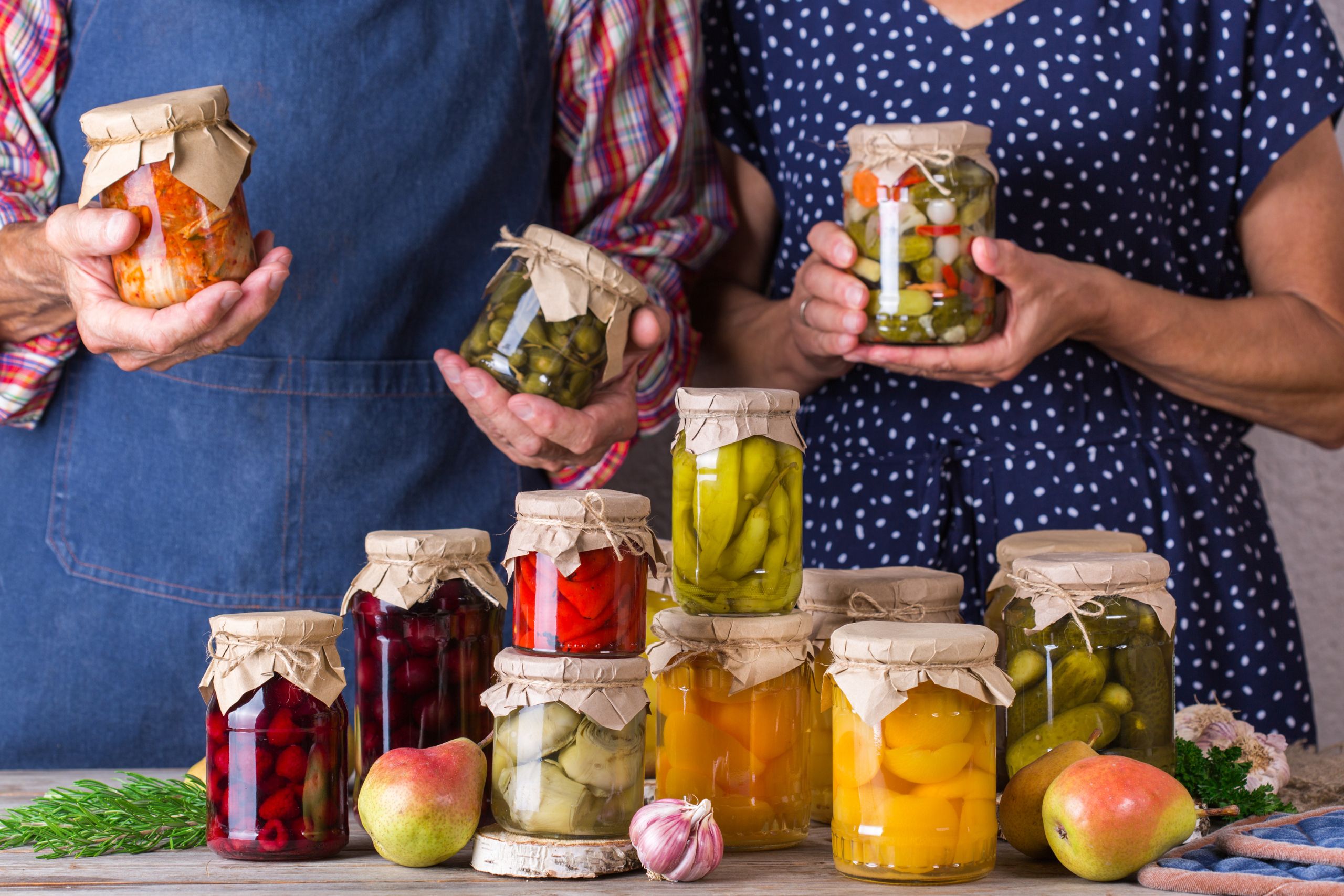
man and woman present fermented vegetables pots

The scent of cabbage slowly transforming in a ceramic crock remains one of Europe’s oldest kitchen traditions. Fermented vegetables connect preservation with flavour in a way few techniques can match. Moreover, fermented vegetables bring depth, texture, and complexity to everyday cooking. From French choucroute to Eastern European pickles, generations of cooks have relied on fermentation to extend seasonal harvests while creating distinctive flavours that continue to inspire modern kitchens.

Why fermented vegetables remain essential

For centuries, families preserved vegetables long before refrigeration became common. First, fermentation offered a practical solution for seasonal abundance. Cabbage, cucumbers, carrots, and turnips could remain usable for months when handled correctly.

Furthermore, fermentation creates new flavours through natural microbial activity. Lactic acid bacteria transform sugars into acids that protect the ingredient while developing complexity. As a result, vegetables gain a pleasant acidity and a richer texture.

GUSTO guide worldwide restaurants, hotels, nightlife, professional services GUSTO guide worldwide restaurants, hotels, nightlife, professional services GUSTO guide worldwide restaurants, hotels, nightlife, professional services

Traditional European regions still celebrate these methods. In Alsace, fermented cabbage remains central to local cuisine. Similarly, many Central European kitchens continue to prepare seasonal pickles using techniques passed between generations.

Discoveries

Chef & Knife: from Garage to Culinary Hub

21/11/2025

Understanding the fermentation process

Successful fermentation begins with simplicity. Salt, vegetables, water, and time create the ideal environment for beneficial bacteria. The process requires patience rather than complicated equipment.

For instance, a basic cabbage fermentation uses approximately 2 percent salt by weight. The salt draws moisture from the vegetable and creates a protective brine. Consequently, harmful microorganisms struggle to develop while beneficial bacteria flourish.

Temperature also influences the final result. Most fermented vegetables perform best between 18°C and 22°C. Higher temperatures accelerate fermentation but may soften texture. Meanwhile, cooler conditions produce a slower and often more refined flavour.

Global Voices. Local Webzines. Discover the WEBZINEworld Network.

Choosing the right vegetables for preservation

Not every ingredient reacts identically to fermentation. However, several vegetables consistently deliver excellent results. Cabbage remains the classical choice because of its natural sugar content and firm structure.

Additionally, cucumbers create crisp fermented pickles when submerged completely in brine. Carrots develop sweetness alongside acidity, while radishes gain surprising complexity after several days.


-

A woman applies a thin layer of oil to a cast iron pan during the cast iron seasoning process in a home kitchen.

Cast iron seasoning: the complete guide

19/07/2026
A chef demonstrating knife skills while slicing fresh summer tomatoes on a wooden cutting board

Knife skills for summer produce prep

13/07/2026
A chef holds tongs over an open flame while charring summer peppers on a gas stovetop in a professional kitchen.

Summer peppers: char, peel, and use them

08/07/2026
A woman carefully assembling a cold noodle bowl with fresh vegetables and sesame dressing on a bright kitchen counter

Cold noodle bowl for hot summer days

03/07/2026
A woman scooping a bowl of homemade ice cream from a metal loaf pan in a bright kitchen

Homemade ice cream without a machine

28/06/2026
A woman carefully arranging ripe stone fruit at a summer farmers market, selecting the best peaches and plums for storage

Stone fruit storage tips for summer

18/06/2026

Seasonality matters greatly. Fresh vegetables contain stronger cellular structure and more natural sugars. Therefore, local produce harvested at peak maturity generally creates superior fermented vegetables.

Many European cooks also combine ingredients. Cabbage may include juniper berries, caraway seeds, or garlic. These additions contribute aroma without overwhelming the primary ingredient.
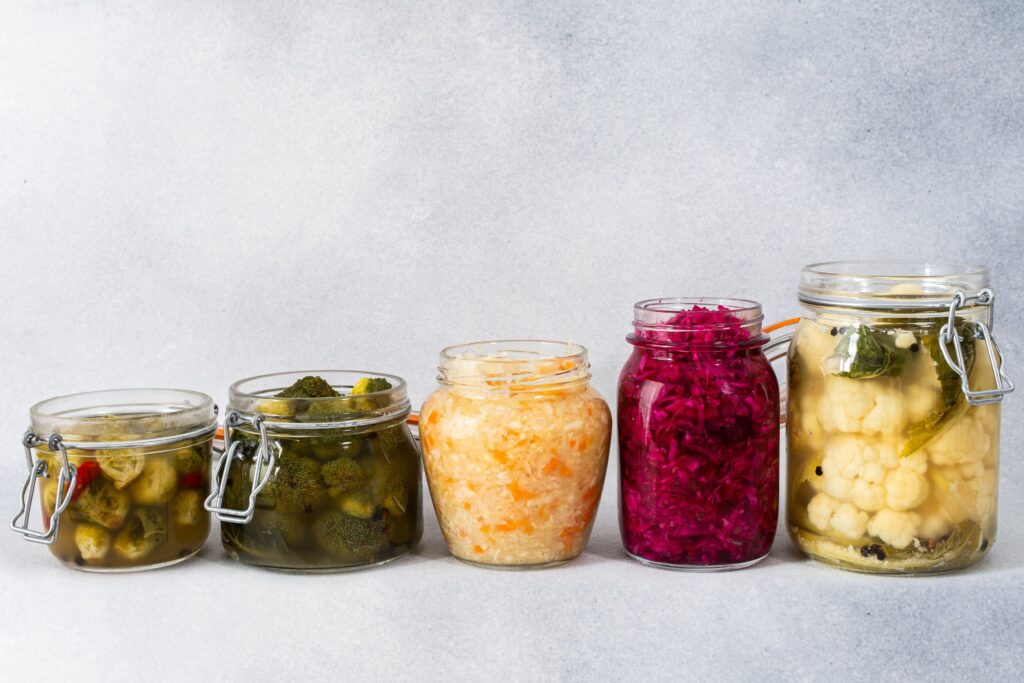

Traditional fermented vegetables in a ceramic crock with fresh cabbage and herbs

A culinary perspective on modern fermentation

Industry perspective, culinary professionals in Europe:

“Many chefs have returned to fermentation because it creates flavour without excessive intervention. Fermented vegetables introduce acidity, depth, and texture naturally. Additionally, fermentation helps kitchens reduce seasonal waste. The technique supports both creativity and sustainability.”

“Current restaurant menus increasingly feature house-fermented ingredients. Guests appreciate authentic craft and traditional preservation methods. Moreover, fermentation continues to inspire new interpretations of classical European cuisine.”

A chef carefully tending slow braises in a heavy cocotte, demonstrating classical technique over low heat

6 slow-cooked braises from around the world

03/08/2026

Slow braises are among the most honest expressions of culinary culture. These 6 dishes, drawn from France, Morocco, Japan, Italy,...

Vendor wearing a green GrabFood apron prepares sauces at a busy market stall with colorful bottles in the foreground.

National Day dishes every table needs

02/08/2026

Singapore's National Day dishes are more than food. They carry 6 decades of shared history across Chinese, Malay, Indian, and...

Practical pickling and preservation tips

Many beginners confuse pickling with fermentation. However, the two methods differ significantly. Traditional pickling often uses vinegar directly. Fermentation creates acidity naturally through bacterial activity.

First, always use clean containers. Good hygiene supports stable fermentation and reduces unwanted contamination. Glass jars and ceramic crocks remain reliable options.

Next, keep vegetables fully submerged beneath the brine. Exposure to air may encourage unwanted surface growth. Therefore, fermentation weights or clean cabbage leaves often help maintain coverage.

Taste frequently after the first few days. Some cooks prefer mild acidity, while others seek deeper flavour. Fermentation allows flexibility because the process evolves gradually.

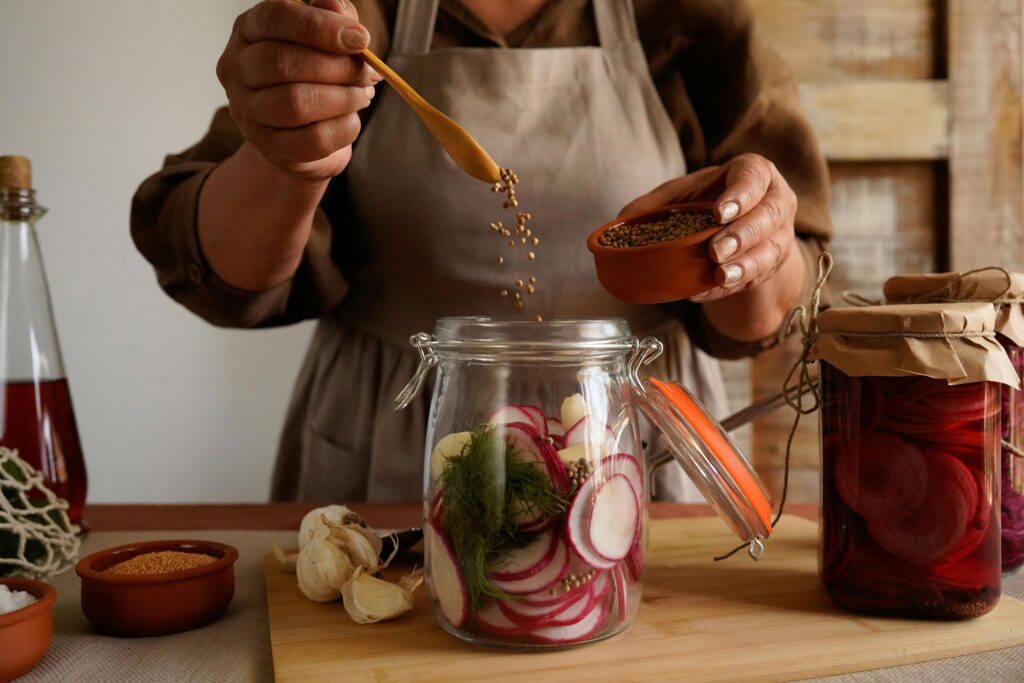
European kitchen preparing fermented vegetables with salt brine and seasonal produce

Fermented vegetables in contemporary cooking

Modern chefs increasingly incorporate fermented vegetables into everyday dishes. Their acidity balances rich meats, creamy sauces, and roasted ingredients. Consequently, fermentation fits naturally into both traditional and contemporary cuisine.

For example, fermented carrots add brightness to grain bowls and salads. Sauerkraut complements pork and sausages, while fermented cucumbers enhance sandwiches and cold platters.

Furthermore, many cooks appreciate fermentation as a sustainable practice. Seasonal vegetables gain extended usefulness without energy-intensive preservation methods. This approach reflects a growing interest in reducing waste while preserving culinary heritage.


Lorem ipsum dolor sit amet, consectetur adipiscing elit. Ut elit tellus, luctus nec ullamcorper mattis, pulvinar dapibus leo.

Chefs & Creators

Floris Van Der Veken: from a late calling to ‘Hof van Cleve’

30/11/2025

Learn more about fermented vegetables

  • FAO: Fermented Fruits and Vegetables
  • Fermented Food Market Report
  • How Your Gut Changes When You Eat One Fermented Food a Day
author avatar
GUSTOwebzine
GUSTOwebzine is your international window on food culture: culinary lifestyle, trends, recipes and gastronomic stories for a global audience with a passion for exceptional taste.
See Full Bio
Previous Post

Seasonal menu planning for restaurants

Next Post

Mixology training for restaurant success

Related Posts

A woman applies a thin layer of oil to a cast iron pan during the cast iron seasoning process in a home kitchen.
Home Cooking Tips

Cast iron seasoning: the complete guide

19/07/2026
A chef demonstrating knife skills while slicing fresh summer tomatoes on a wooden cutting board
Home Cooking Tips

Knife skills for summer produce prep

13/07/2026
A chef holds tongs over an open flame while charring summer peppers on a gas stovetop in a professional kitchen.
Home Cooking Tips

Summer peppers: char, peel, and use them

08/07/2026
A woman carefully assembling a cold noodle bowl with fresh vegetables and sesame dressing on a bright kitchen counter
Home Cooking Tips

Cold noodle bowl for hot summer days

03/07/2026
A woman scooping a bowl of homemade ice cream from a metal loaf pan in a bright kitchen
Home Cooking Tips

Homemade ice cream without a machine

28/06/2026
Next Post
A skilled bartender demonstrating mixology training techniques while preparing a craft cocktail at a restaurant bar

Mixology training for restaurant success

Leave a Reply Cancel reply

Your email address will not be published. Required fields are marked *

Truelang AI Translations Truelang AI Translations Truelang AI Translations
No Result
View All Result

Our Focus

GUSTOwebzine is your international window on food culture: culinary lifestyle, trends, recipes and gastronomic stories for a global audience with a passion for exceptional taste.

Our Readers

GUSTOwebzine addresses readers who engage with food culture at a high level: as culinary professionals, passionate home cooks, food entrepreneurs, and tastemakers in their communities.

Our Approach

Recipes, trends, and dining culture are integrated as context and indicators of creativity, identity, and the social forces shaping how the world eats, not standalone content.

Recent Post

  • Cold brew tea from four global traditions
  • 6 slow-cooked braises from around the world

© 2026 GUSTOwebzine by NOOR & NOOR — part of WEBZINE.world.

Welcome Back!

Login to your account below

Forgotten Password?

Retrieve your password

Please enter your username or email address to reset your password.

Log In
Manage Consent
To provide the best experiences, we use technologies like cookies to store and/or access device information. Consenting to these technologies will allow us to process data such as browsing behavior or unique IDs on this site. Not consenting or withdrawing consent, may adversely affect certain features and functions.
Functional Always active
The technical storage or access is strictly necessary for the legitimate purpose of enabling the use of a specific service explicitly requested by the subscriber or user, or for the sole purpose of carrying out the transmission of a communication over an electronic communications network.
Preferences
The technical storage or access is necessary for the legitimate purpose of storing preferences that are not requested by the subscriber or user.
Statistics
The technical storage or access that is used exclusively for statistical purposes. The technical storage or access that is used exclusively for anonymous statistical purposes. Without a subpoena, voluntary compliance on the part of your Internet Service Provider, or additional records from a third party, information stored or retrieved for this purpose alone cannot usually be used to identify you.
Marketing
The technical storage or access is required to create user profiles to send advertising, or to track the user on a website or across several websites for similar marketing purposes.
  • Manage options
  • Manage services
  • Manage {vendor_count} vendors
  • Read more about these purposes
View preferences
  • {title}
  • {title}
  • {title}
No Result
View All Result
  • Home
    • Our Authors
    • Subscribe for Free
    • Media Kit
    • Contact
    • Terms and Conditions
    • Cookie Policy
  • Discoveries
    • Chefs
  • Culinary Culture
  • Food & Drinks
  • Cooking Tips
    • Recipes
  • GUSTO Global
  • Insights
  • GUSTO Guide
    • Hotels Worldwide
    • Nightlife Worlwide
    • Restaurants Worldwide
    • Services Worldwide

© 2026 GUSTOwebzine by NOOR & NOOR — part of WEBZINE.world.

Not enough quota to unlock this post
Unlock left : 0
Are you sure want to cancel subscription?
Verified by MonsterInsights
enEnglishdeDeutschesEspañolfrFrançaisitItalianoja日本語nlNederlandszh中文
No results