CONTACT
  • Login
Upgrade
GUSTOwebzine
Advertisement
  • Home
    • Our Authors
    • Subscribe for Free
    • Media Kit
    • Contact
    • Terms and Conditions
    • Cookie Policy
  • Discoveries
    • Chefs
  • Culinary Culture
  • Food & Drinks
  • Cooking Tips
    • Recipes
  • GUSTO Global
  • Insights
  • GUSTO Guide
    • Hotels Worldwide
    • Nightlife Worlwide
    • Restaurants Worldwide
    • Services Worldwide
  • Home
    • Our Authors
    • Subscribe for Free
    • Media Kit
    • Contact
    • Terms and Conditions
    • Cookie Policy
  • Discoveries
    • Chefs
  • Culinary Culture
  • Food & Drinks
  • Cooking Tips
    • Recipes
  • GUSTO Global
  • Insights
  • GUSTO Guide
    • Hotels Worldwide
    • Nightlife Worlwide
    • Restaurants Worldwide
    • Services Worldwide
No Result
View All Result
GUSTOwebzine
No Result
View All Result
Home Home Cooking Tips

Knife skills for summer produce prep

Master these 6 techniques to cut faster, stay safe, and get the most from every piece of summer produce.

A chef demonstrating knife skills while slicing fresh summer tomatoes on a wooden cutting board

Knife skills matter most when summer markets overflow with tomatoes, melons, corn, peppers, avocados, and fresh herbs that all demand different approaches at the cutting board.

Keep your blade sharp

A sharp blade is the first requirement of good knife skills. A sharp knife is a safe knife. When blades are sharp, they move through food with minimal effort, reducing the chance of slips. This sounds counterintuitive, but the risk goes up when a blade is dull. Dull knives struggle to grip whatever you are chopping without extra force, and that means the knife is more likely to slip off a carrot or tomato.

Test sharpness on a ripe tomato. You can check whether your knife is sharp if it moves through a tomato with no resistance. If it crushes the skin instead of slicing it, stop and sharpen before you continue. Restaurant cooks may need to sharpen blades as often as once a month, while home cooks should aim for every 3 to 6 months depending on how much they use their knives.

GUSTO guide worldwide restaurants, hotels, nightlife, professional services GUSTO guide worldwide restaurants, hotels, nightlife, professional services GUSTO guide worldwide restaurants, hotels, nightlife, professional services

Use a honing rod between sharpening sessions to keep the edge aligned. Regularly hone your knife’s edge with a honing rod to keep it aligned. When the blade gets dull, sharpen it with a sharpening stone or a professional service.

Use the right knife for each produce

There is no 1 universal knife that works for the full range of cutting tasks. Selecting the correct tool reduces effort and improves safety. Use your chef’s knife for chopping, slicing, dicing, and mincing. Use your paring knife for peeling and detail-oriented work.

For summer produce specifically, the serrated knife solves a common problem. For slicing tomatoes in a caprese salad or for sandwiches, use a serrated knife. The teeth of the serrated knife break through the skin cleanly, and your slices stay intact with less mess.

Similarly, for large fruit and vegetables such as cabbage or melon, reach for a cleaver. Cut the produce into halves or quarters with the cleaver, then finish with a chef’s knife.

Master the pinch grip and claw hand

Technique separates a fast, controlled cook from a slow, risky one. 2 specific hand positions deliver both speed and safety. First, the pinch grip. With this technique, your index finger and thumb pinch the base of the blade above where it meets the handle, while the other fingers wrap around the top half of the handle. The pinch grip gives you the most control, precision, and safety. It places your hand closer to the middle of the knife, providing a more balanced feel.

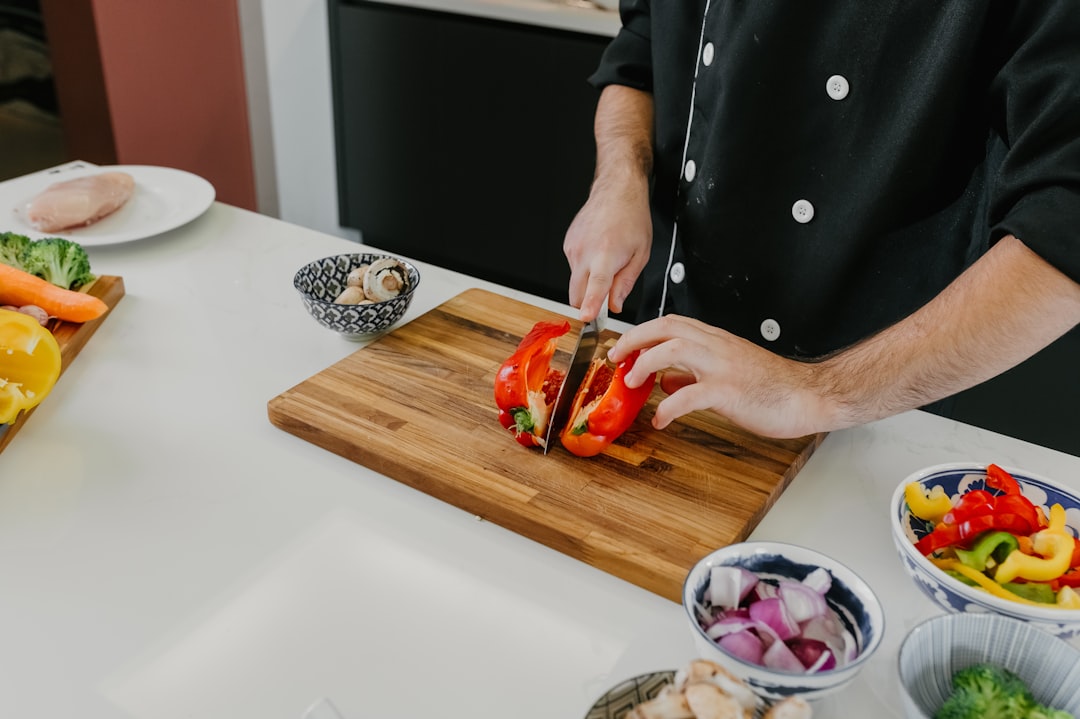
Second, protect your guiding hand with the claw technique. Curl your fingers under and use your knuckles as a guide to keep the blade away from them while cutting. This claw grip reduces the risk of cutting your fingertips.

Together, these 2 grips form the core of safe, efficient knife skills. With strong cutting technique, ingredients will be uniform, which translates to even cooking and professional presentation. Cooks can also work faster, more safely, and in a way that reduces physical discomfort.
A home cook using the claw hand technique to practise knife skills while cutting summer produce

What culinary professionals say about knife skills

Learning proper knife technique is not simply about speed. It is about building a physical relationship with your tools that becomes automatic over time. Home cooks often focus on recipes and ingredients, but they overlook the fact that every dish starts with a cut. When you understand how to grip a knife, how to create a stable surface, and how to let the blade do the work rather than forcing it, your cooking transforms. You waste less produce, your results are more consistent, and your kitchen becomes a calmer, safer environment. The investment in learning these fundamentals pays back with every meal you prepare, whether you are slicing tomatoes for a simple salad or breaking down a whole melon for a fruit platter.

Industry perspective, culinary arts and food education professionals

-

A woman applies a thin layer of oil to a cast iron pan during the cast iron seasoning process in a home kitchen.

Cast iron seasoning: the complete guide

19/07/2026
A chef holds tongs over an open flame while charring summer peppers on a gas stovetop in a professional kitchen.

Summer peppers: char, peel, and use them

08/07/2026
A woman carefully assembling a cold noodle bowl with fresh vegetables and sesame dressing on a bright kitchen counter

Cold noodle bowl for hot summer days

03/07/2026
A woman scooping a bowl of homemade ice cream from a metal loaf pan in a bright kitchen

Homemade ice cream without a machine

28/06/2026
A woman carefully arranging ripe stone fruit at a summer farmers market, selecting the best peaches and plums for storage

Stone fruit storage tips for summer

18/06/2026
A chef carefully monitoring grill vegetables over high heat to achieve a smoky, charred finish

Grill vegetables for smoky, charred flavor

12/06/2026

Stabilize your board and your produce

A secure work surface is as important as a sharp blade. Professional cooks place a damp kitchen towel or paper towel under the chopping board. This creates a firm, non-slip surface that stops unplanned movement while cutting. The moisture generates suction between the board and the counter, greatly reducing the risk of the board moving when you use sharp knives.

Produce also needs to be stabilized before you cut it. Fruits and vegetables that wobble, slide, and roll around on a cutting board can lead to accidents. If there is no flat side, make one: cut a thin piece off 1 side of a round vegetable so it sits flat on the board.

Also, having multiple pieces of previously chopped items on the cutting board makes your surface smaller, and so the process more dangerous. Clear scraps regularly and keep your workspace clean.
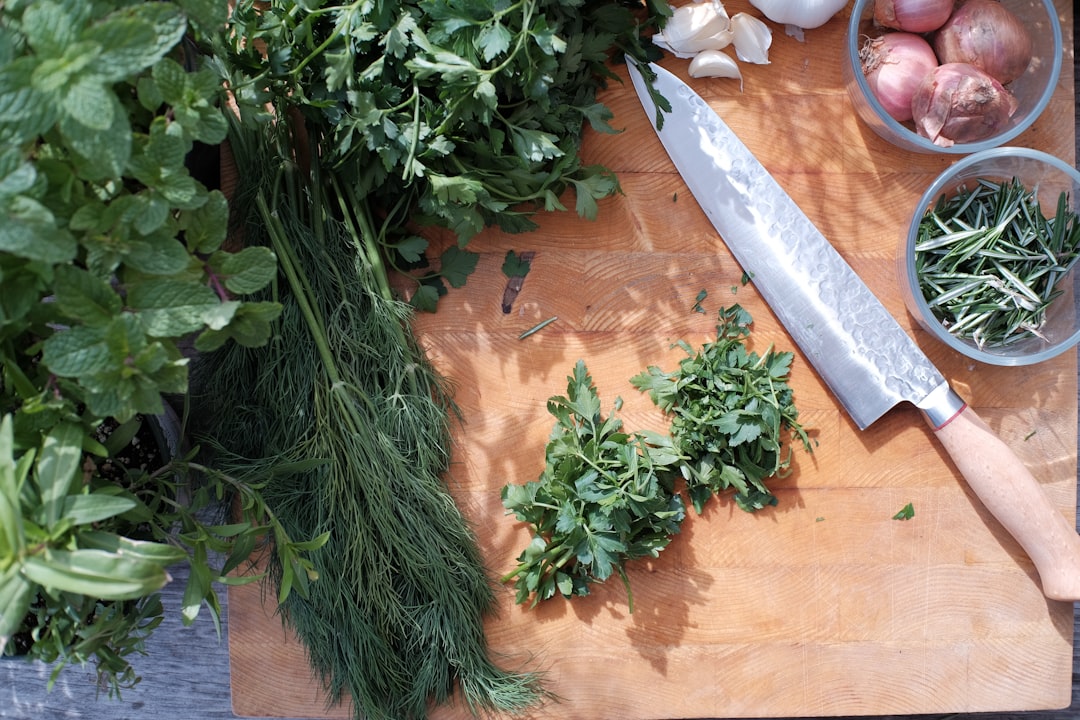
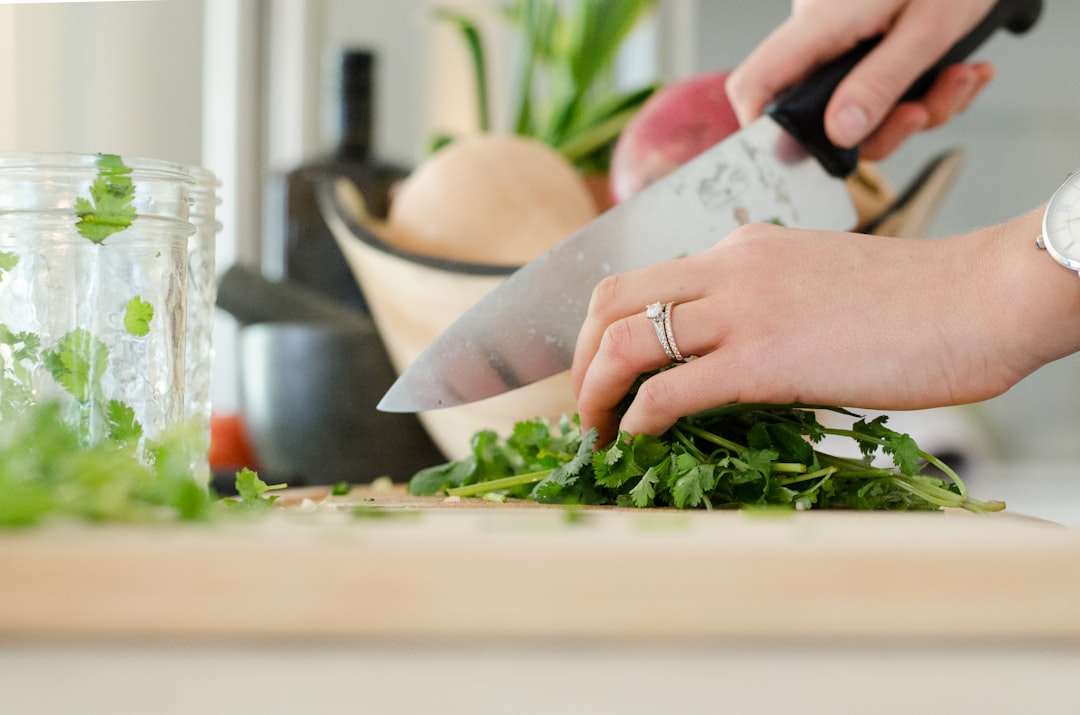
A person rolling and slicing fresh basil using knife skills to create a chiffonade cut

Cut herbs with the chiffonade technique

Fresh basil, mint, and large-leaf herbs appear constantly in summer cooking, from Vietnamese rice paper rolls to Italian bruschetta and Mexican salsas. The chiffonade technique handles them cleanly and quickly. This knife technique cuts aromatic herbs and certain leafy greens into thin ribbons. The most effective way is to tightly roll your desired herbs into a bundle and softly slice them into thin strips.


Specifically: stack 4 or 5 leaves on a cutting board, roll them into a tight cylinder, slice the cylinder crosswise into thin strips, then separate and garnish.

For all herb work, sharpness is critical. Using a freshly sharpened knife is best for this task. If your knife is too dull, you will bruise the herbs instead of chopping them cleanly.

Knife skills: the foundation of better produce prep

Good knife skills reduce prep time and lower the risk of injury with every piece of summer produce you handle. Start with a sharp blade and the correct knife for each task. Build the pinch grip and claw hand into habit. Stabilize your board and your produce before each cut. Use the chiffonade for herbs and a serrated knife for tomatoes. Proper knife skills not only improve the visual presentation of dishes but also ensure even cooking and enhance overall flavor distribution. They also increase kitchen efficiency and reduce the risk of injuries. Practice these 6 techniques consistently, and knife skills will become the most valuable tool in your kitchen.

Discover more about knife skills

  • Knife Skills for Beginners: A Visual Guide to Slicing, Dicing, and More
  • Culinary Basics: Knife Skills (National CACFP Association)
  • Basic Knife Skills: Institute of Culinary Education

author avatar
Lars Eriksen
Lars Eriksen grew up foraging wild herbs on the Danish coast with his grandmother, long before foraging became a culinary movement. He studied gastronomy at the University of Copenhagen and has spent two decades documenting the New Nordic revolution from the inside. From Noma's legacy to the next generation of Copenhagen chefs redefining what seasonal and sustainable really means, Lars writes with the quiet authority of someone who was there from the beginning.
See Full Bio
Previous Post

Gluten free hawker centre guide Singapore

Next Post

Food innovation signals at IFT FIRST

Related Posts

A woman applies a thin layer of oil to a cast iron pan during the cast iron seasoning process in a home kitchen.
Home Cooking Tips

Cast iron seasoning: the complete guide

19/07/2026
A chef holds tongs over an open flame while charring summer peppers on a gas stovetop in a professional kitchen.
Home Cooking Tips

Summer peppers: char, peel, and use them

08/07/2026
A woman carefully assembling a cold noodle bowl with fresh vegetables and sesame dressing on a bright kitchen counter
Home Cooking Tips

Cold noodle bowl for hot summer days

03/07/2026
A woman scooping a bowl of homemade ice cream from a metal loaf pan in a bright kitchen
Home Cooking Tips

Homemade ice cream without a machine

28/06/2026
A woman carefully arranging ripe stone fruit at a summer farmers market, selecting the best peaches and plums for storage
Home Cooking Tips

Stone fruit storage tips for summer

18/06/2026
Next Post
A food scientist examines natural ingredients in a laboratory, reflecting the spirit of food innovation at IFT FIRST

Food innovation signals at IFT FIRST

Leave a Reply Cancel reply

Your email address will not be published. Required fields are marked *

Truelang AI Translations Truelang AI Translations Truelang AI Translations
No Result
View All Result

Our Focus

GUSTOwebzine is your international window on food culture: culinary lifestyle, trends, recipes and gastronomic stories for a global audience with a passion for exceptional taste.

Our Readers

GUSTOwebzine addresses readers who engage with food culture at a high level: as culinary professionals, passionate home cooks, food entrepreneurs, and tastemakers in their communities.

Our Approach

Recipes, trends, and dining culture are integrated as context and indicators of creativity, identity, and the social forces shaping how the world eats, not standalone content.

Recent Post

  • Rooftop dining in NYC worth booking now
  • Japanese food labels: hidden gluten guide

© 2026 GUSTOwebzine by NOOR & NOOR — part of WEBZINE.world.

Welcome Back!

Login to your account below

Forgotten Password?

Retrieve your password

Please enter your username or email address to reset your password.

Log In
Manage Consent
To provide the best experiences, we use technologies like cookies to store and/or access device information. Consenting to these technologies will allow us to process data such as browsing behavior or unique IDs on this site. Not consenting or withdrawing consent, may adversely affect certain features and functions.
Functional Always active
The technical storage or access is strictly necessary for the legitimate purpose of enabling the use of a specific service explicitly requested by the subscriber or user, or for the sole purpose of carrying out the transmission of a communication over an electronic communications network.
Preferences
The technical storage or access is necessary for the legitimate purpose of storing preferences that are not requested by the subscriber or user.
Statistics
The technical storage or access that is used exclusively for statistical purposes. The technical storage or access that is used exclusively for anonymous statistical purposes. Without a subpoena, voluntary compliance on the part of your Internet Service Provider, or additional records from a third party, information stored or retrieved for this purpose alone cannot usually be used to identify you.
Marketing
The technical storage or access is required to create user profiles to send advertising, or to track the user on a website or across several websites for similar marketing purposes.
  • Manage options
  • Manage services
  • Manage {vendor_count} vendors
  • Read more about these purposes
View preferences
  • {title}
  • {title}
  • {title}
No Result
View All Result
  • Home
    • Our Authors
    • Subscribe for Free
    • Media Kit
    • Contact
    • Terms and Conditions
    • Cookie Policy
  • Discoveries
    • Chefs
  • Culinary Culture
  • Food & Drinks
  • Cooking Tips
    • Recipes
  • GUSTO Global
  • Insights
  • GUSTO Guide
    • Hotels Worldwide
    • Nightlife Worlwide
    • Restaurants Worldwide
    • Services Worldwide

© 2026 GUSTOwebzine by NOOR & NOOR — part of WEBZINE.world.

Not enough quota to unlock this post
Unlock left : 0
Are you sure want to cancel subscription?
Verified by MonsterInsights
enEnglishdeDeutschesEspañolfrFrançaisitItalianoja日本語nlNederlandszh中文
No results