CONTACT
  • Login
Upgrade
GUSTOwebzine
Advertisement
  • Home
    • Our Authors
    • Subscribe for Free
    • Media Kit
    • Contact
    • Terms and Conditions
    • Cookie Policy
  • Discoveries
    • Chefs
  • Culinary Culture
  • Food & Drinks
  • Cooking Tips
    • Recipes
  • GUSTO Global
  • Insights
  • GUSTO Guide
    • Hotels Worldwide
    • Nightlife Worlwide
    • Restaurants Worldwide
    • Services Worldwide
  • Home
    • Our Authors
    • Subscribe for Free
    • Media Kit
    • Contact
    • Terms and Conditions
    • Cookie Policy
  • Discoveries
    • Chefs
  • Culinary Culture
  • Food & Drinks
  • Cooking Tips
    • Recipes
  • GUSTO Global
  • Insights
  • GUSTO Guide
    • Hotels Worldwide
    • Nightlife Worlwide
    • Restaurants Worldwide
    • Services Worldwide
No Result
View All Result
GUSTOwebzine
No Result
View All Result
Home Home Cooking Tips

Chocolate Tempering: Professional Methods for Home Chocolate Making

This chocolate tempering technique reveals professional methods for making chocolate at home. Learn about temperature control, seeding and troubleshooting.

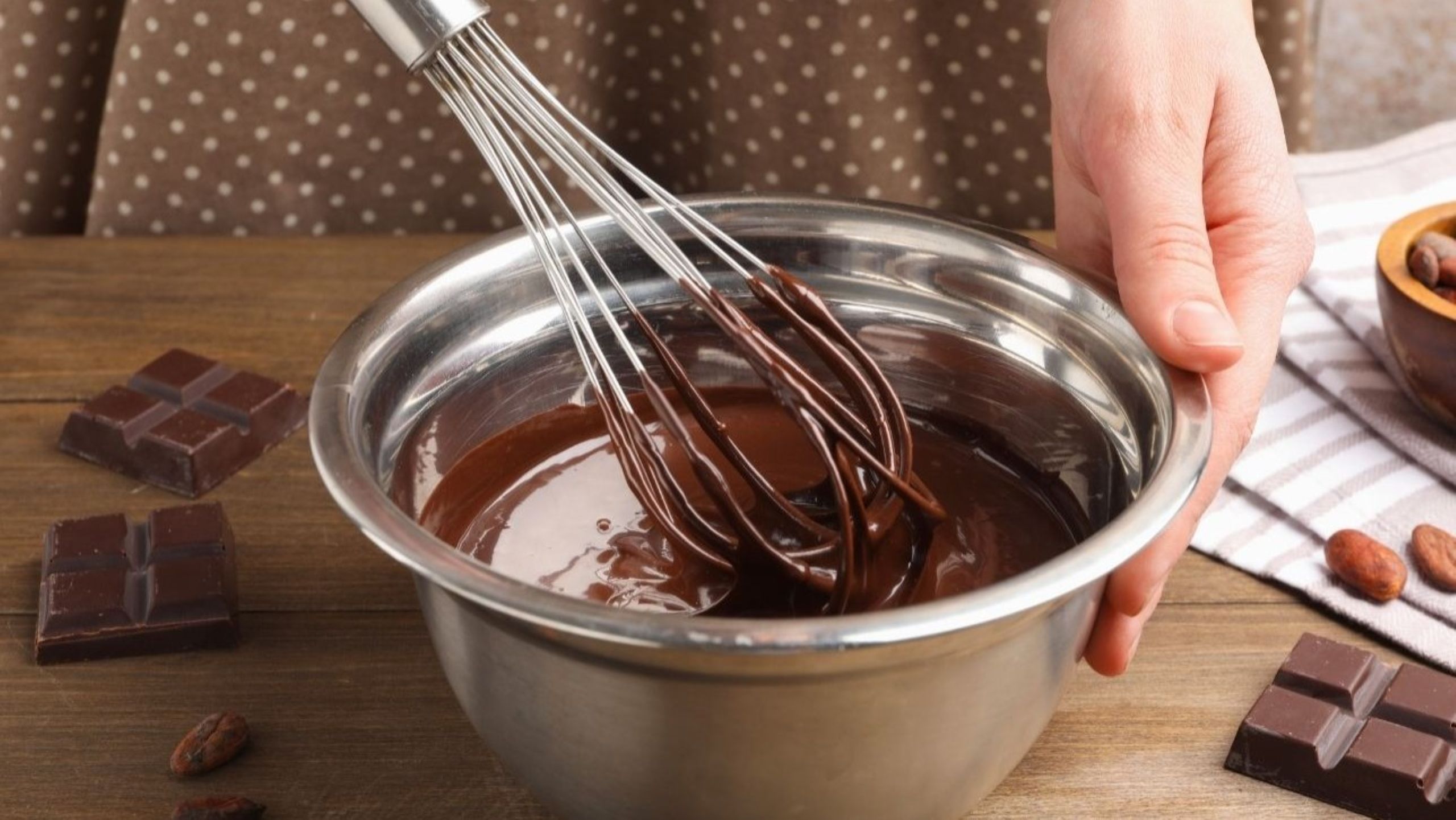
Chocolate tempering technique with professional methods showing melting chocolate for home chocolate making

Tempering chocolate transforms it into professional-quality confections with a perfect snap, shine and stability. Furthermore, mastering temperature control techniques allows home chocolatiers to create stunning truffles, bonbons and decorations. Understanding the science and methods of tempering can elevate chocolate making from a hobby to an artisan craft.

What Makes Chocolate Tempering Essential for Quality?

Chocolate tempering aligns cocoa butter crystals creating stable structure. Consequently, properly tempered chocolate exhibits glossy appearance and crisp snap. Professional chocolatiers recognize tempering as fundamental skill mastery.

Additionally, untempered chocolate appears dull with white streaks (bloom). Therefore, temperature control prevents fat separation and crystallization issues. Moreover, tempered chocolate sets quickly at room temperature maintaining form.

GUSTO guide worldwide restaurants, hotels, nightlife, professional services GUSTO guide worldwide restaurants, hotels, nightlife, professional services GUSTO guide worldwide restaurants, hotels, nightlife, professional services

Cocoa butter exists in six crystal forms (polymorphs) with different melting points. For instance, Form V crystals provide ideal characteristics professionally. Thus, tempering process encourages Form V formation while eliminating others.

Discoveries

The Mastercooks of Belgium: 170 Elite Chefs Network

12/10/2025

Which Chocolate Tempering Methods Work Best at Home?

Tabling/marble method traditional technique using marble slab cooling chocolate. Furthermore, two-thirds melted chocolate spread on marble working continuously. Professional chocolatiers prefer this method for precision control.

Seeding method adding unmelted chocolate (seed) to melted chocolate. However, simplest home method requiring only thermometer and bowl. Also, seed chocolate provides stable crystals encouraging proper formation.

Microwave method carefully melting chocolate in short bursts stirring. Meanwhile, residual heat continues melting between intervals preventing overheating. Certainly, requires attention and practice achieving consistency.

Sous vide method maintaining precise water bath temperature eliminating guesswork. For example, immersion circulator holds chocolate at exact tempering. Besides, hands-free approach allows multitasking during preparation.
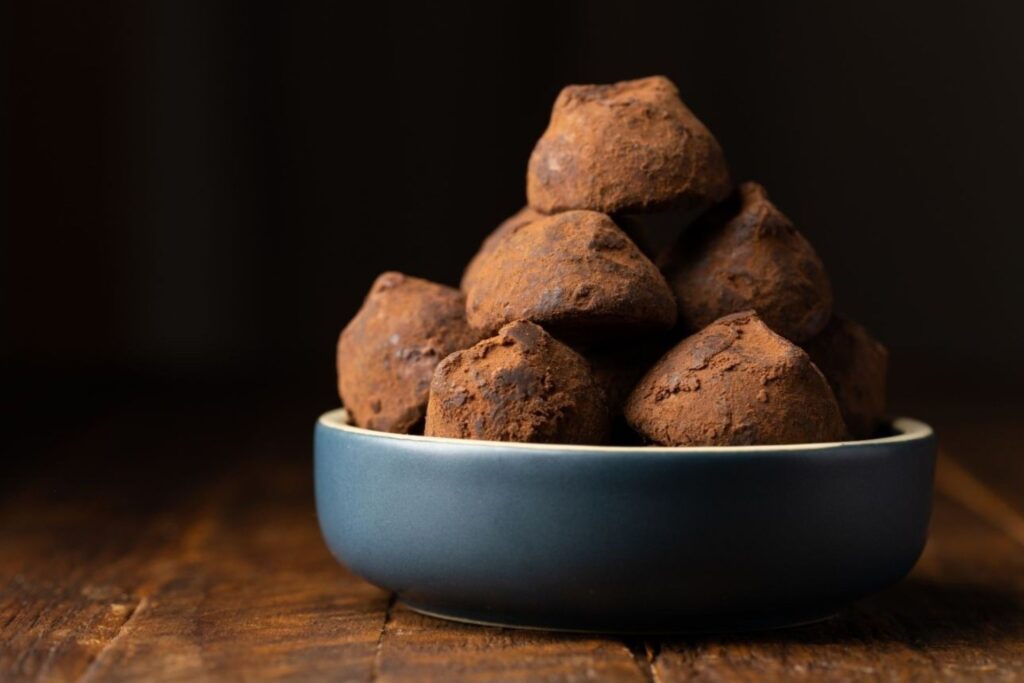
Professional chocolate tempering results with homemade truffles demonstrating proper technique methods

How Do You Execute Seeding Method Successfully?

Chop chocolate finely ensuring uniform melting and temperature distribution. Nevertheless, smaller pieces melt faster and more evenly. Specifically, aim for pea-sized pieces or smaller consistently.


-

A woman applies a thin layer of oil to a cast iron pan during the cast iron seasoning process in a home kitchen.

Cast iron seasoning: the complete guide

19/07/2026
A chef demonstrating knife skills while slicing fresh summer tomatoes on a wooden cutting board

Knife skills for summer produce prep

13/07/2026
A chef holds tongs over an open flame while charring summer peppers on a gas stovetop in a professional kitchen.

Summer peppers: char, peel, and use them

08/07/2026
A woman carefully assembling a cold noodle bowl with fresh vegetables and sesame dressing on a bright kitchen counter

Cold noodle bowl for hot summer days

03/07/2026
A woman scooping a bowl of homemade ice cream from a metal loaf pan in a bright kitchen

Homemade ice cream without a machine

28/06/2026
A woman carefully arranging ripe stone fruit at a summer farmers market, selecting the best peaches and plums for storage

Stone fruit storage tips for summer

18/06/2026

Melt two-thirds chocolate over double boiler or microwave carefully. On the other hand, dark chocolate melts to 45-50°C maximum. Additionally, milk chocolate reaches 40-45°C and white 40-43°C.

Add remaining chocolate (seed) stirring constantly until completely melted. For instance, temperature drops to working range through absorption. Besides, unmelted chocolate provides stable crystal structure template.

Test temper by spreading small amount on parchment observing set. Thus, properly tempered chocolate sets within 3-5 minutes developing. Furthermore, slight sheen and snap indicate successful tempering.


Global Voices. Local Webzines. Discover the WEBZINEworld Network.

What Professional Chocolatiers Say About Tempering Mastery?

Jacques Torres, Master Chocolatier

“Chocolate tempering separates hobbyists from professional chocolatiers fundamentally. Professional methods require understanding physics and practice developing feel. Additionally, temperature precision determines final product quality completely.”

“I’ve tempered thousands of kilograms perfecting technique over decades. Technique mastery comes through repetition and attention to detail. Furthermore, ambient temperature and humidity affect tempering requiring adaptations. Home chocolate making achieves professional results with proper knowledge.”

Summer menus Dubai worth booking now

Summer menus Dubai worth booking now

04/08/2026

Dubai's summer is one of the most rewarding times to eat out in the city. With fewer crowds and some...

A woman carefully pouring cold brew tea from a glass jar into a cup on a wooden kitchen counter

Cold brew tea from four global traditions

04/08/2026

Cold brew tea connects a simple glass of cold water to centuries of global leaf culture. This guide takes you...

Which Temperature Ranges Apply to Different Chocolates?

Dark chocolate (70%+ cacao) melts to 45-50°C initially. Therefore, working temperature maintained at 31-32°C for tempering. Currently, higher cocoa butter content requires precise control.

Milk chocolate melts to 40-45°C avoiding scorching milk. As a result, working temperature stays at 29-30°C consistently. Moreover, milk solids increase temperature sensitivity significantly.

White chocolate melts to 40-43°C preventing separation completely. Indeed, working temperature maintained at 28-29°C carefully always. Also, contains no cocoa solids only cocoa butter.

Colored/compound coating does not require tempering due to. Nevertheless, vegetable fats instead of cocoa butter eliminate crystallization. Undoubtedly, lacks authentic chocolate flavor and texture quality.

Temperature monitoring using digital thermometer ensures accuracy within 1°C. Meanwhile, infrared thermometers provide non-contact instant readings surface. Also, ambient room temperature affects cooling and setting.

Working environment maintained at 18-20°C with 50% humidity ideally. Thus, warm kitchens slow setting while cold causes premature. Furthermore, humidity creates condensation causing sugar bloom defects.

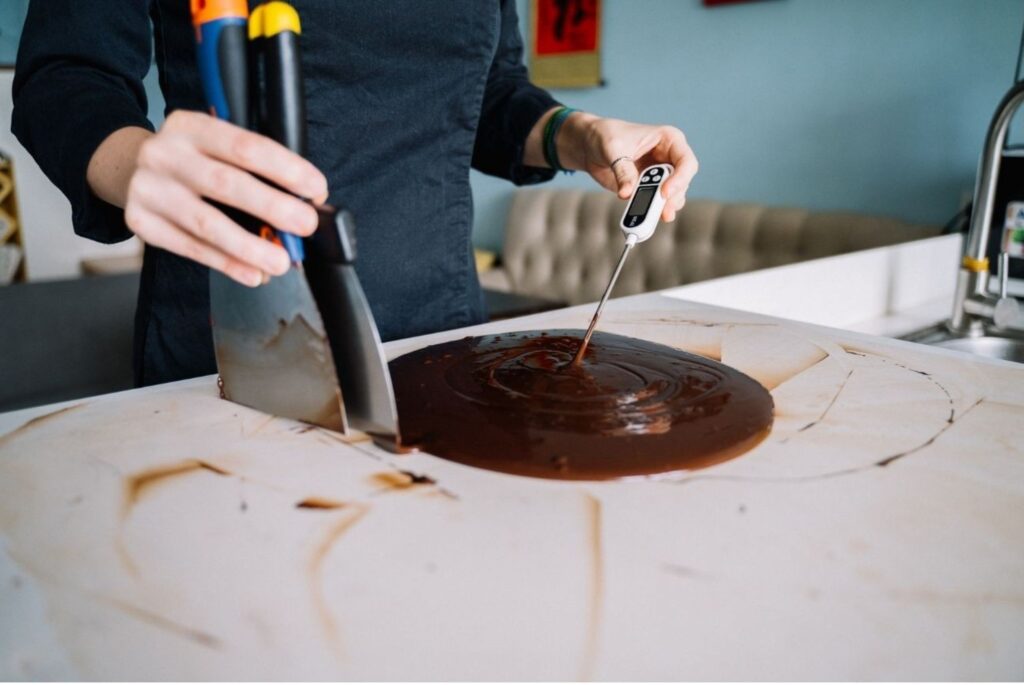
Chocolate tempering professional methods using thermometer for temperature control in home making

What Common Tempering Problems and Solutions Exist?

Chocolate won’t set indicates insufficient cooling or over-tempering. Meanwhile, re-melt and re-temper starting process fresh completely. Also, check ambient temperature ensuring cool enough environment.

White streaks/bloom from fat separation due to incorrect temperature. However, chocolate remains safe eating but appears unprofessional. Besides, re-tempering fixes bloom restoring proper appearance.

Thick/lumpy texture suggests water contamination or overheating damage. For instance, even small water amounts cause seizing instantly. Thus, ensure all equipment completely dry before starting.

Dull finish results from insufficient agitation or wrong crystal formation. Nevertheless, working chocolate longer encourages proper crystallization development. Specifically, continuous stirring during cooling phase critical.

Soft texture indicates under-tempering with unstable crystal structure. Therefore, chocolate melts at room temperature lacking proper snap. Furthermore, refrigeration masks problem temporarily but doesn’t fix.

Rapid setting before work completed suggests over-tempering with excessive. Meanwhile, gentle reheating to upper working temperature range. Also, working quickly and efficiently prevents premature setting.

Chefs & Creators

Filip Claeys: from family roots to culinary mastery

30/10/2025

Conclusion: Mastering Chocolate Tempering for Home Excellence

Tempering chocolate elevates home chocolate making to professional standards. Moreover, precise temperature control enables the creation of stunning confections with perfect characteristics.

Begin by mastering the seeding method and the basics before attempting more advanced techniques. Furthermore, invest in an accurate thermometer and maintain an ideal working environment. Practise consistently to develop a feel for the proper consistency and timing.

Embrace mistakes as learning opportunities, refining your technique progressively. Indeed, professional chocolatiers spend years perfecting their tempering skills. Begin your chocolate tempering journey by creating beautiful artisan chocolates.

Useful Resources for Chocolate Tempering

  • Callebaut Chocolate Academy – Tempering Guide
  • Valrhona – Professional Chocolate Techniques
  • Chocolate Alchemy – Home Chocolatier Resources
author avatar
GUSTOwebzine
GUSTOwebzine is your international window on food culture: culinary lifestyle, trends, recipes and gastronomic stories for a global audience with a passion for exceptional taste.
See Full Bio
Tags: bakingchocolatepastryProfessionaltechniqueTempering
Previous Post

Restaurant Wine Program: Building Profitable Wine Lists and Staff Training

Next Post

International Restaurant & Bar Expo 2026: Kazakhstan HoReCa Hub

Related Posts

A woman applies a thin layer of oil to a cast iron pan during the cast iron seasoning process in a home kitchen.
Home Cooking Tips

Cast iron seasoning: the complete guide

19/07/2026
A chef demonstrating knife skills while slicing fresh summer tomatoes on a wooden cutting board
Home Cooking Tips

Knife skills for summer produce prep

13/07/2026
A chef holds tongs over an open flame while charring summer peppers on a gas stovetop in a professional kitchen.
Home Cooking Tips

Summer peppers: char, peel, and use them

08/07/2026
A woman carefully assembling a cold noodle bowl with fresh vegetables and sesame dressing on a bright kitchen counter
Home Cooking Tips

Cold noodle bowl for hot summer days

03/07/2026
A woman scooping a bowl of homemade ice cream from a metal loaf pan in a bright kitchen
Home Cooking Tips

Homemade ice cream without a machine

28/06/2026
Next Post
international restaurant & bar expo EXPO International Exhibition Center Astana

International Restaurant & Bar Expo 2026: Kazakhstan HoReCa Hub

Comments 3

  1. lucas_moreauF says:
    4 months ago

    Excellent article ! Le tempérage du chocolat est souvent l’étape la plus redoutée en pâtisserie, mais vos explications sur les méthodes professionnelles rendent le processus beaucoup plus clair. C’est vraiment indispensable pour obtenir ce fameux fini brillant et croquant. Merci pour ce guide très utile

    Reply
  2. Zaktoni_Hassan says:
    4 months ago

    Great article! The step-by-step methods make tempering chocolate at home seem so much easier and approachable. I’ve always struggled with getting that perfect shine and snap, but these professional tips are exactly what I needed to level up my home cooking. Thanks for sharing

    Reply
  3. ryanmitchellAN says:
    4 months ago

    Tempering has always been the most intimidating part of working with chocolate for me. Getting that perfect snap and glossy finish without the cocoa butter blooming is genuinely tricky. This guide breaks down the seeding method so clearly that it actually feels manageable in a home kitchen. I really appreciate the precise temperature breakdowns—going to give this a try on my next batch

    Reply

Leave a Reply Cancel reply

Your email address will not be published. Required fields are marked *

Truelang AI Translations Truelang AI Translations Truelang AI Translations
No Result
View All Result

Our Focus

GUSTOwebzine is your international window on food culture: culinary lifestyle, trends, recipes and gastronomic stories for a global audience with a passion for exceptional taste.

Our Readers

GUSTOwebzine addresses readers who engage with food culture at a high level: as culinary professionals, passionate home cooks, food entrepreneurs, and tastemakers in their communities.

Our Approach

Recipes, trends, and dining culture are integrated as context and indicators of creativity, identity, and the social forces shaping how the world eats, not standalone content.

Recent Post

  • Private clubs NYC with rooftop access
  • Summer menus Dubai worth booking now

© 2026 GUSTOwebzine by NOOR & NOOR — part of WEBZINE.world.

Welcome Back!

Login to your account below

Forgotten Password?

Retrieve your password

Please enter your username or email address to reset your password.

Log In
Manage Consent
To provide the best experiences, we use technologies like cookies to store and/or access device information. Consenting to these technologies will allow us to process data such as browsing behavior or unique IDs on this site. Not consenting or withdrawing consent, may adversely affect certain features and functions.
Functional Always active
The technical storage or access is strictly necessary for the legitimate purpose of enabling the use of a specific service explicitly requested by the subscriber or user, or for the sole purpose of carrying out the transmission of a communication over an electronic communications network.
Preferences
The technical storage or access is necessary for the legitimate purpose of storing preferences that are not requested by the subscriber or user.
Statistics
The technical storage or access that is used exclusively for statistical purposes. The technical storage or access that is used exclusively for anonymous statistical purposes. Without a subpoena, voluntary compliance on the part of your Internet Service Provider, or additional records from a third party, information stored or retrieved for this purpose alone cannot usually be used to identify you.
Marketing
The technical storage or access is required to create user profiles to send advertising, or to track the user on a website or across several websites for similar marketing purposes.
  • Manage options
  • Manage services
  • Manage {vendor_count} vendors
  • Read more about these purposes
View preferences
  • {title}
  • {title}
  • {title}
No Result
View All Result
  • Home
    • Our Authors
    • Subscribe for Free
    • Media Kit
    • Contact
    • Terms and Conditions
    • Cookie Policy
  • Discoveries
    • Chefs
  • Culinary Culture
  • Food & Drinks
  • Cooking Tips
    • Recipes
  • GUSTO Global
  • Insights
  • GUSTO Guide
    • Hotels Worldwide
    • Nightlife Worlwide
    • Restaurants Worldwide
    • Services Worldwide

© 2026 GUSTOwebzine by NOOR & NOOR — part of WEBZINE.world.

Not enough quota to unlock this post
Unlock left : 0
Are you sure want to cancel subscription?
Verified by MonsterInsights
enEnglishdeDeutschesEspañolfrFrançaisitItalianoja日本語nlNederlandszh中文
No results