CONTACT
  • Login
Upgrade
GUSTOwebzine
Advertisement
  • Home
    • Our Authors
    • Subscribe for Free
    • Media Kit
    • Contact
    • Terms and Conditions
    • Cookie Policy
  • Discoveries
    • Chefs
  • Culinary Culture
  • Food & Drinks
  • Cooking Tips
    • Recipes
  • GUSTO Global
  • Insights
  • GUSTO Guide
    • Hotels Worldwide
    • Nightlife Worlwide
    • Restaurants Worldwide
    • Services Worldwide
  • Home
    • Our Authors
    • Subscribe for Free
    • Media Kit
    • Contact
    • Terms and Conditions
    • Cookie Policy
  • Discoveries
    • Chefs
  • Culinary Culture
  • Food & Drinks
  • Cooking Tips
    • Recipes
  • GUSTO Global
  • Insights
  • GUSTO Guide
    • Hotels Worldwide
    • Nightlife Worlwide
    • Restaurants Worldwide
    • Services Worldwide
No Result
View All Result
GUSTOwebzine
No Result
View All Result
Home Culinary Culture

Communal table traditions across cultures

From Ethiopia to East Asia, the shared table remains the most eloquent expression of what it means to eat well together.

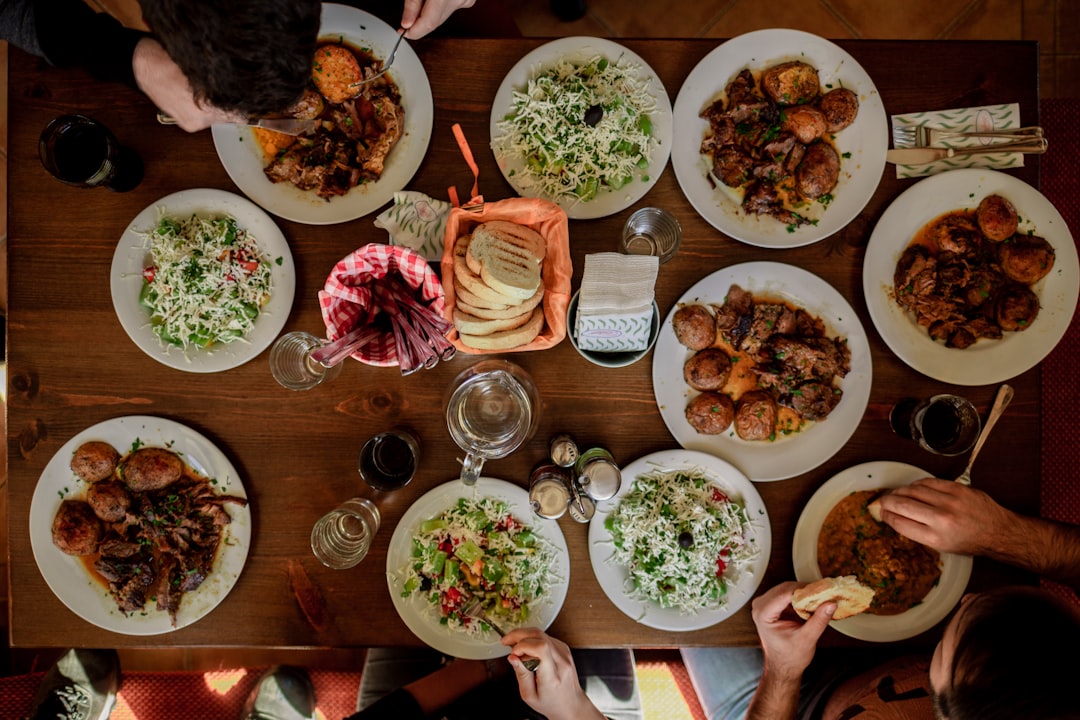
A group of guests reaching across a communal table covered in shared dishes, celebrating the communal table tradition.

The communal table is not a trend. It is the original architecture of every serious food culture on earth, and it has never needed rescuing.

Where the tradition begins

Shared meals have anchored human culture for millennia. Ancient Mesopotamian banquets reinforced political loyalty, and medieval service à la française filled tables with communal platters long before the individually plated entrée existed. The instinct to place food at the center and invite others to reach for it is older than any technique a chef now trains for years to master.

From ancient times, people gathered around fires to share meals. This practice fostered not just nourishment but also connection. In many cultures, communal tables symbolized hospitality and unity. That symbolic weight did not diminish as kitchens became more refined. If anything, it intensified.

GUSTO guide worldwide restaurants, hotels, nightlife, professional services GUSTO guide worldwide restaurants, hotels, nightlife, professional services GUSTO guide worldwide restaurants, hotels, nightlife, professional services

These social eating practices have facilitated trust, fostered commonality, and assisted in resolving conflicts among diverse populations, thereby influencing societal ethos and perspectives. A well-set table, it turns out, has always done the quiet work of diplomacy.

How gathering shapes the plate itself

The communal table does not merely reflect culture. It actively shapes what a cook prepares. In Chinese dining culture, sharing food from common plates is a central practice that reinforces family unity and social harmony. Every dish is sized, seasoned, and sequenced with the group in mind, not the individual.

At the heart of communal dining in Asian countries are values such as harmony, respect, and togetherness. The shared table represents equality and connection. Everyone uses serving utensils to serve dishes from shared plates, ensuring that each diner enjoys the same food. Elders are served first, bowls are kept full, and each action reinforces deeper connections between diners.

Similarly, Ethiopian cuisine takes shared plates further by serving stews and salads on a single large injera flatbread, with diners eating directly from the communal surface. The practice of gursha, hand-feeding another person a morsel of food, transforms the meal into an act of affection. The plate becomes a gesture, and the gesture becomes the culture.

The science of sharing

Research now confirms what cooks and hosts have always understood. Research from the University of Oxford highlights the importance of communal dining in creating social bonds and a sense of belonging. People who regularly eat with others are more likely to feel content and connected to their communities, suggesting that shared meals are a powerful tool for improving mental and emotional well-being.

An evolutionary perspective shows that communal eating correlates with enhanced social bonding, trust, and life satisfaction, suggesting that shared meals evolved as a bonding mechanism. This is not sentiment. It is physiology meeting culture at the table.


Eating the same food at the same time increases trust and cooperation between strangers, while regular communal meals correlate with greater happiness and life satisfaction. The chef who understands this designs not only a menu but an experience of gathering itself.

A smiling woman placing a large serving platter at the center of a communal table where several guests are seated.

Expert perspective

A craft perspective on the communal table

The communal table demands a different kind of precision from the kitchen. When a dish travels to the center of the table rather than to a single plate, the cook must think about texture, temperature, and portioning across many appetites at once. This is a more demanding discipline, not a simpler one. The great family-style traditions of Italy, Lebanon, and West Africa share this quality: every component must hold its character long enough for the slowest diner to reach it. There is also a social intelligence built into these menus. Too much richness and the table becomes heavy. Too little and generosity fails. The best communal menus are finely calibrated acts of hospitality, and that calibration is as much a culinary skill as any classical technique.

Industry perspective, culinary arts and hospitality education professionals

A diverse group of friends laughing and eating together at a long communal table set with multiple shared dishes.

-

Tomato sauce recipes from global kitchens

27/08/2026
A chef carefully plates a dish for festival visitors, capturing the craft at the heart of British food culture in Edinburgh

British food culture at Edinburgh festival

26/08/2026
A professional chef finely chopping fresh parsley to prepare a classic green sauce at a wooden kitchen counter

Green sauce from 6 global traditions

22/08/2026
A woman harvesting ripe tomatoes in a sunlit Mediterranean cooking garden in late August

Mediterranean cooking peaks in late August

19/08/2026
A woman carefully dressing chilled grain salads in a bright kitchen, showcasing global culinary technique

7 chilled grain salads that hold up in summer heat

14/08/2026
laughing woman cocoa farmer in the forest

Ethical cocoa sourcing and the future

11/08/2026

The living traditions across 6 continents

Communal dining traditions span the globe, from the Greek symposium and Roman convivium to Chinese hotpot, Pacific Island luaus, South American asados, Ethiopian gursha, Korean jeongol, and Jewish Shabbat dinners. Each of these traditions carries its own precise rules, its own choreography of service, and its own vocabulary of ingredients.

Community dining often incorporates elements of participatory dining experiences. This can include interactive cooking sessions where diners engage in preparing part of their meal together, or communal food-related activities such as sharing recipes or food stories. These interactive components further enhance the sense of community and collaboration, turning a meal into a shared creative and social experience.

UNESCO has recognized this living quality. Italian cooking was inscribed in 2025 on the Representative List of the Intangible Cultural Heritage of Humanity. It is a communal activity that emphasizes intimacy with food, respect for ingredients, and shared moments around the table. The practice is rooted in anti-waste recipes and the transmission of flavours, skills, and memories across generations. It is a means of connecting with family and the community, whether at home, in schools, or through festivals, ceremonies, and social gatherings.

The communal table endures

The communal table endures because no other format asks more of a cook or gives more to a guest. What unites these traditions is a common conviction: food tastes better when experienced collectively. Each culture developed its own rituals, ingredients, and table manners, yet all arrived at the same philosophy of placing connection above individual portions.

The communal table is not a style choice. It is the foundation on which every honest food culture rests. At GUSTOwebzine, we invite you to seek out these traditions in your own city, at your next travel destination, and at your own table. Pull up a chair. Place the dish in the center. Let the meal begin.

Discover more about communal table

  • UNESCO: Italian cooking, between sustainability and biocultural diversity
  • EHL Group Food and Wellbeing 2025: Trends in social eating
  • University of Oxford: Social eating connects communities

[End of article body]

author avatar
Claire Beaumont
Claire Beaumont grew up in Lyon's bouchon culture, where Sunday lunches lasted three hours and every dish told a story. She trained at Institut Paul Bocuse before turning to food writing, covering classical French technique, regional produce, and Europe's evolving restaurant scene. Her work is elegant, precise, and always deeply rooted in the craft behind the plate.
See Full Bio
Previous Post

Vegetarian hawker stalls meat-eaters love

Next Post

Singapore dining resets before September rush

Related Posts

Culinary Culture

Tomato sauce recipes from global kitchens

27/08/2026
A chef carefully plates a dish for festival visitors, capturing the craft at the heart of British food culture in Edinburgh
Culinary Culture

British food culture at Edinburgh festival

26/08/2026
A professional chef finely chopping fresh parsley to prepare a classic green sauce at a wooden kitchen counter
Culinary Culture

Green sauce from 6 global traditions

22/08/2026
A woman harvesting ripe tomatoes in a sunlit Mediterranean cooking garden in late August
Culinary Culture

Mediterranean cooking peaks in late August

19/08/2026
A woman carefully dressing chilled grain salads in a bright kitchen, showcasing global culinary technique
Culinary Culture

7 chilled grain salads that hold up in summer heat

14/08/2026
Next Post
People stand in line outside a Japanese eatery with white curtain banners and red signage above the door, posters on the windows.

Singapore dining resets before September rush

Leave a Reply Cancel reply

Your email address will not be published. Required fields are marked *

Truelang AI Translations Truelang AI Translations Truelang AI Translations
No Result
View All Result

Our Focus

GUSTOwebzine is your international window on food culture: culinary lifestyle, trends, recipes and gastronomic stories for a global audience with a passion for exceptional taste.

Our Readers

GUSTOwebzine addresses readers who engage with food culture at a high level: as culinary professionals, passionate home cooks, food entrepreneurs, and tastemakers in their communities.

Our Approach

Recipes, trends, and dining culture are integrated as context and indicators of creativity, identity, and the social forces shaping how the world eats, not standalone content.

Recent Post

  • Gluten-free izakaya: Tokyo guide
  • Singapore dining resets before September rush

© 2026 GUSTOwebzine by NOOR & NOOR — part of WEBZINE.world.

Welcome Back!

Login to your account below

Forgotten Password?

Retrieve your password

Please enter your username or email address to reset your password.

Log In
Manage Consent
To provide the best experiences, we use technologies like cookies to store and/or access device information. Consenting to these technologies will allow us to process data such as browsing behavior or unique IDs on this site. Not consenting or withdrawing consent, may adversely affect certain features and functions.
Functional Always active
The technical storage or access is strictly necessary for the legitimate purpose of enabling the use of a specific service explicitly requested by the subscriber or user, or for the sole purpose of carrying out the transmission of a communication over an electronic communications network.
Preferences
The technical storage or access is necessary for the legitimate purpose of storing preferences that are not requested by the subscriber or user.
Statistics
The technical storage or access that is used exclusively for statistical purposes. The technical storage or access that is used exclusively for anonymous statistical purposes. Without a subpoena, voluntary compliance on the part of your Internet Service Provider, or additional records from a third party, information stored or retrieved for this purpose alone cannot usually be used to identify you.
Marketing
The technical storage or access is required to create user profiles to send advertising, or to track the user on a website or across several websites for similar marketing purposes.
  • Manage options
  • Manage services
  • Manage {vendor_count} vendors
  • Read more about these purposes
View preferences
  • {title}
  • {title}
  • {title}
No Result
View All Result
  • Home
    • Our Authors
    • Subscribe for Free
    • Media Kit
    • Contact
    • Terms and Conditions
    • Cookie Policy
  • Discoveries
    • Chefs
  • Culinary Culture
  • Food & Drinks
  • Cooking Tips
    • Recipes
  • GUSTO Global
  • Insights
  • GUSTO Guide
    • Hotels Worldwide
    • Nightlife Worlwide
    • Restaurants Worldwide
    • Services Worldwide

© 2026 GUSTOwebzine by NOOR & NOOR — part of WEBZINE.world.

Not enough quota to unlock this post
Unlock left : 0
Are you sure want to cancel subscription?
Verified by MonsterInsights
enEnglishdeDeutschesEspañolfrFrançaisitItalianoja日本語nlNederlandszh中文
No results