Cold soba is Tokyo’s most honest summer pleasure: a bowl of buckwheat discipline that asks nothing of you except attention, appetite, and the willingness to sit still.
Why cold soba belongs to summer in Tokyo
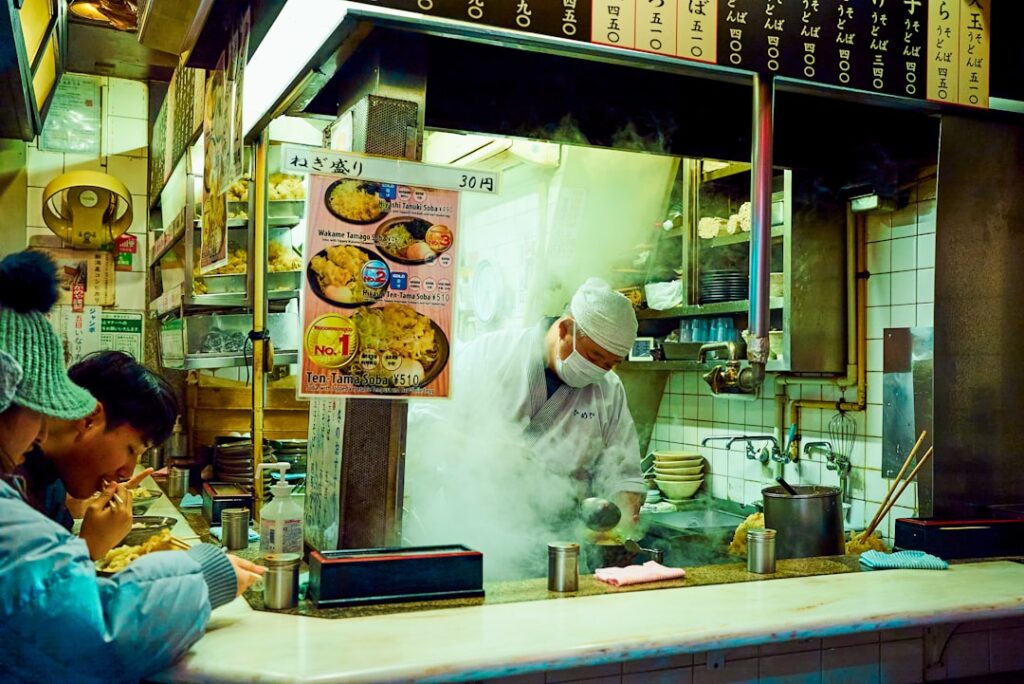
Among all noodle types, soba has the longest history of being eaten cold. That history feels present in every bowl. During the Edo Period (1603 to 1868), food stalls catering to the people of Edo sprang up all over town, partly to serve a large population of samurai who lived away from their families. The cold bowl became a quiet social ritual, and it remains one today.

Soba is served either cold with a dipping sauce or in a hot broth with various toppings. Many soba connoisseurs prefer to eat cold soba because it allows them to better appreciate the noodle’s delicate aroma and flavor. In summer, this preference becomes almost universal. Because of its cool temperature, cold soba is easy to eat and a very popular meal during summertime.
Of all the major noodle types in Japan, soba is considered the most artisanal. Each soba master has their own skills and secrets, whether in the sourcing of their buckwheat, their ratio of buckwheat to wheat flour, or their signature kneading and rolling techniques. This is craft in the French sense: invisible precision that shows only in the result.
What makes a cold soba bowl exceptional
In Japan, authentic soba is generally either juwari soba (100% buckwheat) or hachiwari soba (80% buckwheat, 20% wheat). Many soba noodles contain a lower proportion of buckwheat, which dilutes the natural aroma. Juwari soba offers the most fragrant and pure taste, though its quality varies greatly with the chef’s skill. Hachiwari soba retains a rich aroma while being slightly easier to eat, and it remains a popular choice.

Since the Edo Period, hachiwari soba has been the traditional Tokyo style, enjoyed with a popularity comparable to sushi as a form of accessible, daily food. Even today, it remains a beloved and convenient meal. Tokyo soba culture also includes the tradition of sobamae, small dishes and sake enjoyed at a soba restaurant while waiting for the noodles.
Most soba shops do not require reservations, but long waits occur at popular locations. Some high-end restaurants require a reservation, and it is not uncommon for establishments to close once their soba is sold out for the day. This scarcity is part of the ritual. It teaches patience.
3 restaurants for cold soba in Tokyo
Kyorakutei, Bunkyo. This Michelin Bib Gourmand restaurant is excellent for soba enthusiasts who want to watch the chef make teuchi (hand-cut) noodles from scratch. There are 2 noodle options: standard soba with a small amount of wheat flour, and juwari (100% buckwheat) soba, which is darker and has a nuttier fragrance. The juwari soba is more uncommon, so it is the one to order here. Enjoy it cold, dipping the chilled noodles into the sauce, and pair it with their seasonal tempura, such as ayu (sweetfish) or pike conger.
Kanda Matsuya, Chiyoda. This is one of Tokyo’s most famous and oldest soba restaurants, established in 1884. Dining here is a step back in time. The restaurant is a beautifully preserved wooden building from the early Showa period, and the atmosphere is authentic and classic. The classic zaru soba, cold soba noodles served with a dipping sauce, is a perfect way to appreciate their noodles.
Ryan, Shibuya. For a creative and contemporary take on cold soba, visit Ryan in Shibuya. The menu ranges from plain chilled soba with a rich dashi-based dipping sauce to more complex offerings like soba with anago (saltwater eel) and vegetable tempura, or soba topped with fresh shirasu (whitebait), sea urchin, and salmon roe. It brings a quiet precision to flavor combinations that feel genuinely new.

An industry perspective on Tokyo’s cold food culture
Tokyo’s summer food culture operates by a logic that resists abundance. The most respected dishes are the simplest ones: a block of cold tofu, a tray of buckwheat noodles, a small cup of dipping sauce. What the restaurant provides is not volume but calibration. The temperature of the tofu, the concentration of the dashi, the ratio of buckwheat in the noodle, these small decisions carry everything. Diners who understand this come early, wait patiently, and eat slowly. The ritual is inseparable from the meal. It is not nostalgia. It is a living standard of what summer food should feel like.
Industry perspective, food culture and traditional cuisine professionals in Tokyo
3 restaurants for chilled tofu in Tokyo
Chilled tofu, or hiyayakko, carries its own long history. The term “yakko” is derived from the white, square-shaped crest that adorned the sleeves of servants who attended high-ranking samurai in the Edo Period (1603 to 1868). Blocks of tofu cut to resemble that crest became a popular dish among Edo townspeople, and hiya (chilled) yakko remains a favorite hot-weather dish throughout Japan today.
Also known as cold tofu, hiyayakko requires no cooking or heat at all. It is a cool, refreshing dish that is perfect for the summer heat. Simply chilled tofu, cut into cubes, is garnished with toppings that enhance its umami. Popular toppings include spring onions, ginger, seaweed, bonito flakes, sesame seeds, and shiso, along with soy sauce or ponzu to finish.
Tofuya Ukai, Shibakoen. Tofuya Ukai offers private room settings, a stunning Japanese garden, and an excellent menu of tofu dishes. Their tofu is made fresh every day, using spring water and carefully selected soybeans. The setting is undeniably beautiful, nestled near Tokyo Tower with a serene traditional garden that offers a peaceful escape from the city.
Umenohana, Ginza. This tofu specialty restaurant in Ginza serves a kaiseki-style tofu menu across lunch and dinner. Their tofu has a subtly sweet taste, and the dishes are complemented by refreshing and seasonal vegetable preparations. The Ginza address suits the precision of the kitchen: nothing is excessive, everything is considered.




Sobakappo Nagano, Sumida. This home-style restaurant in Higashimukojima is known for its selection of appetizers designed to be paired with sake. The carefully prepared accompaniments reflect years of expertise in Japanese cuisine. Chilled tofu appears on the appetizer menu and pairs beautifully with the restaurant’s cold soba. This is the one address on this list that offers both disciplines at the same table.

Cold soba and chilled tofu: Tokyo summer, simplified
Tokyo in summer asks you to slow down and eat with your full attention. Cold soba and chilled tofu are the two best answers to that demand. Both dishes arrive cool, restrained, and complete. Both reward the diner who notices texture, temperature, and proportion. The 6 restaurants in this guide each approach these ideals with genuine craft. Visit any of them before September. Cold soba and chilled tofu are not dishes you eat in a hurry. They are dishes you return to, quietly, season after season.

Explore these addresses during your next visit to Tokyo, and allow the meal to set the rhythm of your afternoon.
Discover more about cold soba
- Must-try Soba Restaurants in Tokyo, The MICHELIN Guide
- Japan Summer Survival Tips including cold noodle dishes, Japan National Tourism Organization
- Cool to be square: Chilled tofu for summer, The Japan Times
Originally published on TOKYOwebzine.