Wheat-free bread holds a quiet, luminous place in European culinary memory: long before modern agriculture standardized the grain supply, communities across the EU built their tables around what the local land gave them.
Brittany and the galette de sarrasin
Brittany’s galette de sarrasin is perhaps the EU’s most beloved naturally wheat-free bread tradition. Bakers craft it entirely from buckwheat flour, water, salt, and patience. Despite the word “wheat” in its name, buckwheat is not a grain at all. It contains no gluten and is in fact a seed, its rich and nutty profile providing depth that standard loaves often lack.

The galette carries protected cultural status in France and remains central to Breton identity. Street crêperies in Quimper and Rennes serve it folded around ham, egg, and aged cheese, a pairing as refined as it is ancient. The buckwheat harvest season in late summer makes this the ideal moment to seek out an authentic version.
Tuscany and castagnaccio
Castagnaccio is Tuscany’s extraordinary chestnut loaf, and it asks for nothing from the wheat family. The recipe calls for chestnut flour, water, olive oil, rosemary, and pine nuts. Chestnut flour gives this wheat-free bread its distinctive, cozy seasonal taste. It is dense, slightly bitter, and intensely aromatic.
Tuscan villages have baked castagnaccio since the medieval period, when chestnut trees covered the Apennine hills and fed entire communities through winter. Today, small artisan bakeries in the Garfagnana valley still follow the original method. The loaf requires no leavening and no equipment beyond a wide terracotta dish and a good oven.

Lithuania and dark rye bread
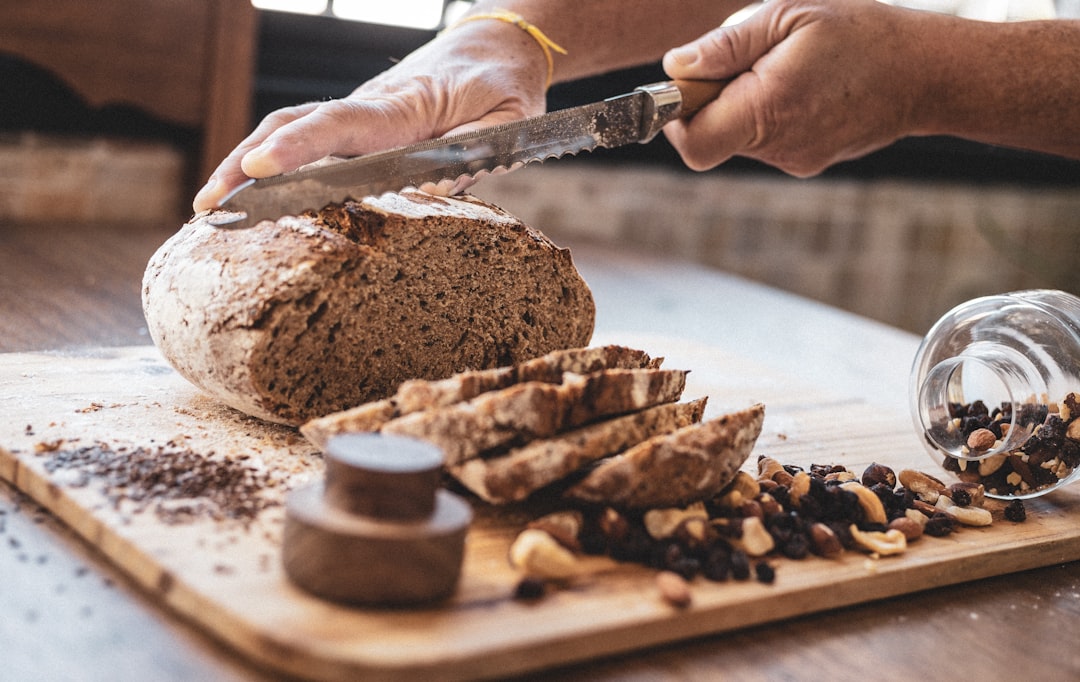
Lithuania’s dark rye bread stands among the most culturally significant wheat-free bread traditions in the EU’s northeastern corner. From the dense rye breads of Lithuania, each type tells a story of its origins, local ingredients, and traditional methods. Rye thrived in the cold, acidic Baltic soils where wheat never grew well.
Rye bread does not contain wheat flour and has a lower glycemic index than wheat-based loaves, which impacts blood-sugar levels less. Lithuanian bakers ferment their dough for extended periods, producing loaves with a deep, complex flavor and a firm crumb. The bread accompanies every meal, from simple dairy spreads to elaborate festive tables.
Voices from the artisan baking community
A heritage perspective on wheat-free bread
For generations, the most honest breads in Europe were never built on wheat. They were built on necessity, on terroir, on what the forest and the field actually offered. Buckwheat in Brittany, chestnut in Tuscany, rye in the Baltic: each flour carries the memory of a landscape. What we are seeing now is not a gluten-free trend. It is a rediscovery of what European communities already knew. When consumers choose a regional wheat-free bread this harvest season, they are not making a dietary choice alone. They are choosing to keep a living tradition alive. That act of choosing has real cultural and economic weight for small producers across the EU.
Industry perspective, artisan baking and food heritage professionals in Europe
Portugal and broa de milho
Broa de milho is the traditional cornbread of northern Portugal, and it contains no wheat. Bakers mix stone-ground white maize flour with rye flour, water, and a natural sourdough starter. The crust forms a thick, golden shell and the interior stays dense and moist for several days.
The bread originated in the Minho and Douro regions, where maize arrived from the Americas in the 16th century and integrated rapidly into local agriculture. Today, broa pairs naturally with Portuguese caldo verde soup. It represents one of the clearest examples of how EU regional food traditions absorbed new ingredients without surrendering local identity.
Slovenia and ajdov kruh
Slovenia’s ajdov kruh is a buckwheat bread from the Alpine interior, and it carries a quiet elegance that matches the country’s mountain landscape. Bakers blend buckwheat flour with small amounts of other naturally wheat-free flours, then shape the dough by hand into round, rustic loaves. The flavor is earthy and slightly nutty, with a firm texture that suits aged sheep’s cheese and forest honey.
European breads reflect the continent’s rich culinary heritage, with each type a blend of carefully chosen ingredients that have stood the test of time. Ajdov kruh appears at Slovenian harvest festivals each autumn, served on wooden boards alongside local cured meats. It is a bread that tastes like altitude and tradition in equal measure.






Sardinia and carasau
Sardinia’s pane carasau is a paper-thin wheat-free bread tradition that dates back to the Nuragic civilization. Different regions developed their own signature styles, each shaped by local grains, climate, and culinary creativity. Carasau relies on finely milled semolina from Sardinian durum wheat, which is botanically distinct from common wheat and nutritionally different. Some artisan versions use barley or a mixture that excludes common wheat entirely.
The bread is baked twice, first as a thin disc, then split and returned to the oven until it becomes crisp and almost translucent. Shepherds carried it for weeks across the island’s interior plateaus. Today, Michelin-starred restaurants in Cagliari serve it alongside raw fish and aged pecorino, proof that ancient and contemporary identity can share the same plate.
Galicia and borona
Borona is the ancient cornmeal bread of Galicia in northwestern Spain, and it shares no ingredient with common wheat. Cooks mix finely ground maize with water, salt, and a natural leavening culture, then wrap the dough in cabbage leaves before placing it in a wood-fired oven. The result is a loaf with a smoky, rustic character unlike anything produced by industrial bakeries.
Market growth in European wheat-free foods is driven by rising health awareness and a broader shift toward healthier, allergen-free diets, alongside growing demand for clean-label, natural, and plant-based foods. Borona predates the Roman period in Galicia and survived centuries of agricultural change. Local food festivals in the Ribeiro region still celebrate it each harvest season as a living symbol of Galician rural culture.
Why these traditions matter today
Wheat-free bread is not a modern invention. It is a return. Across the EU, these 7 traditions prove that regional baking cultures developed sophisticated, nourishing, and beautiful loaves long before wheat became the default grain of European bakeries. The increasing diagnosis of celiac disease, growing adoption of wellness-focused lifestyles, and the rapid expansion of e-commerce are all driving renewed demand for these alternatives. Yet the deepest reason to seek them out this harvest season is cultural, not medical.

Each wheat-free bread on this list carries a protected identity: a landscape, a community, and a way of understanding what food can mean. Sophie Marchand invites you to find a specialist producer, order directly from an artisan cooperative, and place one of these extraordinary loaves at the center of your autumn table. Wheat-free bread belongs on every refined European menu, not as a substitute, but as an original.
Discover more about wheat-free bread
- EU Cereals and Bread Heritage, European Commission
- Europe Gluten-Free Foods and Beverages Market Report, Mordor Intelligence
- European Bread Making: Heritage in Every Loaf, Amazing Food and Drink
元々EUwebzineに公開されました。