
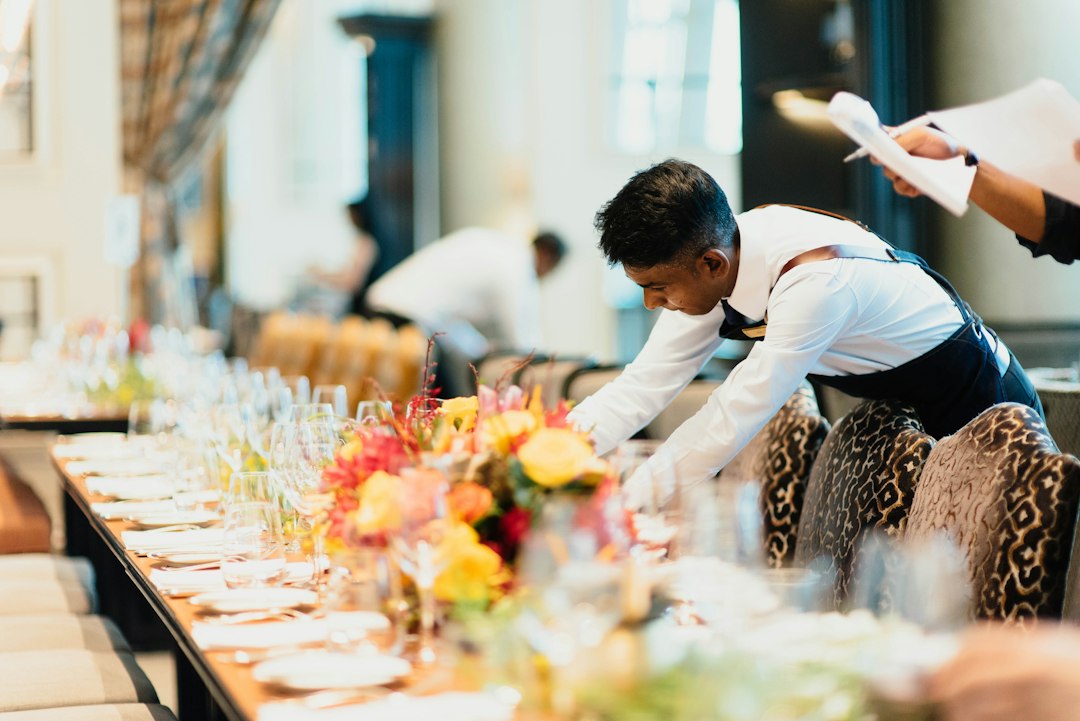
Holiday staffing fails in the schedule long before it fails on the floor. A restaurant does not run out of food during the busiest week of the year; it runs out of people. Every December, the same managers who ran a normal Tuesday service in October need a replacement cook on December 23rd, with no one left to call. The problem is rarely a shortage of workers in the labor market. It is a staffing plan built for an average week, asked to survive an unusual one. Fixing that gap takes specific steps, not goodwill.
Why holiday staffing breaks down first
December exposes every weak point in a staffing plan before it reaches the staff themselves. Holiday season staffing from October through January raises food service labor costs by an estimated 12 to 20 percent above the annual baseline, driven by premium pay for holiday shifts and the agency markups that rise as the available labor pool shrinks. That increase lands on a baseline that is already thin. Full-service restaurants carry combined food and labor costs of 55 to 65 percent of revenue, with labor alone at 30 to 35 percent, according to the National Restaurant Association's 2025 State of the Restaurant Industry report.
The hiring market adds pressure of its own. Job openings in accommodation and food services fell to about 684,000 in June 2026, yet 42 percent of full-service operators still report hiring problems. Early mornings, late nights, weekends, and holidays remain the hardest shifts to fill, which is exactly where a staffing shortage causes the most damage. A manager who waits until Thanksgiving week to fix the schedule starts the season already behind.
Post the December schedule before December starts
A posted schedule is more than a courtesy during the holiday rush. In a growing number of cities, it is the law. As of 2026, Oregon statewide, plus roughly eleven cities including New York City, Seattle, Chicago, Philadelphia, Emeryville, Berkeley, and Evanston, have active predictive scheduling or fair workweek laws that cover food service. These laws generally require advance notice of the schedule, typically 14 days, with predictability pay when the employer changes a posted shift. A restaurant in Seattle that changes a server's Saturday shift three days before Christmas, without consent, risks a real penalty, not only an uncomfortable conversation.
Planning ahead also helps the team stay. Predictable scheduling is one of the strongest retention levers in the service industry, and one of the least used. Erratic, last-minute schedules are a top reason restaurant staff quit, while predictable ones, posted a week or more ahead with staff input and easy shift swaps, are linked to roughly a quarter less absenteeism and a fifth less turnover. Build the December calendar in early November. Confirm it with the team by mid-month, then limit changes to real emergencies.
Follow overtime rules before the first double shift
Overtime law does not pause for December. Treating seasonal hours as an informal category is a costly mistake. Under the Fair Labor Standards Act, nonexempt seasonal employees must receive overtime pay at one and one-half times their regular rate for all hours worked over 40 in a workweek. A slow week cannot be averaged against a busy one to cancel the overtime; the law counts hours week by week. A line cook who works 30 hours the week before Thanksgiving and 50 hours during Christmas week still earns overtime for every hour past 40 in that second week.
State rules can set a stricter standard. California requires overtime after 8 hours in a workday and double time after 12 hours, even for seasonal employees. A banquet server in Los Angeles who works a 10-hour shift on New Year's Eve earns overtime for the last two hours, regardless of the weekly total. Check your state's rule before the season starts, not after the first payroll dispute.
"We can't add staff this time of year"
The most common objection from owners deserves a real answer, not a dismissal. Holiday-season labor costs already run 12 to 20 percent above the annual baseline before a single extra hire starts work. Training someone new for six weeks of work can look expensive next to simply asking current staff to work more hours.
But the calculation changes when a seasonal hire is treated as a pipeline, not a cost. Retail, which faces the same seasonal surge every November, treats this differently. Seasonal hiring is one of the most effective, lowest-risk talent pipelines a retailer has. Seasonal-to-permanent conversion typically runs between 20 and 40 percent, and the strongest chains do considerably better when they plan for it rather than leave it to chance. A restaurant can apply the same logic: hire a few seasonal servers in November, and treat your best one as a candidate for a permanent slot, not just extra coverage for six weeks. Cross-training current staff to cover a second station is a cheaper fix for a short two-week busy period, though it rarely works for a season that runs six weeks or longer.
What changes once you staff for the season, not just the rush
A restaurant that plans December in October stops treating the holidays as a surprise. It starts treating them as a known cost with a known fix. Industry surveys already show 75 percent of restaurant managers feeling overwhelmed by the extra workload that staffing vacancies create, and 56 percent of restaurant employees reporting that their mental health has declined because of staffing shortages. Those numbers do not have to describe your kitchen.
Three steps matter most. Post the December schedule by the first week of November, and treat any change inside your local notice window as a predictability-pay event, not an unplanned exception. Track overtime every week, not every month, so a busy Christmas week never exceeds 40 hours without your knowledge. Mark your best two or three seasonal hires by December 15, and start the conversion conversation before they accept a different job for January. Staff who see a plan, not only a rush, tend to return for the next one.