CONTACT
  • Login
Upgrade
GUSTOwebzine
Advertisement
  • Home
    • Our Authors
    • Subscribe for Free
    • Media Kit
    • Contact
    • Terms and Conditions
    • Cookie Policy
  • Discoveries
    • Chefs
  • Culinary Culture
  • Food & Drinks
  • Cooking Tips
    • Recipes
  • GUSTO Global
  • Insights
  • GUSTO Guide
    • Hotels Worldwide
    • Nightlife Worlwide
    • Restaurants Worldwide
    • Services Worldwide
  • Home
    • Our Authors
    • Subscribe for Free
    • Media Kit
    • Contact
    • Terms and Conditions
    • Cookie Policy
  • Discoveries
    • Chefs
  • Culinary Culture
  • Food & Drinks
  • Cooking Tips
    • Recipes
  • GUSTO Global
  • Insights
  • GUSTO Guide
    • Hotels Worldwide
    • Nightlife Worlwide
    • Restaurants Worldwide
    • Services Worldwide
No Result
View All Result
GUSTOwebzine
No Result
View All Result
Home Hospitality Insights

Outdoor catering: equipment and logistics

What every off-site catering team needs to know about equipment, temperature control, and seamless logistics.

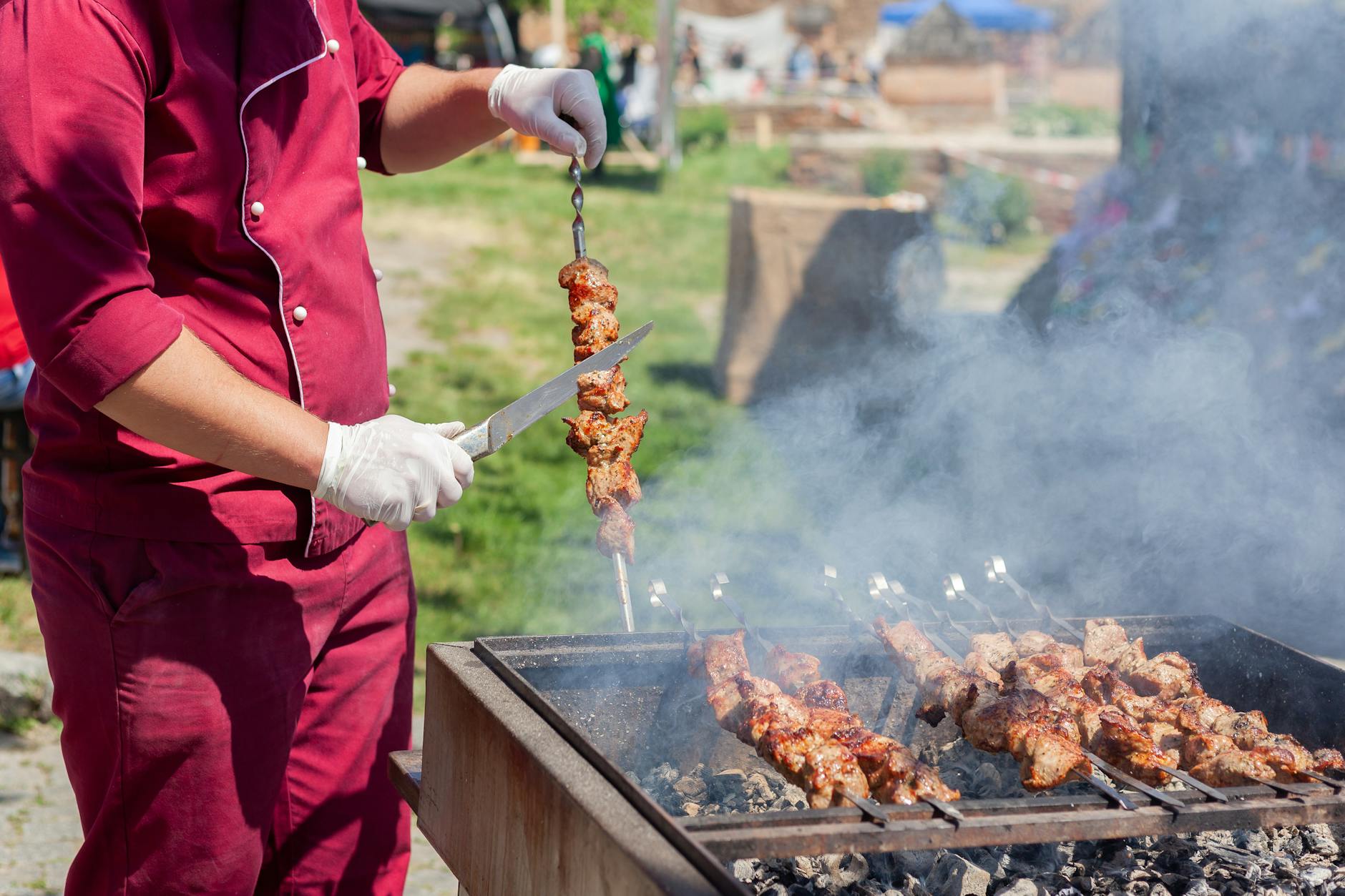
A professional chef arranges serving dishes at an outdoor catering station during a large off-site event.

Outdoor catering reveals the true character of a kitchen: remove the walls, the plumbing, and the fixed power supply, and what remains is either discipline or confusion.

Why off-site events demand a different mindset

Catering an outdoor event brings a set of logistical challenges that simply do not exist in a traditional indoor venue. Temperature, terrain, access, weather, and timing all become active factors. The professional caterer does not simply carry food to a location. That caterer reconstructs an entire kitchen system from scratch, in an unfamiliar space, often under time pressure.

Running a successful off-site catering operation means replicating the capability of a commercial kitchen in a location that may have no fixed infrastructure at all. This is a discipline that rewards precision. Experienced teams approach each venue as a new problem to solve, not a template to repeat.

GUSTO guide worldwide restaurants, hotels, nightlife, professional services GUSTO guide worldwide restaurants, hotels, nightlife, professional services GUSTO guide worldwide restaurants, hotels, nightlife, professional services

Catering teams build temporary kitchens complete with food prep areas, cooking equipment, and sanitation systems, all while maintaining the same hygiene standards required in a fixed restaurant. The guest sees none of this. They see food that arrives at the right temperature, served with care.

Core equipment for outdoor catering

Most outside catering setups require some combination of cooking equipment, preparation surfaces, handwash facilities, and hot holding equipment. The selection of each item depends on the menu, the guest count, and the access the venue provides.

All-weather cooking appliances, including smokers, griddles, camping stoves, induction cooktops, and wood-fired ovens, give teams a broad range of options for any setting. Induction units deserve particular attention. Induction cookers are compact, portable, and produce no ambient heat, which makes them well suited to enclosed or covered spaces.

Portable power solutions, including outdoor lighting and generators to run appliances, are often overlooked in an off-site equipment list, especially for evening events. Additionally, transport and storage solutions such as food transport carts, insulated carriers, coolers, and ice chests, combined with a clear labeling system and stackable bins, keep ingredients and dishes in proper order.

Transport and temperature control

Temperature management is where outdoor catering most often fails. For temperature-sensitive meals, insulated bags are essential for maintaining heat or cold during transport. Secure containers and plastic wrap prevent leaks and spills from soups or sauces in transit.

Keeping ingredients at safe temperatures during outdoor events is non-negotiable. Beyond the journey to the venue, teams must maintain correct temperatures throughout service. Power requirements must be confirmed at the venue in advance. LPG cooking equipment can operate without a mains power supply, but electric fridges and induction cooktops require a reliable power source.

Planning the most efficient route to the event location and allocating sufficient time for travel are basic but critical steps. Equipment must be packed securely to prevent shifting during transit, and specific team members should be assigned to oversee the packing and unpacking process to reduce the risk of damage or loss.

A catering team member carries insulated food containers during the setup of an outdoor catering service at an event venue.

Expert perspective on off-site logistics

Off-premise catering will never be perfect in the literal sense. The client believes it is perfect, but behind the scenes the operation is complex and demanding. Success comes from managing every team member toward the best possible result at the end. The equipment list alone is extensive: linens, chairs, tables, china, flatware, stemware, napkins, chargers, portable bars, refrigeration units, and sometimes full mobile kitchens operating from parking areas. Each piece must be transported, set up, operated, and broken down, often within tight building access windows. That gap between what the guest experiences and what the team executes is exactly where experienced logistics professionals prove their value.

Industry perspective, off-premise catering and event logistics professionals

Hygiene and food safety standards

Off-site events require the same food hygiene standards as a fixed kitchen. This is not negotiable, and it is where the professionalism of a catering operation becomes visible to health authorities. Portable handwashing stations are essential for locations without sinks or water connections.

International food safety frameworks provide a useful foundation. The Codex Alimentarius, the joint FAO and WHO food code, is a collection of international standards, guidelines, and codes of practice. Codex standards are used worldwide to harmonize national food safety regulations. Caterers who operate across multiple countries benefit from understanding these standards. They form the basis for local compliance in most markets.

A caterer serves food to guests at an outdoor catering buffet table set up for a corporate event.

Sustainability in outdoor catering

Consumers show increasing concern about the environmental impact of their food choices. Caterers respond by minimizing plastic use, offering biodegradable packaging, and sourcing ingredients from sustainable farms. These practices also reduce the volume of waste that a team must manage after an event.

Sustainability is now a defining feature of modern catering. The focus has moved from simply reducing waste to designing menus that use every ingredient well. Chefs create broths from vegetable trimmings and turn bread from the previous day into garnishes. For outdoor catering specifically, this thinking also applies to equipment choices. Reusable items reduce both cost and material waste over time.

Inventory management software helps reduce over-ordering and cuts down on food waste, which matters especially when a team is working far from a central kitchen. Good planning at the preparation stage limits both loss and environmental impact.


-

Restaurant owner checking energy relief eligibility on a bill

Energy relief for restaurants: what qualifies

14/10/2026
Chef calculating menu pricing for a new dish in a professional kitchen

Menu pricing that protects your margin

09/10/2026
A hotel dining team member tastes a new dish during a pre-service training session, building ingredient knowledge.

Hotel dining: training staff on global ingredients

20/09/2026
a woman arranges roasted root vegetables on a plate as part of the new autumn menus service in a kitchen.

Autumn menus: 8 ways restaurants adapt

14/09/2026
A hotel chef selects seasonal produce at a local market, reflecting the values of culturally grounded dining programmes

Dining programmes that reflect local culture

09/09/2026
A head chef studies a new autumn menu at a prep counter, preparing for the seasonal shift from summer to cooler months

Seasonal shift: how restaurants recalibrate

30/08/2026

Outdoor catering as professional practice

Outdoor catering is not a simplified version of kitchen work. It is a more demanding form of it. Every element that a fixed kitchen provides automatically must be planned, packed, transported, assembled, and then removed. The teams who do this well share a common approach: they treat logistics as seriously as the menu itself.

Interactive catering experiences, including live cooking stations, build-your-own meal bars, and immersive dining concepts, are becoming central to high-end outdoor events. These formats raise the logistical challenge further, because equipment must support live performance as well as production. Yet they also raise the standard of the guest experience in ways that repay the effort.

Outdoor catering at its best is a form of seasonal, site-specific hospitality. Plan the equipment with care, respect the hygiene requirements, and let the location inform the menu. That is where the discipline meets the craft.

Discover more about outdoor catering

  • Codex Alimentarius: International Food Safety Standards (FAO/WHO)
  • 2025 Catering Industry Report: Key Trends, Growth Insights and Technology Shifts (Curate)
  • 8 Event Catering Trends to Watch in 2026 and Beyond (Paytronix)
Previous Post

Gluten-free Paris: 8 best bistros

Next Post

Tipping customs across 10 countries

Related Posts

Restaurant owner checking energy relief eligibility on a bill
Hospitality Insights

Energy relief for restaurants: what qualifies

14/10/2026
Chef calculating menu pricing for a new dish in a professional kitchen
Hospitality Insights

Menu pricing that protects your margin

09/10/2026
A hotel dining team member tastes a new dish during a pre-service training session, building ingredient knowledge.
Hospitality Insights

Hotel dining: training staff on global ingredients

20/09/2026
a woman arranges roasted root vegetables on a plate as part of the new autumn menus service in a kitchen.
Hospitality Insights

Autumn menus: 8 ways restaurants adapt

14/09/2026
A hotel chef selects seasonal produce at a local market, reflecting the values of culturally grounded dining programmes
Hospitality Insights

Dining programmes that reflect local culture

09/09/2026
Next Post
A smiling server accepts a cash tip at a restaurant table, illustrating tipping customs in a fine dining setting.

Tipping customs across 10 countries

Leave a Reply Cancel reply

Your email address will not be published. Required fields are marked *

Truelang AI Translations Truelang AI Translations Truelang AI Translations
No Result
View All Result

Our Focus

GUSTOwebzine is your international window on food culture: culinary lifestyle, trends, recipes and gastronomic stories for a global audience with a passion for exceptional taste.

Our Readers

GUSTOwebzine addresses readers who engage with food culture at a high level: as culinary professionals, passionate home cooks, food entrepreneurs, and tastemakers in their communities.

Our Approach

Recipes, trends, and dining culture are integrated as context and indicators of creativity, identity, and the social forces shaping how the world eats, not standalone content.

Recent Post

  • Cider doughnuts worth the drive from NYC
  • Energy relief for restaurants: what qualifies

© 2026 GUSTOwebzine by NOOR & NOOR — part of WEBZINE.world.

Welcome Back!

Login to your account below

Forgotten Password?

Retrieve your password

Please enter your username or email address to reset your password.

Log In
Manage Consent
To provide the best experiences, we use technologies like cookies to store and/or access device information. Consenting to these technologies will allow us to process data such as browsing behavior or unique IDs on this site. Not consenting or withdrawing consent, may adversely affect certain features and functions.
Functional Always active
The technical storage or access is strictly necessary for the legitimate purpose of enabling the use of a specific service explicitly requested by the subscriber or user, or for the sole purpose of carrying out the transmission of a communication over an electronic communications network.
Preferences
The technical storage or access is necessary for the legitimate purpose of storing preferences that are not requested by the subscriber or user.
Statistics
The technical storage or access that is used exclusively for statistical purposes. The technical storage or access that is used exclusively for anonymous statistical purposes. Without a subpoena, voluntary compliance on the part of your Internet Service Provider, or additional records from a third party, information stored or retrieved for this purpose alone cannot usually be used to identify you.
Marketing
The technical storage or access is required to create user profiles to send advertising, or to track the user on a website or across several websites for similar marketing purposes.
  • Manage options
  • Manage services
  • Manage {vendor_count} vendors
  • Read more about these purposes
View preferences
  • {title}
  • {title}
  • {title}
No Result
View All Result
  • Home
    • Our Authors
    • Subscribe for Free
    • Media Kit
    • Contact
    • Terms and Conditions
    • Cookie Policy
  • Discoveries
    • Chefs
  • Culinary Culture
  • Food & Drinks
  • Cooking Tips
    • Recipes
  • GUSTO Global
  • Insights
  • GUSTO Guide
    • Hotels Worldwide
    • Nightlife Worlwide
    • Restaurants Worldwide
    • Services Worldwide

© 2026 GUSTOwebzine by NOOR & NOOR — part of WEBZINE.world.

Not enough quota to unlock this post
Unlock left : 0
Are you sure want to cancel subscription?
Verified by MonsterInsights
enEnglishdeDeutschesEspañolfrFrançaisnlNederlands