CONTACT
  • Login
Upgrade
GUSTOwebzine
Advertisement
  • Home
    • Our Authors
    • Subscribe for Free
    • Media Kit
    • Contact
    • Terms and Conditions
    • Cookie Policy
  • Discoveries
    • Chefs
  • Culinary Culture
  • Food & Drinks
  • Cooking Tips
    • Recipes
  • GUSTO Global
  • Insights
  • GUSTO Guide
    • Hotels Worldwide
    • Nightlife Worlwide
    • Restaurants Worldwide
    • Services Worldwide
  • Home
    • Our Authors
    • Subscribe for Free
    • Media Kit
    • Contact
    • Terms and Conditions
    • Cookie Policy
  • Discoveries
    • Chefs
  • Culinary Culture
  • Food & Drinks
  • Cooking Tips
    • Recipes
  • GUSTO Global
  • Insights
  • GUSTO Guide
    • Hotels Worldwide
    • Nightlife Worlwide
    • Restaurants Worldwide
    • Services Worldwide
No Result
View All Result
GUSTOwebzine
No Result
View All Result
Home Hospitality Insights

Tipping customs across 10 countries

What every traveler needs to know before leaving money on the table in a foreign restaurant.

A smiling server accepts a cash tip at a restaurant table, illustrating tipping customs in a fine dining setting.

Tipping customs tell you something true about a place: how it values labor, how it prices hospitality, and what a meal actually costs before the bill arrives.

Why gratuity is not a universal language

Tipping customs around the world reflect diverse cultural values, economic systems, and attitudes toward service work. While some countries like the United States rely heavily on tipping to supplement low wages, others like Japan consider it unnecessary or even insulting. That contrast is not a minor footnote. It shapes the entire relationship between a diner and the person who carries the plate.

Survey respondents admitted that tipping inappropriately was a top 10 mistake they have made while traveling internationally. The error goes in both directions. Tipping too much can signal disrespect in one country. Tipping too little can signal indifference in another. The table below covers 10 countries where this distinction matters most.

GUSTO guide worldwide restaurants, hotels, nightlife, professional services GUSTO guide worldwide restaurants, hotels, nightlife, professional services GUSTO guide worldwide restaurants, hotels, nightlife, professional services

Practices can vary even within countries, especially between urban and rural areas or local versus tourist establishments. Treat every figure here as a guide, not a fixed rule.

Countries where tipping is expected

United States. Tipping in America is typically expected by servers because the hourly wage they receive can be as low as $2.13 an hour. In general, a 20% tip shows your server that all your needs were met during your meal. Housekeeping deserves $2 to 5 per night, placed clearly with a note.

Mexico. In Mexico, tipping practices closely mirror the United States, where 15 to 20% is considered standard for good service. Cash is strongly preferred in smaller restaurants, where card tips may not reach the server directly.

United Kingdom. In the UK, tipping is less obligatory. A service charge may be included in your bill, but if not, 10 to 15% is appreciated in restaurants. Pubs usually do not expect tips, and rounding up the bill is sufficient.

Morocco. Small tips for hotel staff, guides, and drivers are all customary in Morocco. In Rabat, a server may hope for a 10% tip. In medina restaurants that serve tourists, rounding up is always a safe choice.

Countries where gratuity is optional or modest

France. While a service charge is included in the bill in France, it is customary to leave small change or round up to the nearest euro. Across much of Europe, staff are paid a living wage. Tips are a courtesy, not a lifeline.

Germany. Germany does not have a strong tipping culture, so leaving gratuity is up to you. The general rule is to leave a 5 to 10% tip unless a charge is included in the bill. Telling the server the total you want to pay, rather than leaving coins on the table, is the preferred local method.

Italy. Some tourist areas in Italy add a coperto, meaning a cover charge, to the bill, but this gratuity is not always shared with the staff. If you wish to tip in Italy, leave cash to make sure the server actually receives it. A service charge is often included; additional tipping is not expected but appreciated for exceptional service.

South Africa. In Cape Town, tips may start at 10%, but excellent service may increase that to 20%. South Africa has significant economic inequality, and tips form a meaningful part of many workers’ monthly income. Always check the bill for an existing service charge before adding more.


-

Restaurant owner checking energy relief eligibility on a bill

Energy relief for restaurants: what qualifies

14/10/2026
Chef calculating menu pricing for a new dish in a professional kitchen

Menu pricing that protects your margin

09/10/2026
A hotel dining team member tastes a new dish during a pre-service training session, building ingredient knowledge.

Hotel dining: training staff on global ingredients

20/09/2026
a woman arranges roasted root vegetables on a plate as part of the new autumn menus service in a kitchen.

Autumn menus: 8 ways restaurants adapt

14/09/2026
A hotel chef selects seasonal produce at a local market, reflecting the values of culturally grounded dining programmes

Dining programmes that reflect local culture

09/09/2026
A head chef studies a new autumn menu at a prep counter, preparing for the seasonal shift from summer to cooler months

Seasonal shift: how restaurants recalibrate

30/08/2026

A traveler reviews a restaurant bill at a European café, navigating local tipping customs before leaving a gratuity.

Countries where tipping is uncommon or unwelcome

Japan. A service charge is typically included as part of bills at hotels and restaurants in Japan, so tipping is generally not practiced. Japan also has a set of traditions regarding giving money as a gift, so tipping may cause confusion or be considered rude if the money is given without being placed in a special gift envelope first.

Australia. Tipping is not expected or required in Australia. The tipping culture is very relaxed as it does not directly affect workers’ pay. However, if the service exceeds expectations, tipping 10% would be appreciated.

Expert perspective on global service culture

Understanding tipping customs is not simply about money. It is about reading a system that each country has built over generations. In Japan and Australia, high base wages and included service charges mean that a tip can feel out of place, even disrespectful, because it implies the worker needs supplementing. In the United States, the wage structure makes tipping a near-obligation rather than a reward. In many parts of Africa and the Middle East, gratuity is a meaningful economic contribution to a worker’s livelihood. The most informed travelers learn to ask one question before anything else: does the price of this meal already include the cost of the person serving it? When the answer is yes, a small gesture of appreciation is enough. When the answer is no, a fair tip is a form of basic fairness.

Industry perspective, hospitality and culinary travel professionals
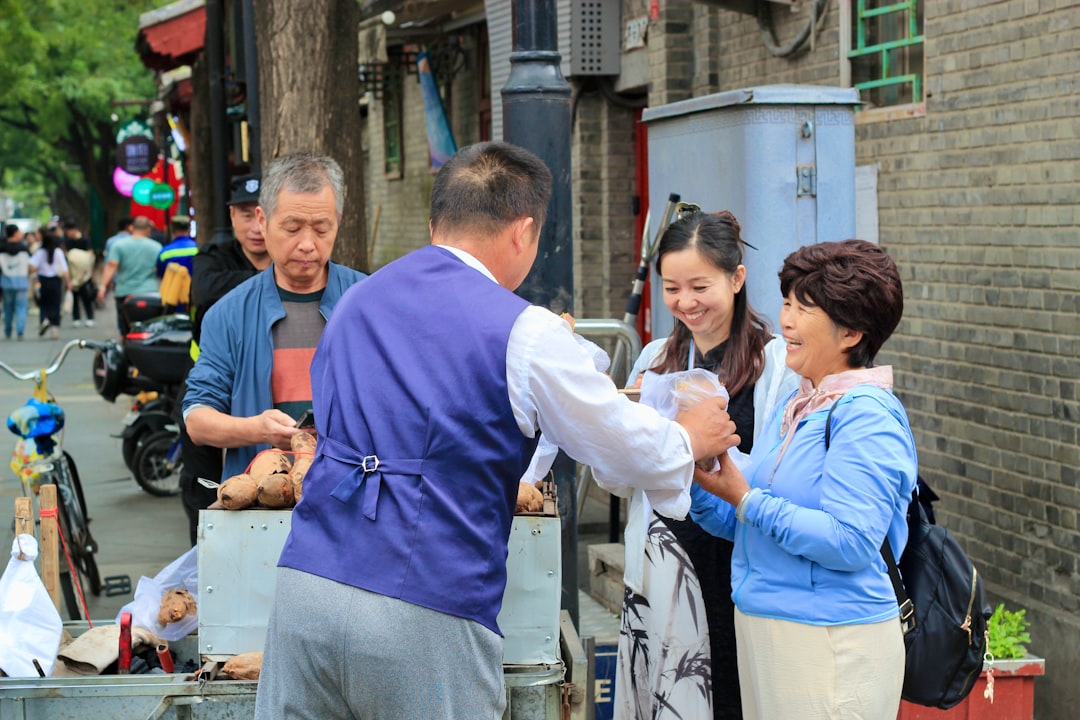
A tourist hands local currency to a market guide, reflecting tipping customs in destinations across Africa and the Middle East.

How to approach tipping customs when you travel

Tipping customs around the world reflect diverse cultural values, economic systems, and attitudes toward service work. No single percentage applies everywhere. The most practical habit is to review your bill before you pay. Always review your bill carefully before tipping. Many countries automatically include service charges.

Always carry small denominations of local currency for tipping. While US dollars are sometimes accepted in tourist areas, local currency is always preferred and more practical. For fine dining, research the specific restaurant before you arrive. Digital payment screens now prompt for gratuity in many countries where tipping was previously unknown, so local norms are shifting.

Conclusion

Tipping customs are one of the clearest signals a place sends about how it values the people who work in its kitchens and dining rooms. Across these 10 countries, the range moves from obligatory to offensive, and every point in between carries meaning. Carry local currency, read the bill, and observe how other diners at neighboring tables behave. Those 3 habits will guide you better than any percentage. When tipping customs are approached with genuine curiosity rather than assumption, they become a way to connect more honestly with the places and the people behind every meal.


Discover more about tipping customs

  • List of tipping customs by country (Wikipedia)
  • International tipping guide by country (TipWhiz, updated 2025)
  • What to tip when traveling and how to avoid getting misled (Business Traveller, 2026)
Previous Post

Outdoor catering: equipment and logistics

Next Post

NYC Spring Dining 2026: 8 New Restaurant Openings

Related Posts

Restaurant owner checking energy relief eligibility on a bill
Hospitality Insights

Energy relief for restaurants: what qualifies

14/10/2026
Chef calculating menu pricing for a new dish in a professional kitchen
Hospitality Insights

Menu pricing that protects your margin

09/10/2026
A hotel dining team member tastes a new dish during a pre-service training session, building ingredient knowledge.
Hospitality Insights

Hotel dining: training staff on global ingredients

20/09/2026
a woman arranges roasted root vegetables on a plate as part of the new autumn menus service in a kitchen.
Hospitality Insights

Autumn menus: 8 ways restaurants adapt

14/09/2026
A hotel chef selects seasonal produce at a local market, reflecting the values of culturally grounded dining programmes
Hospitality Insights

Dining programmes that reflect local culture

09/09/2026
Next Post
Group of friends enjoying a dinner at a restaurant, smiling and chatting around a wooden table with wine glasses and plates.

NYC Spring Dining 2026: 8 New Restaurant Openings

Leave a Reply Cancel reply

Your email address will not be published. Required fields are marked *

Truelang AI Translations Truelang AI Translations Truelang AI Translations
No Result
View All Result

Our Focus

GUSTOwebzine is your international window on food culture: culinary lifestyle, trends, recipes and gastronomic stories for a global audience with a passion for exceptional taste.

Our Readers

GUSTOwebzine addresses readers who engage with food culture at a high level: as culinary professionals, passionate home cooks, food entrepreneurs, and tastemakers in their communities.

Our Approach

Recipes, trends, and dining culture are integrated as context and indicators of creativity, identity, and the social forces shaping how the world eats, not standalone content.

Recent Post

  • Cider doughnuts worth the drive from NYC
  • Energy relief for restaurants: what qualifies

© 2026 GUSTOwebzine by NOOR & NOOR — part of WEBZINE.world.

Welcome Back!

Login to your account below

Forgotten Password?

Retrieve your password

Please enter your username or email address to reset your password.

Log In
Manage Consent
To provide the best experiences, we use technologies like cookies to store and/or access device information. Consenting to these technologies will allow us to process data such as browsing behavior or unique IDs on this site. Not consenting or withdrawing consent, may adversely affect certain features and functions.
Functional Always active
The technical storage or access is strictly necessary for the legitimate purpose of enabling the use of a specific service explicitly requested by the subscriber or user, or for the sole purpose of carrying out the transmission of a communication over an electronic communications network.
Preferences
The technical storage or access is necessary for the legitimate purpose of storing preferences that are not requested by the subscriber or user.
Statistics
The technical storage or access that is used exclusively for statistical purposes. The technical storage or access that is used exclusively for anonymous statistical purposes. Without a subpoena, voluntary compliance on the part of your Internet Service Provider, or additional records from a third party, information stored or retrieved for this purpose alone cannot usually be used to identify you.
Marketing
The technical storage or access is required to create user profiles to send advertising, or to track the user on a website or across several websites for similar marketing purposes.
  • Manage options
  • Manage services
  • Manage {vendor_count} vendors
  • Read more about these purposes
View preferences
  • {title}
  • {title}
  • {title}
No Result
View All Result
  • Home
    • Our Authors
    • Subscribe for Free
    • Media Kit
    • Contact
    • Terms and Conditions
    • Cookie Policy
  • Discoveries
    • Chefs
  • Culinary Culture
  • Food & Drinks
  • Cooking Tips
    • Recipes
  • GUSTO Global
  • Insights
  • GUSTO Guide
    • Hotels Worldwide
    • Nightlife Worlwide
    • Restaurants Worldwide
    • Services Worldwide

© 2026 GUSTOwebzine by NOOR & NOOR — part of WEBZINE.world.

Not enough quota to unlock this post
Unlock left : 0
Are you sure want to cancel subscription?
Verified by MonsterInsights
enEnglishdeDeutschesEspañolfrFrançaisnlNederlands