
CONTACT
  • Login
Upgrade
GUSTOwebzine
Advertisement
  • Home
    • Our Authors
    • Subscribe for Free
    • Media Kit
    • Contact
    • Terms and Conditions
    • Cookie Policy
  • Discoveries
    • Chefs
  • Culinary Culture
  • Food & Drinks
  • Cooking Tips
    • Recipes
  • GUSTO Global
  • Insights
  • GUSTO Guide
    • Hotels Worldwide
    • Nightlife Worlwide
    • Restaurants Worldwide
    • Services Worldwide
  • Home
    • Our Authors
    • Subscribe for Free
    • Media Kit
    • Contact
    • Terms and Conditions
    • Cookie Policy
  • Discoveries
    • Chefs
  • Culinary Culture
  • Food & Drinks
  • Cooking Tips
    • Recipes
  • GUSTO Global
  • Insights
  • GUSTO Guide
    • Hotels Worldwide
    • Nightlife Worlwide
    • Restaurants Worldwide
    • Services Worldwide
No Result
View All Result
GUSTOwebzine
No Result
View All Result
Home Hospitality Insights

Loyal regulars: no marketing budget needed

Small restaurants that focus on presence and ritual build the kind of guest loyalty no advertisement can buy.

A chef steps out of a small restaurant kitchen to welcome loyal regulars at their table

Loyal regulars do not arrive because of a campaign. They arrive because a small restaurant gave them a reason to feel at home, and then did it again the next week.

Why retention matters more than reach

Restaurants average a retention rate of around 55 percent, well below the global benchmark of 75 percent, with 70 percent of first-time diners never returning. That number should sit with every small operator for a moment. Most people who walk through the door once will not come back. The question is not how to attract more strangers. The question is how to give the ones who arrive a reason to stay.

Repeat business drives revenue. Between 65 and 80 percent of restaurant sales come from regulars. For a small kitchen with no advertising budget, that figure is the entire business model. Building loyal regulars is not a marketing strategy. It is a survival strategy, and it begins long before any guest sits down.

GUSTO guide worldwide restaurants, hotels, nightlife, professional services GUSTO guide worldwide restaurants, hotels, nightlife, professional services GUSTO guide worldwide restaurants, hotels, nightlife, professional services

Acquiring a new customer costs 5 to 25 times more than retaining an existing one, according to research published in Harvard Business Review. Small restaurants cannot compete on reach or spend. They can compete on depth.

The role of food quality and honest consistency

Key factors influencing restaurant loyalty include satisfaction, service quality, and food quality, which are crucial for fostering long-term relationships and ensuring repeated patronage. This is not a surprise to anyone who has cooked for a living. What surprises many operators is how fragile each of those 3 factors is when any 1 of them weakens.

Consistency is the discipline beneath quality. A guest who eats the same dish on 3 separate visits expects the same experience each time. When the dish changes because an ingredient is unavailable or a line cook is new, the guest notices. They do not always say so, but they record it. Additional significant factors in building loyalty include sensory experiences, sustainable practices, and customer engagement. In a small restaurant, all 3 of these live in the hands of the people who cook and serve.

Sourcing with care communicates values without words. A menu that shifts with the season, that names the farm or the fisher, tells a guest that the kitchen pays attention. That attention transfers. The guest pays attention too.

Community as the foundation of loyalty

Getting involved with local causes is a strong way to show that a restaurant cares and build a loyal customer base. Sponsoring a charity event, donating meals, or participating in community activities generates goodwill that often turns into long-term customer loyalty. For a small restaurant, the community is not a marketing channel. It is the reason the restaurant exists.

Knowing names matters. A chef who greets a returning guest by name, who remembers that the guest does not eat shellfish, who sets aside the last portion of a dish because they know someone will want it, practises a form of retention that no loyalty app can replicate. The personal touch that used to exist only in small, intimate dining settings is exactly what larger operations now spend money trying to recreate through technology. Small restaurants already have it. The work is to protect it as the room fills.

Creativity, community connection, and consistency often matter more than a big budget. This is the quiet competitive advantage of the small restaurant. It is structural.
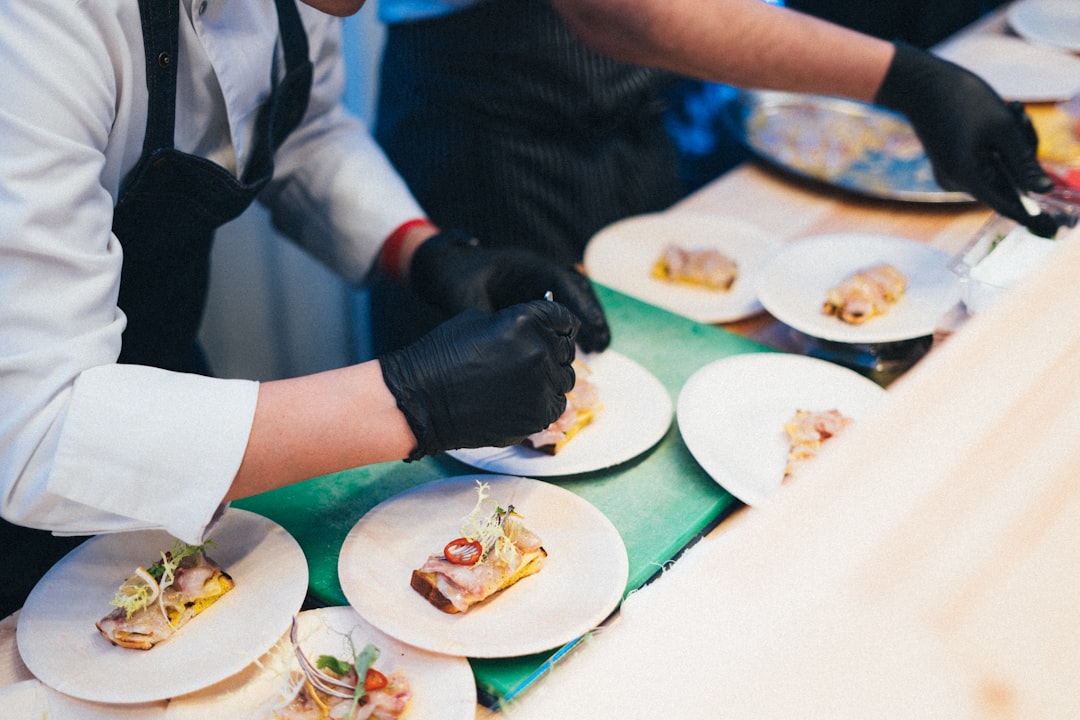
A cook plates a seasonal dish with care, the kind of consistency that turns first-time visitors into loyal regulars

An industry perspective on loyalty and emotion

The biggest shift in how guests relate to restaurants is not about points or punch cards. It is about emotional connection. Guests are no longer satisfied by a transaction; they want to feel seen, remembered, and valued. In a small restaurant, that emotional work happens in person, in the daily rituals of service, in the way a server remembers a preference or a chef steps out of the kitchen to ask how a meal tasted. These moments cost nothing to deliver, but they build something that advertising cannot buy. Research consistently shows that service quality and food quality are the primary drivers of repeat visits, but the differentiator at the top of that hierarchy is always feeling. A guest who leaves feeling genuinely welcomed will return. A guest who leaves feeling processed will not.

Industry perspective, hospitality loyalty and guest experience professionals

-

a woman arranges roasted root vegetables on a plate as part of the new autumn menus service in a kitchen.

Autumn menus: 8 ways restaurants adapt

14/09/2026
A hotel chef selects seasonal produce at a local market, reflecting the values of culturally grounded dining programmes

Dining programmes that reflect local culture

09/09/2026
A head chef studies a new autumn menu at a prep counter, preparing for the seasonal shift from summer to cooler months

Seasonal shift: how restaurants recalibrate

30/08/2026
A chef plates a course during service, embodying the deliberate craft behind tasting menus that tell a seasonal story.

Tasting menus that tell a real story

25/08/2026
A chef carefully plates a fresh seafood dish as part of resort menus designed for peak coastal season guests

How Coastal Resort Restaurants Adapt Menus for August

15/08/2026
a common scene inside well-run restaurant groups focused on quality and consistency.

Restaurant groups: quality across locations

10/08/2026

Building ritual into the guest experience

Ritual is one of the most underused tools in small restaurants. A ritual is any repeated, recognisable act that a guest can anticipate. It might be a small plate that arrives before the menu is read, a specific way the bread is presented, or a particular greeting that is always the same. These acts signal that the restaurant has a character. They give the guest something to return to, not just a meal but a sequence of familiar moments.

Rather than focusing solely on new guest acquisition, retention remains one of the most powerful growth drivers. A guest who has already visited once is significantly easier and less expensive to bring back. The second visit is the most important visit a small restaurant can secure. Converting first-time guests into regulars through intentional follow-up, smart communication, loyalty incentives, and frictionless return visits is the real opportunity.

Simple, honest gestures carry weight. Occasionally offering a complimentary item or a handwritten thank-you note can create positive word of mouth. The gesture does not need to be expensive. It needs to be genuine and it needs to be remembered by the person who receives it.

A server takes notes during service, building the personal knowledge that keeps loyal regulars coming back

Loyal regulars are built one visit at a time

Loyal regulars are not the result of a campaign or a platform. They are the result of many small decisions made with care: a dish prepared with the same attention on a slow Tuesday as on a full Friday, a name remembered across 3 months, a seasonal ingredient introduced because it was the right thing to serve. With competition growing and consumer spending under pressure, the greatest opportunity for differentiation lies in something timeless: hospitality.

For small restaurants, that is good news. Hospitality does not require a budget. It requires presence. Start with the guest who is already in the room. Give them a reason to return. Loyal regulars will follow, not because they were targeted, but because they were seen. Return to that principle every service, and the restaurant will grow from the inside out.

Discover more about loyal regulars

  • Exploring the Drivers of Customer Loyalty in the Restaurant Industry (DOAJ Systematic Review)
  • Restaurant Customer Retention Strategies That Drive ROI (Evokad, 2026)
  • 5 Key Restaurant Marketing Shifts to Watch in 2026 (FSR Magazine)

author avatar
Lars Eriksen
Lars Eriksen grew up foraging wild herbs on the Danish coast with his grandmother, long before foraging became a culinary movement. He studied gastronomy at the University of Copenhagen and has spent two decades documenting the New Nordic revolution from the inside. From Noma's legacy to the next generation of Copenhagen chefs redefining what seasonal and sustainable really means, Lars writes with the quiet authority of someone who was there from the beginning.
See Full Bio
Previous Post

Best Summer brunch deals to book in Dubai

Next Post

EU geographical indication foods worth the try

Related Posts

a woman arranges roasted root vegetables on a plate as part of the new autumn menus service in a kitchen.
Hospitality Insights

Autumn menus: 8 ways restaurants adapt

14/09/2026
A hotel chef selects seasonal produce at a local market, reflecting the values of culturally grounded dining programmes
Hospitality Insights

Dining programmes that reflect local culture

09/09/2026
A head chef studies a new autumn menu at a prep counter, preparing for the seasonal shift from summer to cooler months
Hospitality Insights

Seasonal shift: how restaurants recalibrate

30/08/2026
A chef plates a course during service, embodying the deliberate craft behind tasting menus that tell a seasonal story.
Hospitality Insights

Tasting menus that tell a real story

25/08/2026
A chef carefully plates a fresh seafood dish as part of resort menus designed for peak coastal season guests
Hospitality Insights

How Coastal Resort Restaurants Adapt Menus for August

15/08/2026
Next Post
Cozy market stall with shelves of bottles, jars, and dried goods; a customer browses the counter display behind glass.

EU geographical indication foods worth the try

Leave a Reply Cancel reply

Your email address will not be published. Required fields are marked *

Truelang AI Translations Truelang AI Translations Truelang AI Translations
No Result
View All Result

Our Focus

GUSTOwebzine is your international window on food culture: culinary lifestyle, trends, recipes and gastronomic stories for a global audience with a passion for exceptional taste.

Our Readers

GUSTOwebzine addresses readers who engage with food culture at a high level: as culinary professionals, passionate home cooks, food entrepreneurs, and tastemakers in their communities.

Our Approach

Recipes, trends, and dining culture are integrated as context and indicators of creativity, identity, and the social forces shaping how the world eats, not standalone content.

Recent Post

  • Truffle dinners in NYC this autumn
  • Autumn equinox and how cooks rethink heat

© 2026 GUSTOwebzine by NOOR & NOOR — part of WEBZINE.world.

Welcome Back!

Login to your account below

Forgotten Password?

Retrieve your password

Please enter your username or email address to reset your password.

Log In
Manage Consent
To provide the best experiences, we use technologies like cookies to store and/or access device information. Consenting to these technologies will allow us to process data such as browsing behavior or unique IDs on this site. Not consenting or withdrawing consent, may adversely affect certain features and functions.
Functional Always active
The technical storage or access is strictly necessary for the legitimate purpose of enabling the use of a specific service explicitly requested by the subscriber or user, or for the sole purpose of carrying out the transmission of a communication over an electronic communications network.
Preferences
The technical storage or access is necessary for the legitimate purpose of storing preferences that are not requested by the subscriber or user.
Statistics
The technical storage or access that is used exclusively for statistical purposes. The technical storage or access that is used exclusively for anonymous statistical purposes. Without a subpoena, voluntary compliance on the part of your Internet Service Provider, or additional records from a third party, information stored or retrieved for this purpose alone cannot usually be used to identify you.
Marketing
The technical storage or access is required to create user profiles to send advertising, or to track the user on a website or across several websites for similar marketing purposes.
  • Manage options
  • Manage services
  • Manage {vendor_count} vendors
  • Read more about these purposes
View preferences
  • {title}
  • {title}
  • {title}
No Result
View All Result
  • Home
    • Our Authors
    • Subscribe for Free
    • Media Kit
    • Contact
    • Terms and Conditions
    • Cookie Policy
  • Discoveries
    • Chefs
  • Culinary Culture
  • Food & Drinks
  • Cooking Tips
    • Recipes
  • GUSTO Global
  • Insights
  • GUSTO Guide
    • Hotels Worldwide
    • Nightlife Worlwide
    • Restaurants Worldwide
    • Services Worldwide

© 2026 GUSTOwebzine by NOOR & NOOR — part of WEBZINE.world.

Not enough quota to unlock this post
Unlock left : 0
Are you sure want to cancel subscription?
Verified by MonsterInsights
enEnglishdeDeutschesEspañolfrFrançaisnlNederlands