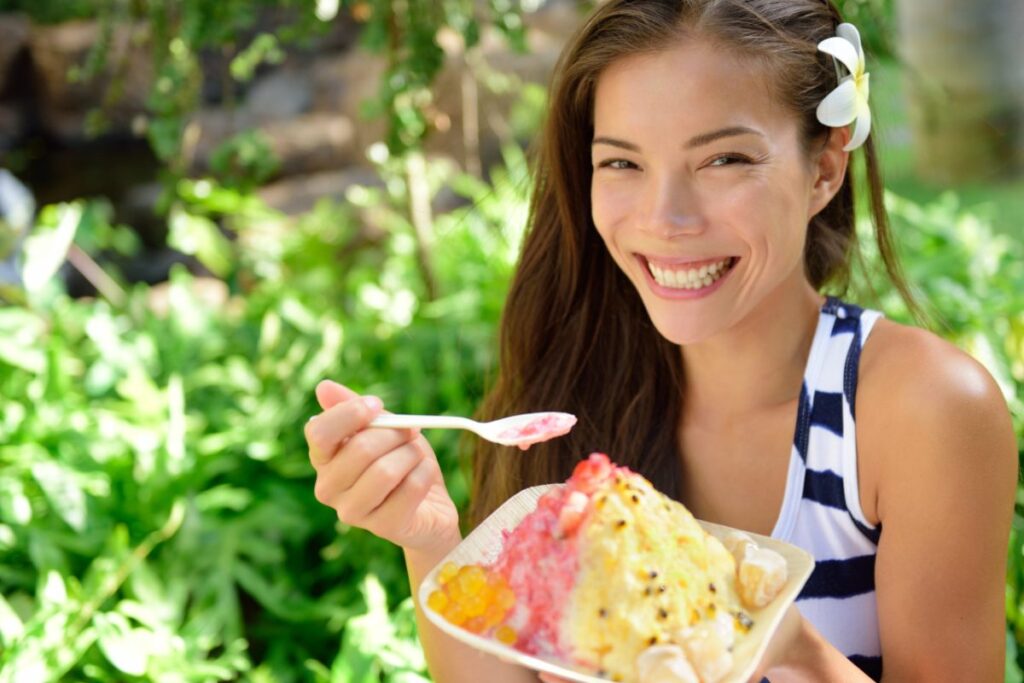
Kakigori has always been more than cold sweetness: in Tokyo’s finest specialist shops, the bowl arrives like a small ceremony, a meeting of precision, season, and silence.
Why kakigori deserves your full attention
Kakigori is a quintessential summer dessert in Japan. This traditional frozen treat features fluffy shaved ice topped with colorful syrups, and its history spans over 1,000 years, dating back to the Heian period (794 to 1185). France has its sorbet; Japan has this. Both belong to a culture that understands that a cold dessert, made with care, is a small act of beauty.

Once the humble offering of summer festivals and school fairs, kakigori has undergone a dramatic transformation. Today it is a gourmet dessert, crafted by specialists, made with ultra-fine ice and layered with high-quality, often seasonal ingredients. The best shops now approach each bowl the way a pastry chef approaches a composed plate.
Japanese kakigori often follows a philosophy of subtraction rather than addition, refining a single ingredient to bring out its full potential. Some shops use only wasanbon (traditional Japanese sugar) syrup to highlight the flavor of the ice, while others serve unsweetened Uji matcha to let the bitterness speak for itself. This restraint is familiar to any French sensibility. It is the discipline that produces elegance.
The ice itself: where the craft begins
Before you choose a flavor, understand the material. Most top kakigori shops use large blocks of ultra-pure, slow-frozen ice, often made from mineral water. The slow freezing process ensures the ice is clear, dense, and free of air bubbles. When shaved properly, using ultra-sharp, hand-cranked or electric machines, this kind of ice turns into a soft, snowy fluff, not crunchy or gritty, but almost like fresh powder. It melts instantly on the tongue, delivering the flavors of the syrups with no icy after-bite.

Some shops source their ice from Yatsuyoshi, renowned as one of the few natural ice producers in Japan. This natural ice, slowly frozen in nature’s cold, has high purity and is free from impurities. Its lack of air bubbles and high transparency give it a beauty of its own. Texture is not an afterthought here. It is the foundation of the whole experience.
Many shops still use hand-cranked machines, allowing them to adjust pressure and speed based on the humidity and type of ice used that day. Some even train for months to get the shaving just right. This is the kind of dedication that the French call métier. Tokyo has it in abundance.
7 specialist shops to visit this summer
Himitsudo (Yanaka, Taito): This is a leading kakigori specialty shop in Tokyo. The shop uses natural ice from Nikko and shaves each serving carefully with a traditional hand-cranked ice shaver. It is known for its rich, fresh fruit syrup made from 100 percent seasonal fruits. The signature item, “Himitsu no Ichigo,” is topped with a generous amount of homemade strawberry jam that completely covers the ice. Arrive early. A numbered ticket system operates on the day of your visit, and reservations are not accepted.
Dégustation (Minato): This shop is operated by a pastry chef who previously worked at Florilège, a French restaurant with 2 Michelin stars. The shop features sauces, meringues, and espuma (foamy mousse) made using French culinary techniques, layered to create a structure that allows customers to enjoy changing flavors with every bite until the end. For readers of this magazine, the French influence here will feel like a welcome bridge between two cultures.
Kooriya Peace (Kichijoji, Musashino): The current owner is a former salaryman who bought the shop after the previous management planned to close. With the management change, the menu was revamped and revitalized while still staying true to the original shop’s roots, and the offerings change weekly during the warmer months. Many know Kooriya Peace after its appearance in the show “Kantaro: the Sweet-Tooth Salaryman,” and its popularity has grown, often requiring reservations.
Sabo Okuno Shibuya (Shibuya): This shop is run by Yasumasa Era, a kakigori specialist who also operates another well-known shaved ice shop called Saryou Okuman in Shinjuku. The menu is mainly seasonal, with flavors like American cherry, peach, and melon during the warmer months. The standard menu also lists classic flavors such as matcha and wasanbon milk. It is a strong address for first-time visitors.
Asakusa Naniwaya (Asakusa, Taito): Asakusa Naniwaya is an anko (sweet bean paste) specialist first. Its kakigori flavors are all formulated to suit the shop’s many varieties of bean paste. Each flavor is thoughtfully developed to match sweet white or red beans, and the seasonal real fruit flavors, ranging from mango in summer to pumpkin in autumn, are especially well regarded. The shop operates in one of Tokyo’s most atmospheric old quarters, which adds to the ritual of visiting.
Kohiruan (Ryogoku, Sumida): This small sweets shop specializes in fluffy shaved ice desserts. Kohiruan’s menu includes classic Japanese kakigori toppings such as matcha, kuromitsu (brown sugar syrup), and kinako (roasted soybean powder), as well as more unusual flavors including tomato, crunchy almond, banana tiramisu, and lychee tea. The unique detail that sets Kohiruan apart is the special taiyaki monaka (fish-shaped wafer) that comes nestled on top of certain orders.
Shimokita Chaen Oyama (Setagaya): Located in Setagaya ward, Shimokita Chaen is a café renowned for its signature matcha kakigori. A specialist in matcha flavors, it produces one of the finest matcha kakigori in Tokyo. Its bestselling item is the Matcha Azuki Kakigori, a shaved ice dessert covered with matcha foam (to help slow melting) and topped with sweet red beans. The matcha here is serious in quality and restrained in sweetness, which is exactly how good matcha should be.
An artisan’s perspective on the modern kakigori movement
Tokyo’s kakigori culture has moved far beyond simple refreshment. The finest shops now source their ice from specific natural producers, adjust their shaving technique daily according to humidity and ice density, and build their seasonal menus around direct relationships with farmers. The flavor is important, of course, but the ritual of choosing, waiting, and eating slowly is equally central to the experience. A great bowl of kakigori asks you to be present. The ice melts. The syrup moves. You must eat it in real time. That is not a flaw. That is the point. It connects you to the season in a way that no stored or preserved dessert ever could. For visitors from outside Japan, this is often a revelation.
Industry perspective, kakigori and specialty dessert culture professionals in Tokyo
How to approach your first specialist bowl
Order 1 bowl per person and eat immediately after it arrives. Kakigori melts quickly, so take a quick photo before you start eating, then enjoy it by gradually breaking it apart to discover the sauces and fillings inside. Start at the top and work slowly downward. Many specialist shops hide additional layers of syrup, cream, or sweet bean paste deep inside the ice. These internal layers are intentional. They change the flavor as the bowl progresses.
For a traditional experience with classic syrups like matcha, red bean, or strawberry, visit an old-school sweet shop (kanmi-dokoro) in Asakusa or Yanaka. For a modern, gourmet version with artisanal fruit purees and creamy toppings, seek out specialty shops in neighborhoods like Shibuya, Omotesando, or the backstreets of Kagurazaka. The geography of kakigori mirrors the geography of Tokyo itself: historic in the east, experimental in the west.






Consider visiting on a weekday morning. Queues at the most popular shops form well before noon. Make sure to come early when visiting, especially during the summertime when lines are known to be longest. Patience is part of the ritual. It prepares you for what is inside the bowl.

Conclusion: the bowl that captures the season
Kakigori rewards people who pay attention. The texture, the restraint, the way a single seasonal fruit becomes the center of the bowl: all of this is visible to anyone who looks. Tokyo’s specialist kakigori shops do not shout for your attention. They ask you to come, sit, and notice. For visitors, kakigori becomes valuable not only for its taste, but also for where you eat it, when, and with whom. The experience itself becomes part of the flavor. Visit these 7 addresses while the season is still generous. The best kakigori in Tokyo will not taste the same twice, and that is exactly the reason to return.
Discover more about kakigori
- Kakigori and Japanese Shaved Ice: Official Japan Food Guide
- Tokyo’s Most Creative Kakigori: Timeout Tokyo
- Kakigori: Japan’s Shaved Ice Tradition and History
Originally published on TOKYOwebzine.