La street food dans l'Union européenne connaît son apogée en août, quand les produits de la récolte garnissent les étals et que les plats les plus authentiques n'ont besoin que d'un ingrédient, d'une flamme et de générations de savoir-faire.
Le choix du naturel sans gluten sur les marchés
L'août est généreux à travers l'UE. Fruits à noyau, poivrons doux, sardines fraîches et premières châtaignes arrivent ensemble, et la street food qui les célèbre est, très souvent, naturellement sans gluten plutôt que par calcul. Environ 1 sur 8 consommateurs européens, portés par les jeunes générations, limitent le gluten dans leur alimentation. Pour beaucoup d'autres, l'attrait réside simplement dans la pureté : un plat avec 3 ingrédients n'a pas besoin de blé pour être extraordinaire.

Le soutien réglementaire et les normes d'étiquetage strictes dans l'UE garantissent la transparence des produits et renforcent la confiance des consommateurs au niveau de la vente au détail. Dans la rue, cette transparence dépend du cuisinier. Les 7 plats ci-dessous sont naturellement sans gluten dans leur forme traditionnelle, et chacun mérite un détour délibéré en ce mois d'août.
La socca, Nice et la Côte d'Azur
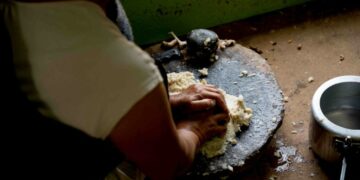
Sur la Côte d'Azur, cherchez la socca : une galette faite de pois chiches, assaisonnée de poivre et d'huile d'olive. Elle sort du four dans une grande poêle en cuivre, croustillante sur les bords et fondante au centre. Les vendeurs la coupent en carrés irréguliers sur l'étal et la servent dans du papier. Vous la mangez debout, idéalement sur un marché matinal, idéalement avec un petit verre de rosé.
La texture est une révélation : à la fois croustillante et crémeuse, avec une profondeur que la farine de blé ne peut offrir. Cherchez-la au marché du Cours Saleya à Nice ou sur n'importe quel marché de village entre Menton et Antibes. Arrivez tôt ; la première fournée disparaît rapidement.

Les sardines grillées au festival de la sardine de Portimão
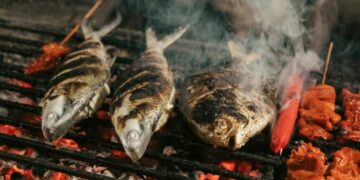
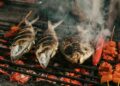
Chaque mois d'août, l'arôme du poisson sur le charbon de bois s'élève des rives de Portimão, où l'humble sardine occupe le devant de la scène. C'est la street food dans ce qu'elle a de plus élémentaire : un poisson entier, du sel, un grill, et rien d'autre. Les sardines sont naturellement sans gluten, riches en oméga-3, et à leur meilleur niveau en août quand leur teneur en graisses culmine.
Autrefois moteur de l'économie de la ville, les sardines sont célébrées lors d'un festival qui s'ouvre sur un déchargement traditionnel, une reconstitution impliquant 80 acteurs et 500 kg de poisson frais. Dégustez la vôtre sur une tranche de pain de maïs, qui est également sans gluten, et restez au bord de la rivière Arade. C'est l'Algarve dans ce qu'elle a de plus généreux et honnête.

-



Les poivrons rôtis au « paprikás » dans les ruin bars de Budapest
La récolte de fin d'été en Hongrie produit certains des meilleurs poivrons de l'UE, et les vendeurs de rue de Budapest les font rôtir entiers à la flamme dans les cours des célèbres ruin bars de la ville. La capitale hongroise célèbre sa cuisine, des vendeurs de street food aux chefs célèbres animant des conférences et des démonstrations en direct. Les poivrons rôtis au paprikás, servis avec un filet d'huile de tournesol et une pincée de sel, ne demandent rien d'autre.
La peau noircit puis se détache pour révéler une chair sucrée, fumée et presque liquide. Les vendeurs ajoutent parfois une cuillerée de fromage frais à côté, qui est également sans gluten. Demandez « sült paprika » et montrez du doigt ; le reste est universel.
Perspective d'expert sur la street food sans gluten en Europe
La scène de la street food européenne connaît un changement discret mais significatif. Les vendeurs qui ajoutaient autrefois de la chapelure ou des panures à base de blé par habitude reconsidèrent désormais activement leurs recettes, en partie à cause de la réglementation, et en partie parce que le marché le demande. Les plats naturellement sans gluten, comme le poisson grillé, les galettes de légumineuses et les légumes rôtis, rencontrent un succès exceptionnel lors des festivals saisonniers à travers l'UE. La saison des récoltes est particulièrement importante : lorsque la qualité des produits est à son apogée, le cuisinier n'a pas besoin de farine pour créer quelque chose de mémorable. Nous assistons à une tendance claire vers la simplicité comme signe de luxe, et c'est une excellente nouvelle pour les consommateurs sans gluten.
Perspective de l'industrie, analystes du marché de l'alimentation et de la gastronomie couvrant l'Union européenne

Espeto de sardinas sur le front de mer de Málaga
La côte sud de l'Espagne propose sa propre version du rituel de la sardine grillée. À Málaga, l'« espeto » désigne des sardines embrochées sur une canne de roseau et grillées au-dessus d'une barque remplie de bois d'olivier brûlant. Le résultat est plus fumé et plus théâtral que son équivalent portugais. L'Europe de l'Ouest est la région avec la plus forte proportion d'allégations « sans gluten » dans les lancements de produits alimentaires mondiaux, et l'Espagne est le pays leader en Europe.
Les stands d'espeto le long des bars de plage « chiringuito » de La Malagueta et Pedregalejo sont une véritable institution. Commandez 6 sardines par personne, ajoutez une assiette de salade de tomates fraîches, et comprenez pourquoi l'Andalousie considère cela comme un repas complet et digne.
La farinata dans les « caruggi » historiques de Gênes
La farinata est la cousine italienne de la socca : une fine galette de pois chiches cuite dans une poêle en cuivre avec de l'huile d'olive, du poivre noir et du sel de mer. À Gênes, on la vend dans de petites « friggitorie » nichées dans les « caruggi » médiévaux, ou ruelles étroites, de la vieille ville. Le mois d'août attire les touristes, mais la clientèle locale ne disparaît jamais ; elle mange de la farinata à ces comptoirs depuis des décennies.
L'Italie a dominé le marché européen du sans gluten avec une part de 33,4 %, soutenue par une industrie agroalimentaire sans gluten bien établie, des initiatives de santé soutenues par le gouvernement et l'accent culturel mis sur des alternatives de haute qualité au blé. La farinata est la preuve que cette culture est profondément ancrée : elle précède toutes les tendances alimentaires de plusieurs siècles.
L'oliebol avec une touche saisonnière à Amsterdam
L'« oliebol » néerlandais traditionnel contient du blé, mais le mois d'août apporte une variante saisonnière sur plusieurs marchés alimentaires d'Amsterdam : une version à base de pâte de pois chiches, garnie de myrtilles fraîches ou de pommes et de cannelle, servie chaude et saupoudrée de sucre glace. Pendant un long week-end chaque année à Amsterdam, des dizaines de food trucks gastronomiques s'installent au parc Westergasfabriek et le transforment en un immense restaurant en plein air appelé Rolling Kitchens.
Demandez spécifiquement la version sans gluten au stand ; les vendeurs les étiquettent clairement. La texture est plus dense que l'original au blé, mais la saveur est plus riche. Dégustez-le chaud au bord de l'un des canaux de la ville, c'est tout simplement parfait.
Conclusion
L'automne est la saison la plus savoureuse d'Europe, où l'origine, la culture et l'innovation se rencontrent, mais août en est l'ouverture : le moment où la récolte est nouvelle, les journées sont longues et la street food dans toute l'UE est à son paroxysme. Ces 7 plats partagent une qualité au-delà du fait d'être sans gluten : ils sont tous enracinés dans leur lieu, leur saison et dans le genre de savoir qui ne peut pas être mis en boîte. Partez à la découverte de cette street food avant la fin de l'été. Suivez la fumée, demandez au vendeur ce qui est arrivé ce matin, et laissez la saison des récoltes guider le reste.

Découvrez plus sur la cuisine de rue
- Réglementation des aliments sans gluten dans l'UE, Commission européenne
- Rapport sur le marché européen des aliments et boissons sans gluten, Mordor Intelligence
- 10 festivals culinaires européens à découvrir cet été, National Geographic
Initialement publié sur EUwebzine.