CONTACTO
  • Iniciar sesión
Mejorar
GUSTOwebzine
Advertisement
  • Inicio
    • Nuestros Autores
    • Suscríbete Gratis
    • Kit de Medios
    • Contacto
    • Términos y Condiciones
    • Política de Cookies
  • Descubrimientos
    • Chefs
  • Cultura Culinaria
  • Comida y Bebidas
  • Consejos de Cocina
    • Recetas
  • GUSTO Global
  • Perspectivas
  • Guía de GUSTO
    • Hoteles en Todo el Mundo
    • Vida Nocturna en Todo el Mundo
    • Restaurantes en Todo el Mundo
    • Servicios en Todo el Mundo
  • Inicio
    • Nuestros Autores
    • Suscríbete Gratis
    • Kit de Medios
    • Contacto
    • Términos y Condiciones
    • Política de Cookies
  • Descubrimientos
    • Chefs
  • Cultura Culinaria
  • Comida y Bebidas
  • Consejos de Cocina
    • Recetas
  • GUSTO Global
  • Perspectivas
  • Guía de GUSTO
    • Hoteles en Todo el Mundo
    • Vida Nocturna en Todo el Mundo
    • Restaurantes en Todo el Mundo
    • Servicios en Todo el Mundo
Sin Resultados
Ver Todos los Resultados
GUSTOwebzine
Sin Resultados
Ver Todos los Resultados
Inicio GUSTO Global

Grados de higiene: qué significan antes de que comas

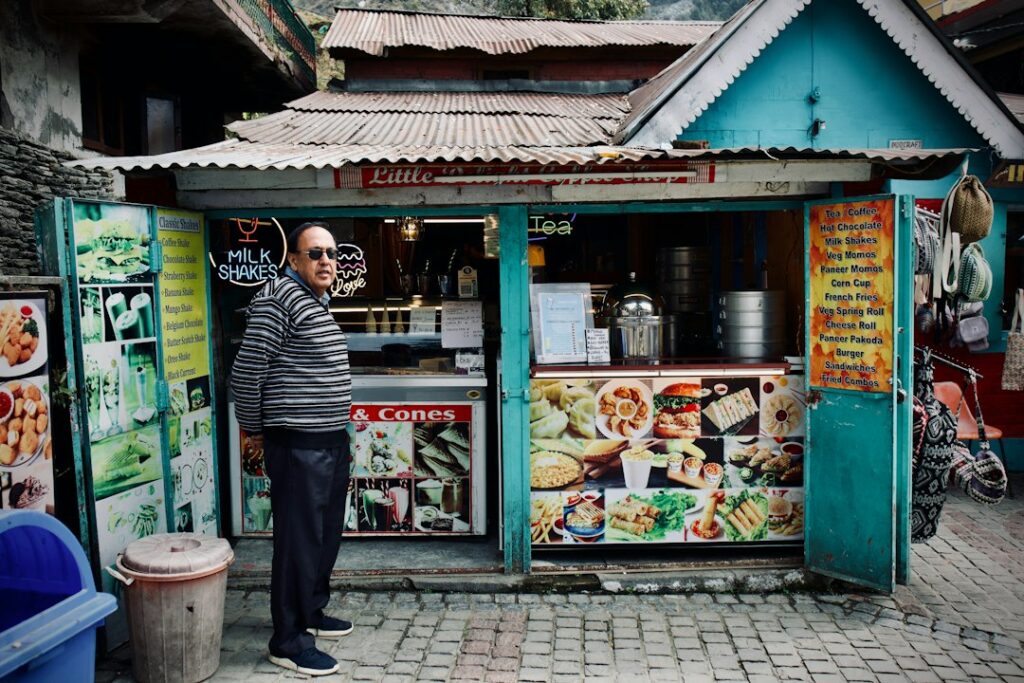
Un hombre con un suéter a rayas está de pie en un puesto de aperitivos junto a la carretera de color verde azulado ofreciendo batidos y conos, mirando a la cámara.

#titulo_imagen

Hygiene grades in Singapore changed in January 2026, and many stall decals now show letters that mean something different from a year ago. The Singapore Food Agency replaced the old annual snapshot system with a framework called SAFE, which grades stalls on a long track record rather than a single inspection day. A stall showing an A today may have earned that letter through three years without a major lapse, not because an inspector walked through last week. Knowing the difference changes how you should read every decal in a hawker centre.

GUSTO guide worldwide restaurants, hotels, nightlife, professional services GUSTO guide worldwide restaurants, hotels, nightlife, professional services GUSTO guide worldwide restaurants, hotels, nightlife, professional services

Why old hygiene grades stopped meaning much

The system that most diners grew up with started in 1997. Since June 1997, food stalls in hawker centres have been given a grade based on the overall hygiene, cleanliness and housekeeping standards of the stalls. Hawker stalls were assessed and given the following grades: A for a score of 85 percent or higher, B for 70 to 84 percent, C for 50 to 69 percent, and D for 40 to 49 percent. The scale sounded precise, but it stopped sorting stalls in any useful way long before it was retired.

By the end of 2017, almost every licensed stall had climbed to the top of the scale. About 99% of licensees were graded either 'A' or 'B' as of 31st December 2017, compared to 77% in 2006. The regulator admitted as much itself. With almost all licensees being graded 'A' or 'B', the grading system had become less useful in helping consumers to distinguish good performers. A decal that puts 99 percent of stalls in the same two bands cannot help anyone choose between them.

How the SAFE framework grades a stall now

The agency behind today's grades is not the one that invented them. In 2019, a new agency was formed to oversee all food-related issues, consolidating the food safety duties of the AVA, NEA and the Health Sciences Authority. That agency, the Singapore Food Agency, spent years building a replacement before it finally switched the system over.

The Singapore Food Agency began implementing the Safety Assurance for Food Establishment framework from 19 January 2026. An estimated 45,000 retail and non-retail SFA-licensed food establishments came under the framework, categorised as either Category 1 or Category 2 based on their level of food processing or preparation. Hawker stalls mostly sit in Category 2, while larger kitchens and caterers with heavier processing fall into Category 1.

The letters on the decal now mean something structurally different. Food establishments are graded as A for a good track record of more than three years with no major lapse, B for a good track record of between one and three years, C for having committed a major lapse such as a licence suspension under the Points Demerit System or a court conviction for a food safety offence, and NEW for operations under a year old. The D grade has been removed entirely. Walk into Maxwell Food Centre or Tiong Bahru Market today and a stall's letter tells you how long it has stayed clean, not how it scored on one visit.

The physical decal is also changing shape. Operators no longer need to scrape off and replace physical grade decals on their storefront. The portal behind the grade can be accessed through the NEA website, the myENV app, or the QR code found on the licence decal displayed at the premises. A sticker on the counter is now a gateway, not the whole story.

Food safety inspector reviewing hygiene grades record at a stall

The trade off: fewer snapshots, slower public alerts

A fair objection follows naturally from all this. If a grade now reflects three years of history, does a stall that slips for a few weeks still look spotless to a passing diner? Under the old system, an inspector's annual visit could catch problems within months. Under SAFE, a short lapse that falls below the threshold for formal action might not move the needle on the public grade at all.

The framework has a built in answer, though it is not a complete one. Accumulating 12 or more demerit points within a rolling 12 month period triggers immediate licence suspension, 2 weeks for a first offence and 4 weeks for a repeat, with an automatic downgrade to Grade C. Serious problems such as pest infestation or repeated temperature abuse still surface quickly and publicly. What the system cannot catch in real time is the smaller, non-reportable lapse, the kind an old annual inspection might have flagged on the spot but that never accumulates enough points to trigger a downgrade. That gap is real, and no amount of marketing around the new framework changes it.


-

Person in a green jacket holds a muddy dog's paw while the dog chews a treat outdoors on fallen autumn leaves.

Truffle season in Piedmont: a buyer’s guide

09/10/2026
Mujer joven sonriendo mientras está sentada a una mesa con una gran comida india estilo thali y un vaso de bebida en un restaurante.

Restaurantes etíopes en Londres: las mejores opciones

25/09/2026
Alguien tamiza harina a través de un cedazo metálico sobre un tazón en una cocina, con la harina flotando en el aire.

Harinas sin gluten que todo panadero de la UE necesita

19/09/2026
Pasta fettuccine en un plato blanco sobre la que una rebanadora manual añade láminas finas de trufa.

Cenas de trufa en Nueva York este otoño

16/09/2026
Panadera con camisa marrón y delantal de pie tras una vitrina llena de cruasanes y pasteles.

Panaderías sin gluten en NYC: come bien

14/09/2026
Chica sentada descalza en un muelle de madera junto a un lago, comiendo rodajas de naranja de una taza de metal con un plato de comida a su lado.

Quesos regionales de la UE en su punto óptimo en septiembre

12/09/2026

What to check before you order

Treat the grade on the decal as a starting point, not a verdict on today's kitchen. Scan the QR code before you order rather than after, especially at a stall you have not tried before. A Grade A tells you the operator has stayed clean for three years or more, which is a genuinely strong signal. A Grade B still means one to three years without a major lapse, a reasonable record for a newer business.

A NEW grade is not a warning, but it is a blank page. The operator has simply not been open long enough to earn a longer term rating, so treat it as neutral rather than negative. A Grade C is the one grade worth pausing over, since it means a major lapse has already been recorded, either a suspension under the demerit system or a court conviction. Phase 2 of the framework, which adds further requirements for larger Category 1 operators, is expected to be detailed by 2027, so expect the grading criteria to tighten again before this decade is out.

If you accept that a grade is now a history rather than a photograph, the habit that follows is simple. Check the QR code on the decal before you sit down, not after your food arrives. Reserve real hesitation for a Grade C, read a NEW grade as unproven rather than unsafe, and remember that an A earned over three years still says more about an operator's discipline than any single clean kitchen on inspection day ever did.

Learn more about hygiene grades

  • New Safety Assurance for Food Establishment (SAFE) Framework to strengthen food safety
  • Understanding the Safety Assurance for Food Establishments (SAFE) Framework
  • Hawker centres – Singapore Infopedia

Publicado originalmente en SINGAPUREwebzine.

Publicación anterior

Fermentación de koji: el antiguo secreto del sabor en Japón

Siguiente Publicación

Normas sobre propinas que enfrentan los grupos de restauración este mes

Relacionado Artículos

Person in a green jacket holds a muddy dog's paw while the dog chews a treat outdoors on fallen autumn leaves.
GUSTO Global

Truffle season in Piedmont: a buyer’s guide

09/10/2026
Mujer joven sonriendo mientras está sentada a una mesa con una gran comida india estilo thali y un vaso de bebida en un restaurante.
GUSTO Global

Restaurantes etíopes en Londres: las mejores opciones

25/09/2026
Alguien tamiza harina a través de un cedazo metálico sobre un tazón en una cocina, con la harina flotando en el aire.
GUSTO Global

Harinas sin gluten que todo panadero de la UE necesita

19/09/2026
Pasta fettuccine en un plato blanco sobre la que una rebanadora manual añade láminas finas de trufa.
GUSTO Global

Cenas de trufa en Nueva York este otoño

16/09/2026
Panadera con camisa marrón y delantal de pie tras una vitrina llena de cruasanes y pasteles.
GUSTO Global

Panaderías sin gluten en NYC: come bien

14/09/2026
Siguiente Publicación
Gerente de restaurante informando al personal sobre las nuevas normas de propinas

Normas sobre propinas que enfrentan los grupos de restauración este mes

Deja un comentario Cancelar respuesta

Tu dirección de correo electrónico no será publicada. Los campos requeridos están marcados *

Truelang AI Translations Truelang AI Translations Truelang AI Translations
Sin Resultados
Ver Todos los Resultados

Nuestro Enfoque

GUSTOwebzine es tu ventana internacional a la cultura gastronómica: estilo de vida culinario, tendencias, recetas e historias gastronómicas para una audiencia global con pasión por el sabor excepcional.

Nuestros Lectores

GUSTOwebzine se dirige a lectores que se relacionan con la cultura gastronómica a un nivel profundo: como profesionales culinarios, cocineros caseros apasionados, emprendedores gastronómicos y líderes de opinión en sus comunidades.

Nuestro Enfoque

Las recetas, tendencias y cultura gastronómica se integran como contexto e indicadores de creatividad, identidad y fuerzas sociales que moldean la forma en que come el mundo, no como contenido aislado.

Publicación reciente

  • Truffle season in Piedmont: a buyer’s guide
  • Normas sobre propinas que enfrentan los grupos de restauración este mes

© 2026 GUSTOwebzine por NOOR Y NOOR — parte de WEBZINE.mundo.

¡Bienvenido de vuelta!

Inicia sesión en tu cuenta a continuación

¿Olvidó su contraseña?

Recuperar tu contraseña

Por favor, ingresa tu nombre de usuario o dirección de correo electrónico para restablecer tu contraseña.

Iniciar sesión
Manage Consent
To provide the best experiences, we use technologies like cookies to store and/or access device information. Consenting to these technologies will allow us to process data such as browsing behavior or unique IDs on this site. Not consenting or withdrawing consent, may adversely affect certain features and functions.
Functional Always active
The technical storage or access is strictly necessary for the legitimate purpose of enabling the use of a specific service explicitly requested by the subscriber or user, or for the sole purpose of carrying out the transmission of a communication over an electronic communications network.
Preferences
The technical storage or access is necessary for the legitimate purpose of storing preferences that are not requested by the subscriber or user.
Statistics
The technical storage or access that is used exclusively for statistical purposes. The technical storage or access that is used exclusively for anonymous statistical purposes. Without a subpoena, voluntary compliance on the part of your Internet Service Provider, or additional records from a third party, information stored or retrieved for this purpose alone cannot usually be used to identify you.
Marketing
The technical storage or access is required to create user profiles to send advertising, or to track the user on a website or across several websites for similar marketing purposes.
  • Manage options
  • Manage services
  • Manage {vendor_count} vendors
  • Read more about these purposes
View preferences
  • {title}
  • {title}
  • {title}
Sin Resultados
Ver Todos los Resultados
  • Inicio
    • Nuestros Autores
    • Suscríbete Gratis
    • Kit de Medios
    • Contacto
    • Términos y Condiciones
    • Política de Cookies
  • Descubrimientos
    • Chefs
  • Cultura Culinaria
  • Comida y Bebidas
  • Consejos de Cocina
    • Recetas
  • GUSTO Global
  • Perspectivas
  • Guía de GUSTO
    • Hoteles en Todo el Mundo
    • Vida Nocturna en Todo el Mundo
    • Restaurantes en Todo el Mundo
    • Servicios en Todo el Mundo

© 2026 GUSTOwebzine por NOOR Y NOOR — parte de WEBZINE.mundo.

Sin cuota suficiente para desbloquear esta publicación
Desbloqueos restantes: 0
¿Estás seguro de que deseas cancelar la suscripción?
Verificado por MonsterInsights
enEnglishdeDeutschesEspañolfrFrançaisnlNederlands