
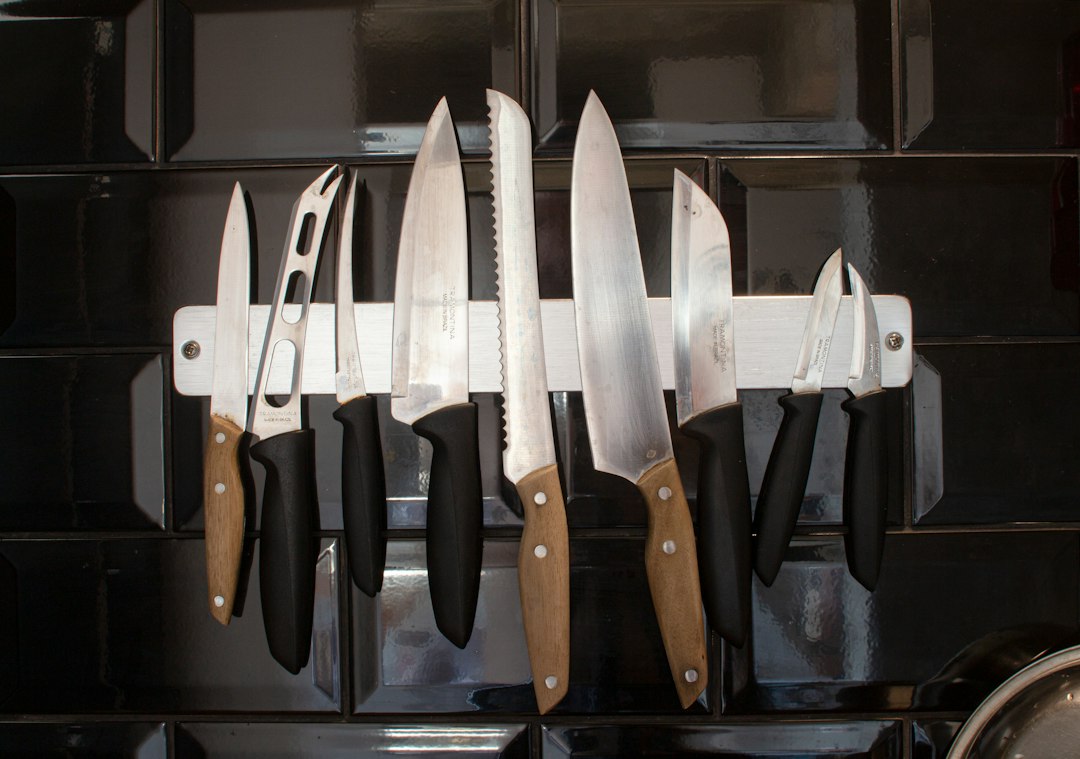
Knife sharpening at home rarely needs a workshop. A chef's knife that squashes a tomato instead of slicing it has not failed, it has simply lost its edge, and most cooks replace a blade long before they need to. Restoring that edge takes a stone, a honing rod and a few minutes a week, not a trip to the knife shop. This guide walks through the tools, the angles and the schedule that keep a kitchen blade performing, plus the point where it makes sense to pay someone else to do it.
What a dull knife is actually telling you
A knife rarely goes dull overnight. With ordinary cutting, the microscopic edge bends and folds sideways instead of staying straight, which is why a knife that cut cleanly last month now slips off an onion skin or crushes a basil leaf. Most of the time this is a maintenance problem, not damage, and a honing steel fixes it in seconds. A true repair job, where the edge is chipped or rounded over from years of neglect, needs an actual sharpening stone instead.
Telling the two apart saves both time and steel. Run the blade through a ripe tomato: if it catches and tears rather than gliding through the skin, honing alone will likely bring it back. If honing does nothing and the blade still struggles, the edge itself needs to be reground, which is where a whetstone comes in.
Pick the right sharpening tool for your knives
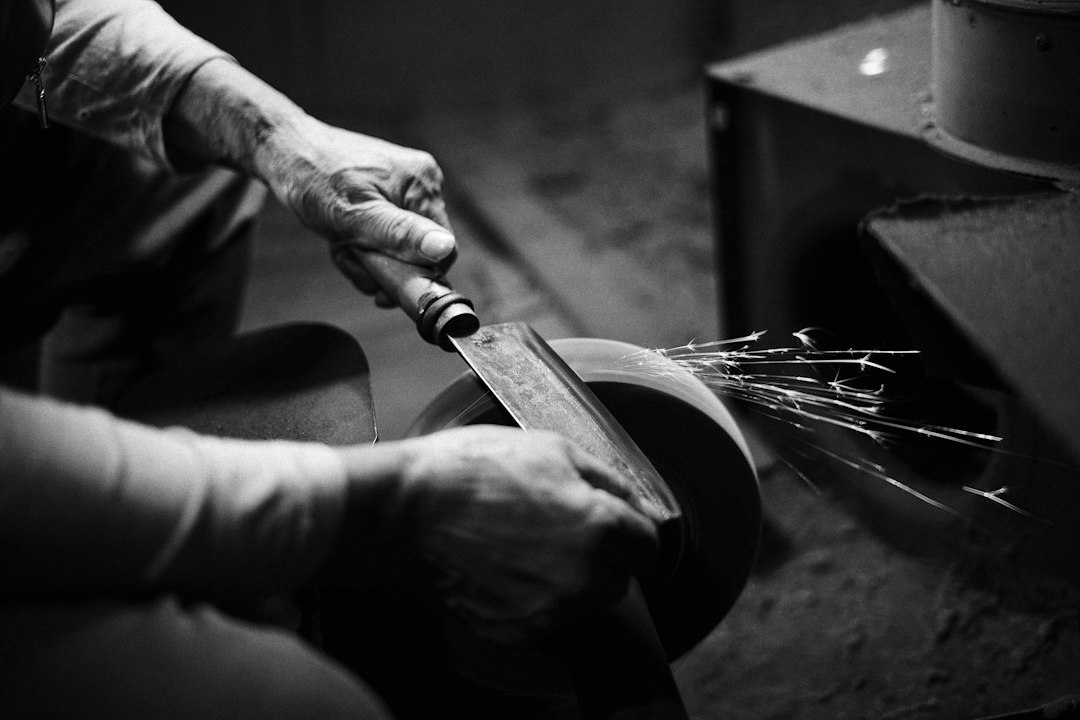
Four tools cover almost every kitchen: the honing steel, the whetstone, the pull-through sharpener and the professional service. A honing steel does not remove metal, it only straightens a bent edge, and honing realigns the microscopic teeth on the edge of the blade and prolongs a knife's lifespan, while sharpening takes a small amount of steel off the blade to create a new edge. That distinction matters because reaching for the wrong tool wastes steel on a knife that only needed straightening.
A whetstone is the slower but more precise option, and it is the one serious cooks reach for once a honing steel stops working. A 1000/6000 combination stone handles 95% of kitchen knife sharpening, which makes it the only stone most households ever need to buy. Pull-through and electric sharpeners sit at the fast, low-skill end of the scale: useful in a pinch, but they remove more metal than a whetstone and shorten a blade's working life faster with repeated use.
Sharpen on a whetstone: grit, angle and strokes
Soak the stone in water for five to ten minutes before starting, coarse side up. For most home cooks, a water stone between 1000 and 6000 grit covers the large majority of sharpening needs, with the 1000 grit side doing the actual regrinding and the 6000 grit side polishing the result. Hold the blade at a steady angle against the stone and draw it from heel to tip in smooth strokes, flipping the knife to work both sides evenly.
Angle is the part beginners get wrong most often. A good working angle sits between 15 and 20 degrees, with Japanese kitchen knives and fillet knives doing well closer to 15 degrees, so check what style of knife is on the stone before settling on a number. On the coarse stone, repeat the motion for ten to fifteen passes per side, keeping the same angle and technique each time, then switch to the fine grit and repeat until the edge feels even on both faces.
Hone between sharpenings to make the edge last
A honing steel is cheap, fast and does the most to stretch the time between real sharpenings. Rest the tip of the steel on a damp towel, tilt the blade so there is a consistent angle against the rod, and draw the knife down and across in a controlled motion. German-style knives typically hone at around a 14-degree angle, while Asian-style knives sit closer to 10 degrees, so matching the angle to the knife matters more than matching it to a single chart.
Frequency does the rest of the work. Honing works best when done every time the knife is used, or at minimum once a week, and a few passes on each side is usually enough to bring the edge back without removing any real steel. Treat it as routine upkeep, similar to wiping down a cutting board, rather than a task reserved for when a knife already feels dull.
Know when to send knives to a professional
Even a well-tended knife eventually needs a full regrind, and that is where sending it out makes sense. A home cook using a knife daily should expect to need an actual sharpening, as opposed to honing, roughly two to four times a year, which is a small enough number to make a professional pass worth the cost. Professional knife sharpening typically costs between $5 and $20 per knife, depending on the knife type, the sharpening method and how damaged the blade already is.
Pricing models vary by shop. Many services charge by the inch of blade length, so an eight-inch chef's knife runs about $8, while mail-in options such as Knife Aid typically charge $10 to $15 per knife with a two-week turnaround. For a drawer of four or five kitchen knives, that works out to roughly the cost of a casual dinner out, once or twice a year, for an edge that a home whetstone takes longer to reach.
Qué hacer primero, qué puede esperar
Buy a honing steel before anything else. It costs little, takes seconds to use, and does more to keep a knife cutting well day to day than any stone or sharpener. Add a 1000/6000 combination whetstone once honing alone stops bringing the edge back, since that single stone handles almost every knife in a standard kitchen set.
Professional sharpening can wait until the whetstone no longer restores a clean edge, or until there simply is not time to learn the angle by hand. Book it once or twice a year rather than as a first resort, and let the honing steel and the whetstone do the daily and monthly work in between.