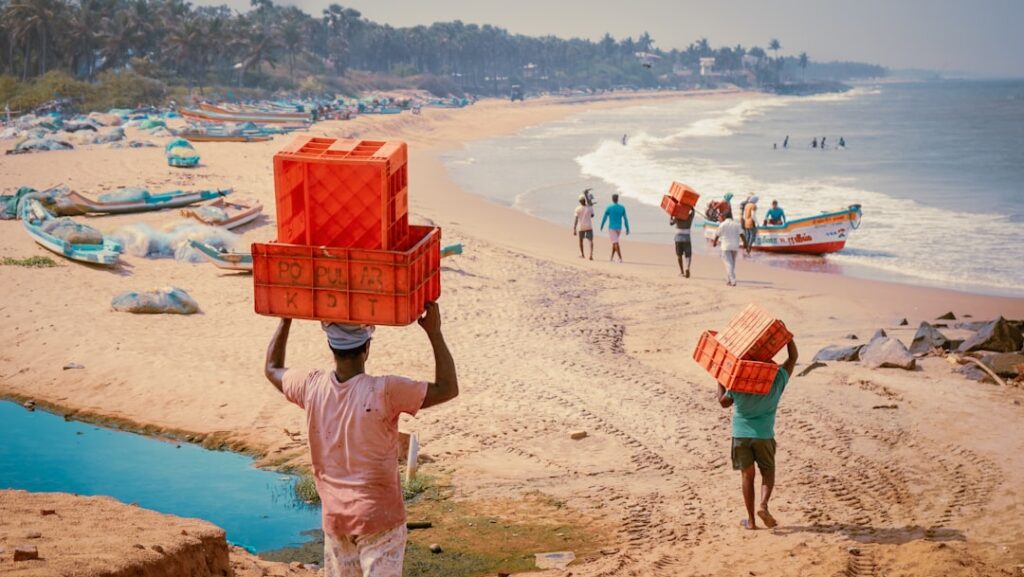
Coastal cuisine in India carries a depth of seafood tradition that the country’s long coastline has quietly protected for centuries, and it deserves far more attention than it receives.
A coastline built for flavor
India’s mainland coastline runs for approximately 7,500 km. The subcontinent has seas on 3 sides, and its southern edge extends into the Indian Ocean, with the Bay of Bengal to the east and the Arabian Sea to the west. This geography is not just beautiful. It is the foundation of a food culture that most people outside the coastal belt have never fully experienced.

Coastal regions of India include Goa, Gujarat, Maharashtra, Kerala, West Bengal, Odisha, Tamil Nadu, Karnataka, and Andhra Pradesh, and each part has its own culinary traditions and local ingredients that add to the richness and flavor of the dishes. The variety across these regions is genuinely remarkable.
Indian coastal cuisine offers fresh seafood from fish, prawns, crabs, lobsters, clams, and squid. Fish and rice are a staple across coastal regions, and coconut is one of the main ingredients, used as fresh coconut, coconut cream, coconut milk, or coconut oil. These are not simply ingredients. They are the building blocks of entire cultural identities.
The regions that deserve more recognition
Goa often takes the first position in any conversation about Indian coastal cuisine. Yet there is so much more territory to explore. Seafood dishes in Mangalore are known for their versatility and their ability to accommodate both fiery spices and coconut-based gravies. One standout dish is the Mangalorean fish curry, made with a blend of red chilies, tamarind, and coconut, and neer dosa, a delicate rice-based crepe, is often served alongside these curries.

Further up the coast, the coastal state of Maharashtra offers a wide variety of seafood dishes, from the Konkan region to Mumbai. Konkani cuisine is known for preparations like bombil fry and crab xec xec, a spicy crab curry, while Mumbai’s street food includes seafood bhel puri, a beloved mix of puffed rice, spices, and fresh seafood.
On the eastern coast, traditions are equally rich but far less documented. The east coast has hilsa, which is the single most flavorful fish in India but is available only seasonally. In West Bengal, this fish carries deep cultural meaning. It appears at celebrations, at family tables, and in recipes passed from one generation to the next.
Andhra, Tamil Nadu, and the power of spices
Andhra Pradesh is known for its fiery cuisine, and its seafood spread is rich in spices and tangy flavors. Andhra fish curry, with red chilies, tamarind, and aromatic spices, is a hallmark dish, and chepala pulusu is a tangy, spicy fish stew. The artistry in Andhra Pradesh’s coastal cuisine lies in its ability to pack a punch with spices while still maintaining a balance that highlights the freshness of the seafood.
In Tamil Nadu, one of the most notable dishes is Chettinad prawn masala. Chettinad cuisine is well known for its use of spices, and the prawns are marinated in red chili powder, turmeric, and coriander before being cooked in a thick, flavorful gravy. The addition of coconut milk and curry leaves adds a distinct South Indian character to the dish.
Meen kuzhambu from Tamil Nadu is a hot fish curry made with tamarind, tomatoes, and spices, showing the bold flavors that define this region. These dishes share one quality: they are built on knowledge that fishing communities developed over many generations.

Expert perspective on coastal cuisine
India’s coastal food traditions are among the most structurally complex in the world. Each region along the coast has developed its own spice vocabulary, its own preservation methods, and its own relationship with the sea. What we call “Indian seafood” in a restaurant abroad is often just 1 or 2 dishes from Goa or Kerala. The real map is far wider. Andhra’s tamarind-heavy fish stews, Mangalore’s coconut and chili gravies, Odisha’s mustard-based preparations, and Gujarat’s tangy pickled fish from communities like the Kharwa all represent entirely separate culinary systems. When gastronomy professionals speak about protecting food heritage in India, coastal cuisine must sit at the center of that conversation. The diversity here is a national resource.
Industry perspective, gastronomy and culinary heritage professionals in India
The economic story behind the plate
The scale of India’s seafood sector reflects how central this food culture truly is. The India seafood market is projected to grow at a CAGR of 7.51% from 2025 to 2033, reaching a value of USD 25.2 billion, driven by rising health-conscious consumption and expanding middle-class demand.
India’s seafood exports hit a record high in both volume and value during 2025 to 2026, reaching 19,72,018 metric tonnes worth approximately 73,890 crore rupees. This is not only an economic number. It signals that the world wants what India’s coasts produce.
The Indian government has actively formalized food heritage as a primary tourism driver. The Ministry of Tourism organized the 4th edition of World Food India in September 2025, themed “Reviving the Culinary Treasures of India,” to position indigenous ingredients and GI-tagged traditions before international buyers and tourists. Coastal cuisine sits at the heart of this effort.







Kerala and the coconut coast
No exploration of coastal cuisine in India is complete without Kerala. One celebrated dish from Kerala is Karimeen Pollichathu, prepared with the pearl spot fish. This is a rare variety of fish, which makes the dish particularly special. Skilful incisions are made in the fish, which is then marinated in spices and steamed in leaves. The steaming is done carefully so that the distinct tastes of the spices do not fade.
Kerala’s cooking method is a lesson in restraint. The spices work with the fish, not against it. Indian coastal cuisines are a testament to the country’s remarkable diversity, both in terms of marine life and the culinary traditions that have evolved over centuries. Whether you are tasting the coconut-infused flavors of Kerala or the fiery spices of Andhra Pradesh, each coastal region has a unique story to tell through its seafood dishes.
This philosophy connects ancient knowledge to the modern table. It is the reason young chefs across India are now revisiting coastal cuisine not as a regional curiosity but as a living, breathing tradition worth celebrating.

Coastal cuisine deserves its place at the center
India’s coastal cuisine is not a footnote in the country’s food story. It is one of the most important chapters. From the mustard-laced fish preparations of Bengal to the coconut curries of Kerala and the fiery tamarind stews of Andhra Pradesh, every plate carries a community’s history. Explore coastal cuisine the next time you sit at a table in India. Ask the cook about the fish, the spices, and the method. You will discover that every answer connects you to something ancient, something proud, and something very much alive. Try 1 new coastal dish this week and share the tradition with someone you love.
了解更多关于沿海美食的信息
- Marine Products Export Development Authority (MPEDA), Government of India
- India Seafood Market Size, Share and Growth Analysis 2025 to 2033, IMARC Group
- India’s Seafood Exports Hit Record High in Value and Volume in 2025 to 2026, Business Standard
最初发布于《印度》网杂志。